
Couples Massage Guide: Premium Home Experience
Building wellness partnerships that sustain demanding careers
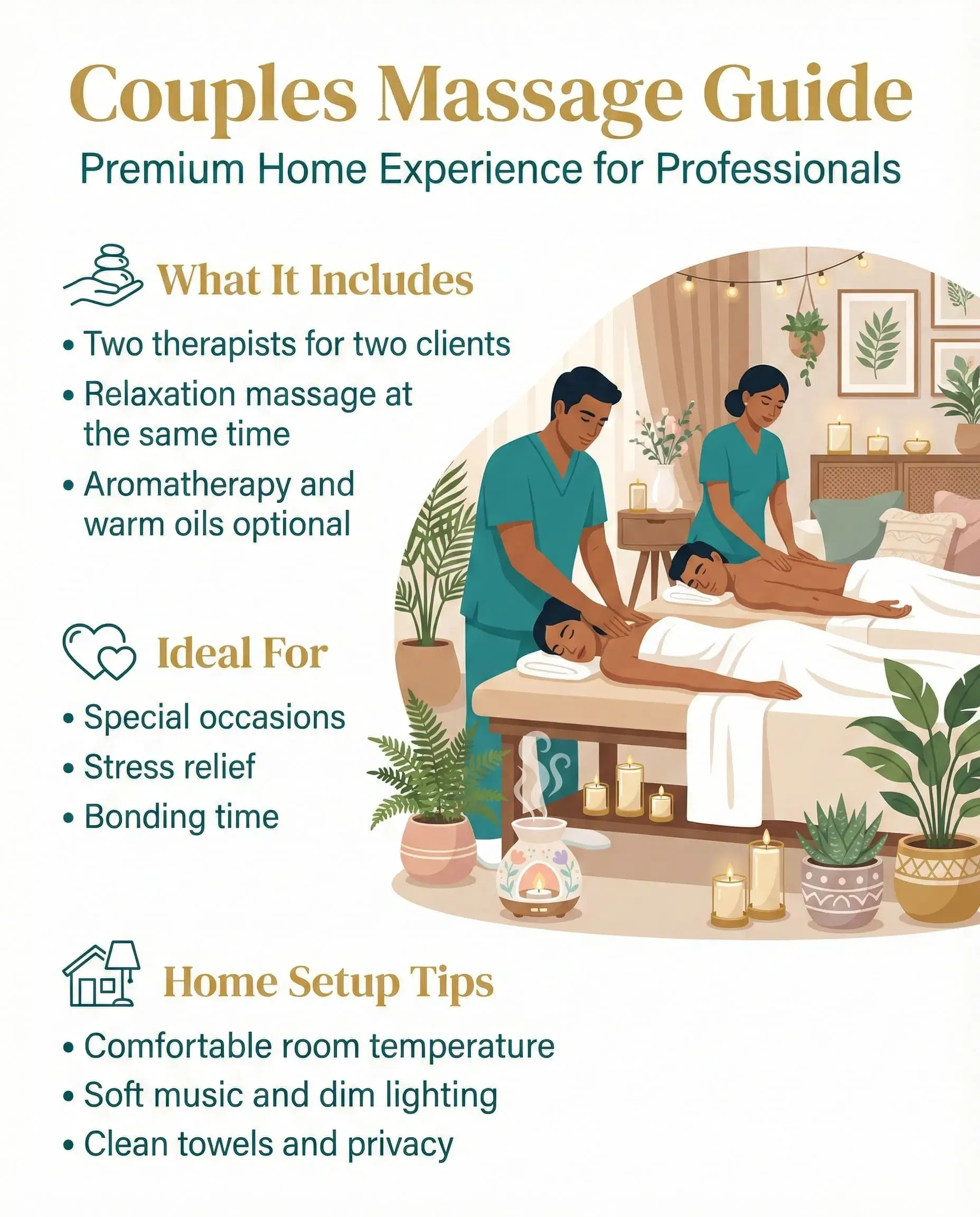
Between demanding careers, shared responsibilities, and the constant negotiation of schedules, couples often find themselves operating as efficient teammates rather than partners invested in each other's wellbeing. When was the last time you both prioritized recovery—together? Professional couples increasingly recognize that shared wellness practices aren't relationship luxuries. They're strategic investments in the partnership that drives everything else.
Couples massage at home removes the logistical barriers that prevent busy professionals from prioritizing shared wellness. No coordinating schedules around spa hours. No sitting in separate waiting rooms. No navigating Bangalore traffic or Mumbai's evening rush after an exhausting week. The therapist arrives at your home, on your schedule, and both partners receive professional treatment in their own space. Why do professionals choose home massage? It's wellness designed for how high-performing couples actually live.
Why Professional Couples Choose Home Massage
For couples managing demanding careers, the decision to invest in shared massage isn't about indulgence. It's about efficiency, privacy, and results. Here's what makes home massage particularly valuable for professional partnerships:
Schedule Synchronization
Finding overlapping free time is the eternal challenge of two-career couples—particularly in India's IT corridors where 10-12 hour workdays and different shift timings are common. Desk workers and executives face this daily. Spa visits compound the problem: you need shared availability that also aligns with the spa's schedule. Home massage inverts this constraint. The service adapts to your availability, whether that's 7 AM before the day begins, 10 PM after late calls with US clients, or Sunday evening to reset before the week.
Complete Privacy
Professional couples often value discretion. At a spa, you might encounter colleagues, clients, or acquaintances. At home, your wellness practices remain private. You're not navigating social dynamics when you're meant to be disconnecting. The recovery happens without audience.
Immediate Post-Session Transition
After a spa massage, you re-enter the world: checkout, traffic, errands. The relaxation dissipates. At home, when the session ends, you're already in your private space. Have a quiet dinner together. Rest. Sleep well. The benefits compound rather than evaporate during the drive home.
Relationship-Focused Time
Couples massage creates dedicated space where both partners are present, disconnected from devices, and experiencing something restorative together. In high-demand careers, these windows are rare and valuable. The shared experience becomes a relationship touchpoint that calendars full of obligations otherwise crowd out. This is why executive wellness increasingly includes partner-focused practices.
| Factor | Spa Visit | Home Massage |
|---|---|---|
| Scheduling | Must match spa hours + both calendars | Service adapts to your availability |
| Total time | 3-4 hours (travel + waiting + session) | 90-120 minutes actual |
| Privacy | Public environment | Complete privacy |
| Post-session | Re-enter the world immediately | Continue resting at home |
| Consistency | Different therapists each visit | Same therapist relationship possible |
| Environment | Spa ambiance (not always relaxing) | Your preferred setting |
The Professional Couple's Wellness Partnership
Couples who build lasting wellness practices together approach them as partnership investments, not occasional treats. Here's the framework successful professional couples use:
Individual Needs Within Shared Practice
Partners often have different recovery needs. One may carry tension from desk work; the other might have exercise-related muscle tightness. One prefers firm pressure; the other responds better to gentler techniques. Understanding different massage modalities helps each partner communicate their needs. The shared experience doesn't require identical treatment—each partner receives what their body needs.
Communication as Wellness Component
The post-massage window often opens conversations that busy weeks crowd out. Both partners are relaxed, present, and not rushing to the next obligation. Many couples find that substantive discussions—about stress, career decisions, family planning, relationship dynamics—happen naturally after shared massage sessions. The recovery creates space for connection.
Shared Accountability
Individual wellness commitments are easy to deprioritize when work demands escalate. Shared commitments are harder to abandon—your partner is expecting you to show up. Couples massage creates mutual accountability for recovery. Neither partner wants to be the one who consistently cancels.
Session Options for Couples
Couples can structure their massage sessions in several ways, each with distinct advantages. The right choice depends on your preferences, space, and scheduling constraints. Understanding your options helps you design sustainable wellness habits:
Simultaneous Sessions
Two therapists arrive together, and both partners receive massage at the same time in the same or adjacent rooms. This approach maximizes time efficiency—a 90-minute window covers both partners completely. It's ideal for couples with severely limited joint availability, common among busy professionals. The experience is shared in real-time, which some couples prefer for the connection it creates.
Sequential Sessions
One therapist provides massage to each partner in sequence—first one, then the other. This requires more total time but only one therapist. Some couples prefer this approach: one partner relaxes or works quietly while the other receives professional recovery treatment, then they switch. It's practical when space is limited or when partners prefer different massage styles that one versatile therapist can provide.
Alternating Weeks
Each partner schedules individual weekly massage, with sessions on different days. While not technically "couples massage," this approach works well for partners with incompatible schedules. Both maintain regular recovery practices; they share the commitment without requiring simultaneous availability. Some couples find this actually increases their individual consistency.
| Format | Time Required | Best For |
|---|---|---|
| Simultaneous (2 therapists) | 90-120 minutes | Severely limited joint availability, shared experience preference |
| Sequential (1 therapist) | 2.5-3 hours | Budget-conscious, different massage preferences |
| Alternating weeks | 60-90 min each, separately | Incompatible schedules, individual focus |
Planning Your Couples Massage Experience
Setting up couples massage at home requires some preparation, but the investment pays off in smoother, more effective sessions. Premium home wellness starts with proper planning:
Space Preparation
For simultaneous sessions, you'll need space for two massage tables—typically a living room or large bedroom. For sequential sessions, one quiet room with space for a single table is sufficient. The therapist(s) bring all equipment; you provide the space, comfortable temperature, and minimal disturbance.
- ✓Clear floor space for table(s)—approximately 2m x 3m per table
- ✓Adjust room temperature to comfortable warmth (slightly warmer than usual)
- ✓Minimize potential interruptions (phones on silent, inform household members)
- ✓Have water available for post-session
- ✓Prepare any preferred music or ensure quiet environment
Session Duration Recommendations
For couples massage, 90-minute sessions typically provide the most value. This duration allows therapists to address full-body tension comprehensively rather than superficially. For couples with severe time constraints, 60-minute sessions work but may require focusing on priority areas rather than complete treatment.
Frequency for Sustained Benefits
The compounding benefits of massage become apparent with consistency. For high-stress professional couples dealing with executive stress, weekly sessions deliver optimal results. Bi-weekly is the minimum for meaningful sustained improvement. Monthly sessions provide refreshers but may not maintain benefits between sessions—particularly during demanding periods like quarter-ends, Diwali season deadlines, or annual appraisal cycles. Understanding the annual investment helps justify consistent scheduling.
Massage Types for Couples
Different massage approaches serve different couple needs. Partners don't need to choose the same type—select based on individual requirements. Our comprehensive modalities guide covers each technique in detail:
| Type | Best For | Partner Considerations |
|---|---|---|
| Swedish Massage | General stress relief, first-timers | Good default when needs differ—works for most |
| Deep Tissue | Chronic tension, desk-related pain | Partner with physical job or gym routine |
| Aromatherapy | Enhanced relaxation, mood support | Discuss scent preferences in advance |
| Hot Stone | Deep relaxation, muscle warmth | Particularly effective in cooler months |
| Sports Massage | Active individuals, recovery focus | Partner who exercises regularly |
Many couples find that different massage types serve them at different times. Deeper work when tension accumulates; Swedish for general maintenance; aromatherapy when sleep improvement is the priority. For partners who exercise regularly, post-workout recovery techniques may be appropriate. Communicate your current needs to your therapist—what works this week may differ from last month.
The ROI of Couples Wellness Investment
For professional couples, understanding the return on wellness investments matters. Our annual wellness investment guide provides detailed analysis. Here's how regular couples massage delivers value:
Individual Performance Gains
Both partners operate at higher capacity when recovery is consistent. Reduced stress improves decision-making, cognitive performance, and emotional regulation. Many professionals also report relief from stress-related headaches. The investment in each partner's recovery compounds: two high-performing individuals create a more resilient partnership unit.
Relationship Quality Improvement
Stressed, depleted partners have less to give each other. Chronic executive stress correlates with relationship conflict, communication breakdown, and reduced intimacy. Regular shared wellness practices interrupt this pattern. Partners who recover together often report improved communication, patience, and connection.
Preventive Health Economics
Stress-related health issues are expensive—in medical costs, lost productivity, and career impact. Couples who maintain regular recovery practices reduce their cumulative stress load, potentially preventing costly health interventions later. Prevention economics favor consistent investment over reactive treatment.
Common Considerations for Couples
Different Preferences Between Partners
Partners rarely have identical massage preferences. One may want firm pressure while the other prefers gentle. One might focus on back and shoulders while the other prioritizes legs—common for those with desk worker issues. This is normal and easily accommodated. Our massage modalities guide helps each partner identify their ideal approach; the shared experience doesn't require identical treatment.
One Partner More Interested Than the Other
Often, one partner introduces the idea while the other is hesitant. The hesitant partner may have concerns about discomfort, time commitment, or simply unfamiliarity. Starting with a single session—with clear communication that there's no long-term obligation—often converts skeptics. Let the experience speak for itself rather than arguing for it.
Privacy and Professional Boundaries
Professional home massage operates with clear boundaries. Therapists are trained professionals focused on therapeutic treatment—you can learn more about premium clientele standards that quality platforms maintain. The home environment is treated with the same professionalism as any clinical setting. Couples can feel confident that their privacy is respected and professional standards are maintained.
Frequently Asked Questions
Can couples be in the same room during massage?
What if one partner wants massage and the other doesn't?
How do we coordinate different massage preferences?
Is couples massage appropriate if we have children at home?
How much space do we need for simultaneous massage?
What's the ideal frequency for couples massage?
Can we request the same therapist for ongoing sessions?
How do we prepare our home for couples massage?
Building a Sustainable Wellness Partnership
The couples who maintain shared massage practices long-term approach it systematically: scheduled in advance, protected from other demands, treated as investment rather than indulgence. Our guide to sustainable wellness habits explores this systematic approach. They recognize that two high-performing partners require consistent recovery to sustain their performance—individually and together.
Home massage removes the friction that prevents professional couples from prioritizing shared wellness. No coordinating with spa schedules. No travel time. No public environment. Just effective recovery, delivered to your home, on your timeline, adapted to both partners' needs.
The investment is your time, your commitment to each other's wellbeing, and the recognition that sustained excellence—in careers and relationships—requires strategic recovery. Professional couples who understand this build wellness partnerships that support everything else they're working to achieve. Whether you're dealing with executive stress, travel fatigue, or simply want quality time together, couples massage delivers.
Related Articles
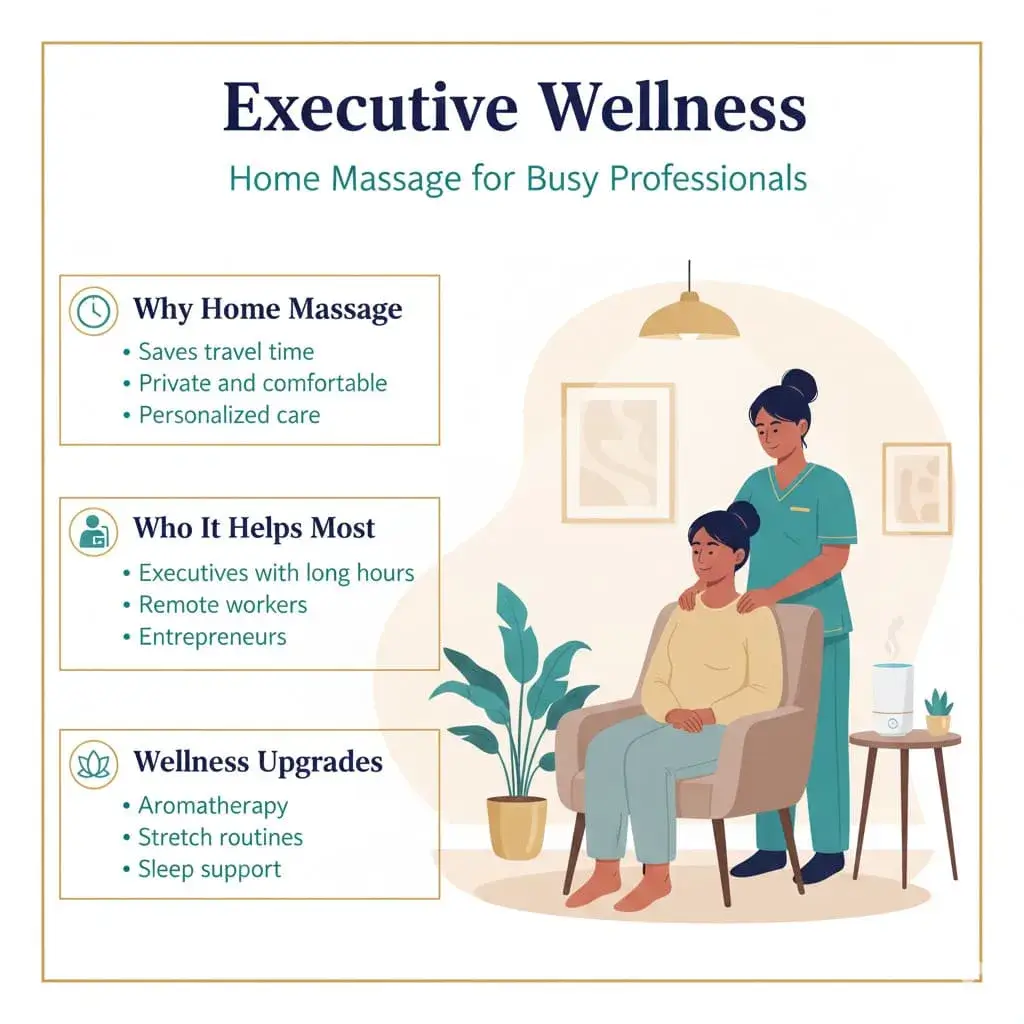
Executive Wellness: Home Massage for Busy Professionals
How successful professionals use home massage to manage stress and maintain peak performance. Strategic wellness protocols for demanding careers.
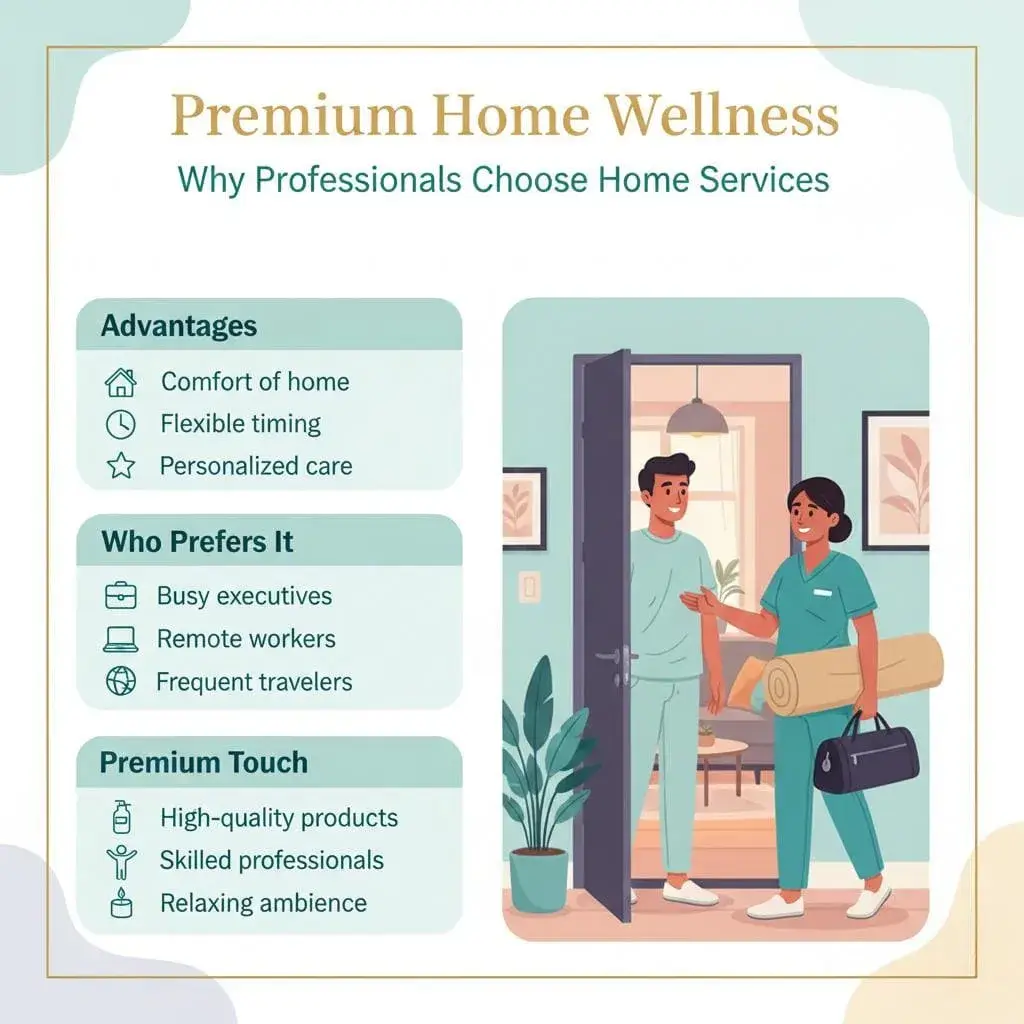
Premium Home Wellness: Why Professionals Choose Home Services
Why successful professionals choose home massage over traditional spas. Discover the productivity, privacy, and quality advantages of home wellness.
Sustainable Wellness: Building Habits That Last
How busy professionals build wellness routines that actually stick. Evidence-based strategies for making self-care sustainable rather than sporadic.
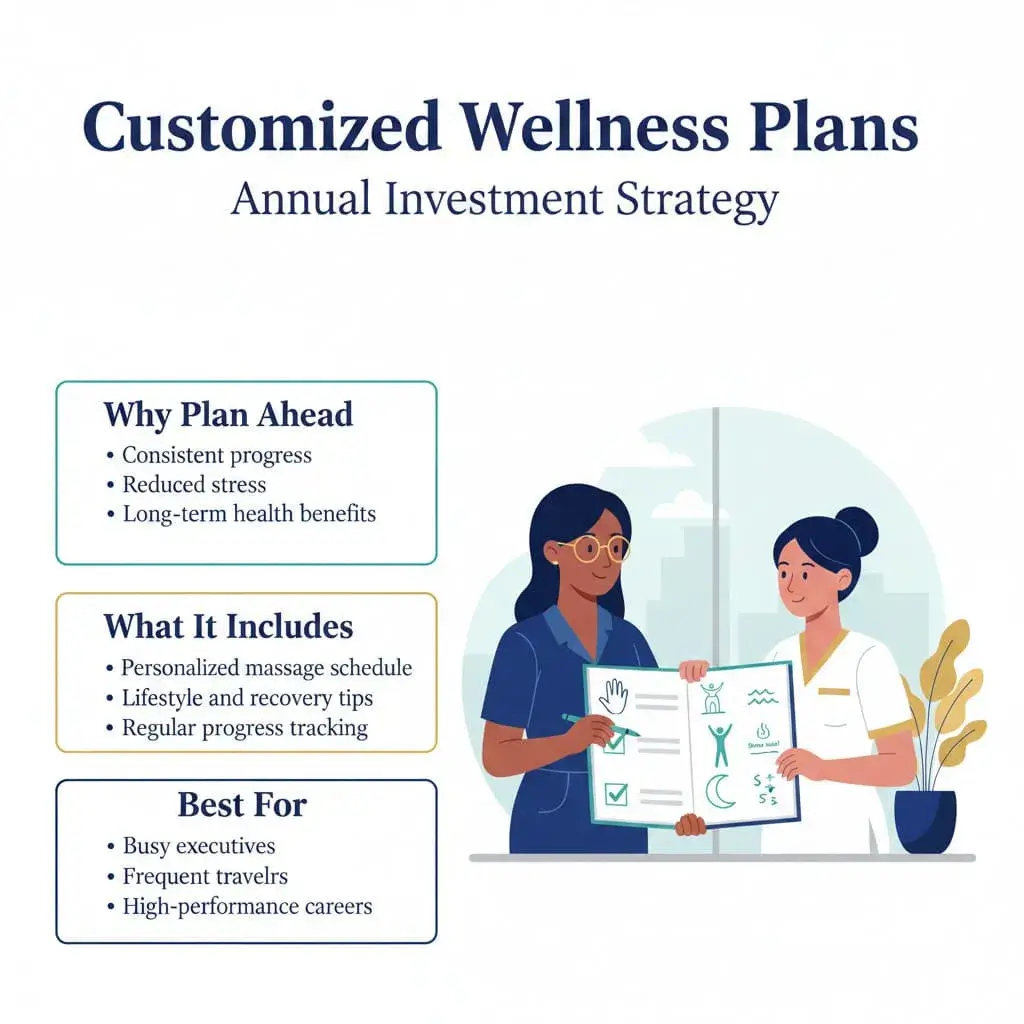
Customized Wellness Plans: Annual Investment Strategy
How professionals structure annual wellness investments for maximum return. Strategic massage frequency, timing, and customization for lasting results.
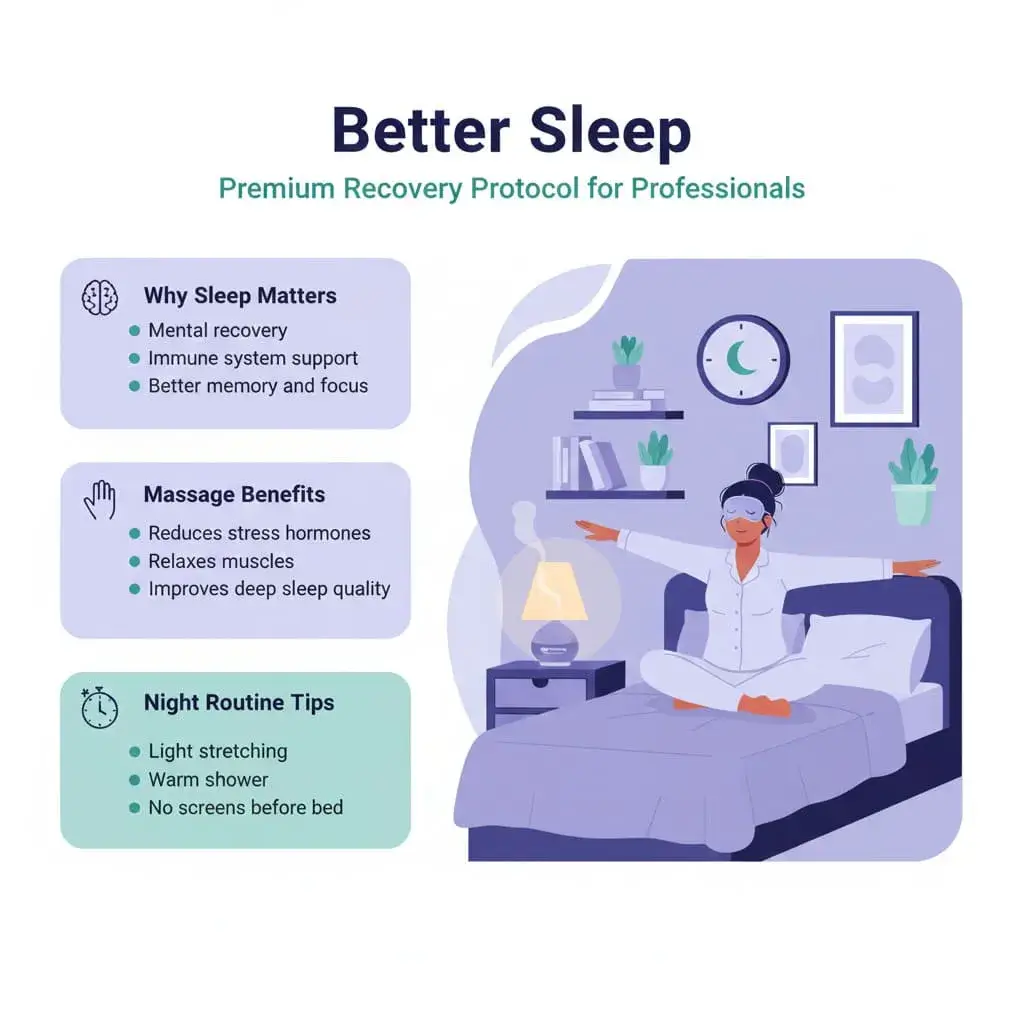
Better Sleep: Premium Recovery Protocol
How high-performers use strategic massage protocols to optimize sleep quality. Evidence-based sleep recovery approaches for cognitive performance.