
Better Sleep: Premium Recovery Protocol
Strategic sleep optimization for sustained professional performance
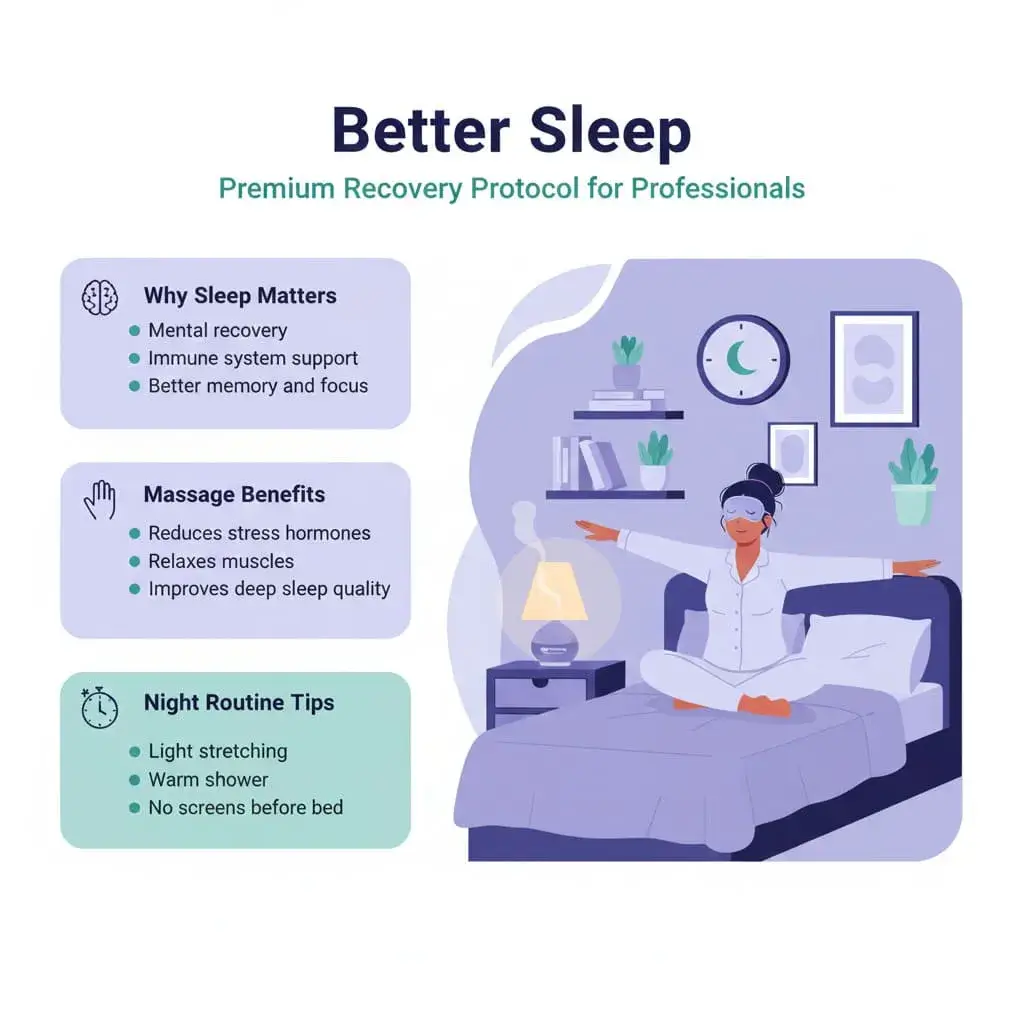
You can outwork most competitors for a week. Maybe two. But sustained performance over quarters and years requires something that effort alone cannot provide: quality sleep. The professional who sleeps six fragmented hours while their competitor sleeps seven restorative hours is operating at a measurable disadvantage—reduced decision accuracy, impaired creativity, slower processing speed, compromised emotional regulation. Sleep debt compounds invisibly until performance gaps become undeniable, affecting executive stress and overall professional recovery.
High performers increasingly recognize sleep as a strategic variable, not a biological inconvenience to minimize. Building sustainable wellness habits requires systematic approach to sleep. The question isn't whether to prioritize sleep—the research is conclusive on that. The question is how to optimize it given the constraints of demanding careers. Evening massage protocols represent one of the most effective interventions available: a systematic approach to sleep enhancement that works with your physiology rather than against it.
Sleep and Professional Performance: The Research
Before exploring solutions, understanding the stakes clarifies why sleep optimization matters. The cognitive impairment from poor sleep is well-documented—and more severe than most professionals realize:
Cognitive Performance Degradation
Research published in Sleep shows that after 17-19 hours awake, cognitive performance degrades to levels comparable to 0.05% blood alcohol—legal intoxication in many jurisdictions. After 24 hours, impairment matches 0.10% BAC. Most professionals don't stay awake this long continuously, but chronic sleep restriction produces cumulative deficits. Six hours nightly for two weeks creates impairment equivalent to 24 hours without sleep.
Critically, subjective awareness of impairment declines faster than actual performance. Sleep-deprived professionals believe they're functioning normally while making measurably worse decisions. This disconnect makes chronic sleep debt particularly dangerous—you don't recognize the degradation until consequences materialize.
Decision Quality Impact
Decision-making requires prefrontal cortex function—the brain region most vulnerable to sleep deprivation. Research from Harvard Medical School demonstrates that sleep-deprived individuals show reduced activity in the prefrontal cortex and increased reliance on the amygdala (emotional, reactive). The practical result: decisions become more impulsive, risk assessment degrades, and creative problem-solving diminishes.
For professionals whose careers depend on judgment quality—executives, investors, consultants, entrepreneurs—this cognitive impairment represents direct professional risk. Understanding executive wellness means recognizing this connection. The strategic decision made on six hours of fragmented sleep is measurably inferior to the same decision made after quality rest.
Creativity and Innovation Impact
Sleep—particularly REM sleep—plays a critical role in creative problem-solving. Research demonstrates that the brain during REM sleep connects disparate concepts and identifies patterns that waking cognition misses. The commonly reported experience of 'sleeping on a problem' and waking with solutions reflects genuine neurological processes.
Professionals who need innovative thinking—product development, strategy formulation, complex negotiations—sacrifice creative capacity when they sacrifice sleep. The insight that could differentiate your approach may require the neural consolidation that only quality sleep provides.
Emotional Regulation and Leadership
Sleep deprivation impairs emotional regulation significantly. Research shows increased amygdala reactivity (threat/stress response) and reduced prefrontal modulation (rational control). For leaders whose effectiveness depends on composure under pressure, this creates vulnerability precisely when stability matters most.
The executive who snaps at a team member, the negotiator who becomes defensive, the manager who overreacts to setbacks—these responses often reflect sleep debt more than character. Chronic poor sleep erodes the emotional reserves that professional effectiveness requires.
| Function | Optimal Sleep | Sleep Restricted |
|---|---|---|
| Decision accuracy | Full prefrontal function | 25-30% reduction |
| Creative problem-solving | Pattern recognition intact | Significantly impaired |
| Memory consolidation | 40% improvement overnight | Minimal consolidation |
| Emotional regulation | Composed under pressure | Reactive, irritable |
| Processing speed | Optimal response time | Measurably slower |
| Error rate | Baseline | 3x increase |
How Massage Enhances Sleep
Massage produces specific physiological changes that directly promote sleep quality. Understanding these mechanisms helps optimize protocol design:
Serotonin-Melatonin Pathway
Massage increases serotonin levels by approximately 28%. This matters for sleep because serotonin is the precursor to melatonin—your primary sleep hormone. When darkness signals evening, serotonin converts to melatonin, initiating sleep onset. More serotonin means more raw material for this conversion. Unlike supplemental melatonin (which provides external hormones), massage enhances your body's natural production capacity.
Cortisol Normalization
Healthy cortisol rhythm shows high levels in the morning (promoting alertness) declining to low levels at night (permitting sleep). Chronic stress disrupts this pattern, keeping cortisol elevated when it should drop. Research shows massage reduces cortisol by approximately 31%—a significant shift that restores the evening cortisol trough necessary for sleep onset.
For professionals operating under sustained stress—common in demanding careers—cortisol dysregulation is often the primary barrier to quality sleep. Massage addresses this directly, without the rebound effects of pharmaceutical interventions.
Parasympathetic Activation
Sleep requires parasympathetic nervous system dominance—your body needs to shift from alert mode to recovery mode. Massage activates the parasympathetic branch, lowering heart rate, reducing blood pressure, and signaling safety to the brain. This shift creates the physiological state that sleep requires.
Many professionals remain stuck in low-grade sympathetic activation—bodies primed for threat even in safe environments. Evening massage provides a systematic intervention to break this pattern, training the nervous system to access relaxation more readily.
Deep Sleep Enhancement
Research suggests massage increases delta wave activity—the slow brain waves associated with deep sleep stages. Deep sleep is where physical restoration peaks and memory consolidation occurs. The quality difference between surface sleep (light stages) and deep sleep explains why some people feel unrested despite adequate hours. Massage appears to shift the balance toward more restorative stages.
The Professional Sleep Protocol
Strategic sleep optimization requires systematic approach. Here's the protocol framework successful professionals use:
Weekly Maintenance Protocol
For sustained sleep quality, schedule one evening massage session per week. Optimal timing is 2-4 hours before intended sleep—allowing full relaxation response to develop while giving serotonin time to convert to melatonin. Sunday evening works well for many professionals, setting up quality sleep for the demanding week ahead.
- ✓60-90 minute evening session (2-4 hours before bed)
- ✓Swedish or aromatherapy massage (relaxation-focused)
- ✓Consistent weekly timing for circadian rhythm support
- ✓Home service for immediate rest transition
- ✓Dim lighting and calming environment during session
Pre-Event Optimization
Before high-stakes events—board presentations, major negotiations, critical decisions—sleep quality directly affects performance. Schedule massage 24-48 hours before, ensuring optimal sleep the night before the event. This timing allows the physiological benefits to peak when you need them.
- ✓Session 24-48 hours before critical event
- ✓Focus on relaxation and sleep preparation
- ✓Moderate pressure (avoid any post-massage fatigue)
- ✓Evening timing for optimal sleep enhancement
- ✓Protect sleep environment and avoid stimulation after
Travel Recovery Protocol
Business travel disrupts sleep through multiple mechanisms: jet lag, unfamiliar environments, schedule irregularities, flight-induced discomfort. Our comprehensive travel wellness guide covers this in detail. Post-travel massage helps reset circadian rhythms and accelerate return to normal sleep patterns.
- ✓Schedule massage within 24 hours of returning home
- ✓Evening timing (destination time zone) for circadian reset
- ✓Focus on travel-specific tension plus sleep preparation
- ✓Include scalp and face work for jet lag recovery
- ✓Longer session (90 minutes) to address cumulative travel effects
Intensive Recovery Protocol
During periods of severe sleep debt or chronic insomnia, increase frequency temporarily. Two sessions per week for 3-4 weeks can reset patterns that weekly maintenance alone cannot address. Reduce to weekly once sleep quality improves.
| Protocol | Frequency | Timing | Best For |
|---|---|---|---|
| Weekly maintenance | 1x/week | Sunday evening | Sustained sleep quality |
| Pre-event optimization | As needed | 24-48 hrs before event | High-stakes performance |
| Travel recovery | Post-trip | Within 24 hrs of landing | Jet lag, circadian reset |
| Intensive reset | 2x/week for 3-4 weeks | Evenings | Chronic sleep issues |
Massage Types for Sleep Optimization
Different massage modalities serve sleep goals differently. Selection depends on your current state and primary sleep challenges:
| Type | Sleep Mechanism | Best When |
|---|---|---|
| Swedish | Strong relaxation response, gentle | Default choice, general sleep improvement |
| Aromatherapy | Enhanced sedation via lavender/chamomile | Anxiety-related sleep issues, racing mind |
| Hot Stone | Deep warmth promotes drowsiness | Physical tension plus sleep issues |
| Craniosacral | Profound nervous system calming | Chronic insomnia, high stress |
| Deep Tissue | Releases chronic tension (daytime only) | Pain disrupting sleep—schedule earlier in day |
For evening sessions focused on sleep, Swedish and aromatherapy massage are typically most effective. Deep tissue work, while valuable, can be stimulating and should be scheduled during daytime hours if needed, with gentler techniques reserved for evening sleep protocols.
Aromatherapy Enhancement
Adding lavender essential oil to massage protocols amplifies sleep benefits. Research published in the Journal of Alternative and Complementary Medicine demonstrates lavender's sedative properties—reducing heart rate, blood pressure, and cortisol while promoting parasympathetic activity. The scent continues working after the massage ends, particularly if you use lavender products in your sleep environment.
The Home Service Advantage for Sleep
When sleep optimization is your goal, premium home wellness offers decisive advantages:
Immediate Rest Transition
After a spa massage, you re-enter stimulating environments: checkout, navigation, traffic, perhaps an Uber through Mumbai's evening rush or Bangalore's congested roads. By the time you're home, the deep relaxation has partially dissipated. Home massage eliminates this entirely—when the session ends, you're already in your private space. The relaxation compounds rather than evaporating.
Optimal Evening Timing
Spa hours often don't accommodate late evening sessions. Home massage services offer 8 PM, 9 PM, even 10 PM appointments—optimal timing for sleep protocols. Schedule massage to end 1-2 hours before bed, then transition directly to your pre-sleep routine in your already-relaxed state.
Environment Control
Your home can be pre-configured for sleep: bedroom prepared with fresh sheets, temperature adjusted, blackout curtains closed, phone silenced. After the massage, you transition immediately to this optimized environment rather than having to create it post-session.
Optimizing the Sleep Protocol
To maximize sleep benefits from your massage protocol:
Pre-Session Preparation
- ✓No caffeine for 6+ hours before evening sessions
- ✓Light dinner 2-3 hours before (not too full, not hungry)
- ✓Prepare sleep environment before the massage
- ✓Communicate sleep optimization goals to your therapist
- ✓Minimize screen time in the hour before your session
Post-Session Protocol
- ✓Avoid screens entirely—blue light disrupts melatonin production
- ✓Keep lighting dim throughout your space
- ✓Skip alcohol (seems sedating but impairs sleep architecture)
- ✓Light activity only: gentle stretching, reading, meditation
- ✓Go to bed when drowsy—don't push through the relaxation window
Long-Term Optimization
- ✓Maintain consistent weekly timing for circadian support
- ✓Track sleep quality to correlate with massage protocols
- ✓Adjust session timing based on your response patterns
- ✓Request the same therapist for protocol consistency
- ✓Communicate improvements and remaining issues to therapist
Addressing Specific Sleep Challenges
Difficulty Falling Asleep
Racing thoughts at bedtime indicate sustained sympathetic activation—your mind won't quiet because your nervous system remains on alert. This often accompanies executive stress and chronic tension headaches. Evening massage directly addresses this through parasympathetic activation and cortisol reduction. Aromatherapy with lavender adds additional sedative effect. Schedule sessions 2-3 hours before bed to optimize sleep onset.
Waking During the Night
Middle-of-night waking often reflects cortisol dysregulation (cortisol rising too early) or physical discomfort interrupting sleep. Regular massage protocols reset cortisol rhythms over time, while direct tissue work addresses pain that may cause micro-awakenings. Consistency matters here—weekly protocols for 4-6 weeks typically show meaningful improvement.
Waking Unrefreshed
Sleeping adequate hours but waking tired indicates poor sleep quality—insufficient time in deep sleep stages. Massage's delta wave enhancement may help shift sleep architecture toward more restorative stages. Evening aromatherapy sessions show particular benefit for this pattern. Track whether you feel more refreshed following massage nights.
Travel-Disrupted Sleep
For executives managing operations across Mumbai, Delhi, Bangalore, and international markets, travel-induced sleep disruption is common. Post-travel massage scheduled for evening (destination time zone) helps reset circadian rhythms. The combination of physical recovery and hormonal normalization accelerates return to normal sleep patterns.
The ROI of Sleep Optimization
Professionals evaluate investments by return. Our annual wellness investment guide provides detailed analysis. Here's how to frame sleep optimization investment:
Cognitive Performance Value
The professional operating at full cognitive capacity makes better decisions, produces higher-quality work, and identifies opportunities that fatigued thinking misses. If weekly massage investment improves sleep quality and thereby cognitive performance by even 5%, the return likely exceeds the cost significantly. For executives making consequential decisions, this margin matters.
Error Prevention Value
Sleep deprivation increases error rates approximately 3x. In professional contexts, errors have costs—missed deadlines, client issues, strategic mistakes, damaged relationships. Sleep optimization that prevents one significant error per quarter likely justifies the entire annual protocol investment.
Health and Longevity Value
Chronic poor sleep is linked to cardiovascular disease, cognitive decline, weakened immunity, and reduced longevity. The long-term health costs of sustained sleep debt vastly exceed the cost of sleep optimization protocols. This calculation matters for professionals with long career horizons.
Frequently Asked Questions
How quickly will massage improve my sleep?
What if I fall asleep during the massage?
Should I get massage if I only have 60 minutes available?
How does massage compare to sleep medications?
Can massage help with jet lag specifically?
Should I avoid exercise on massage days?
What should I tell my therapist about sleep goals?
How do I maintain sleep benefits between sessions?
Sleep as Strategic Advantage
The professionals who sustain peak performance over careers measured in decades share a common understanding: cognitive capacity depends on recovery quality, and recovery quality depends largely on sleep. Working harder on inadequate sleep produces diminishing returns. Working effectively on quality sleep produces compounding advantage. For couples, shared sleep optimization creates relationship benefits alongside individual performance gains.
Evening massage protocols represent one of the most effective interventions for sleep optimization—producing measurable physiological changes that directly promote sleep quality. Premium home wellness eliminates the friction that undermines sleep benefits: no post-session stimulation, no commute, immediate transition to rest.
The question isn't whether quality sleep matters—research settles that conclusively. The question is whether you'll treat sleep optimization as strategic priority or continue accepting suboptimal performance as normal. High performers increasingly choose the former, recognizing that competitive advantage compounds from consistent recovery excellence.
Related Articles
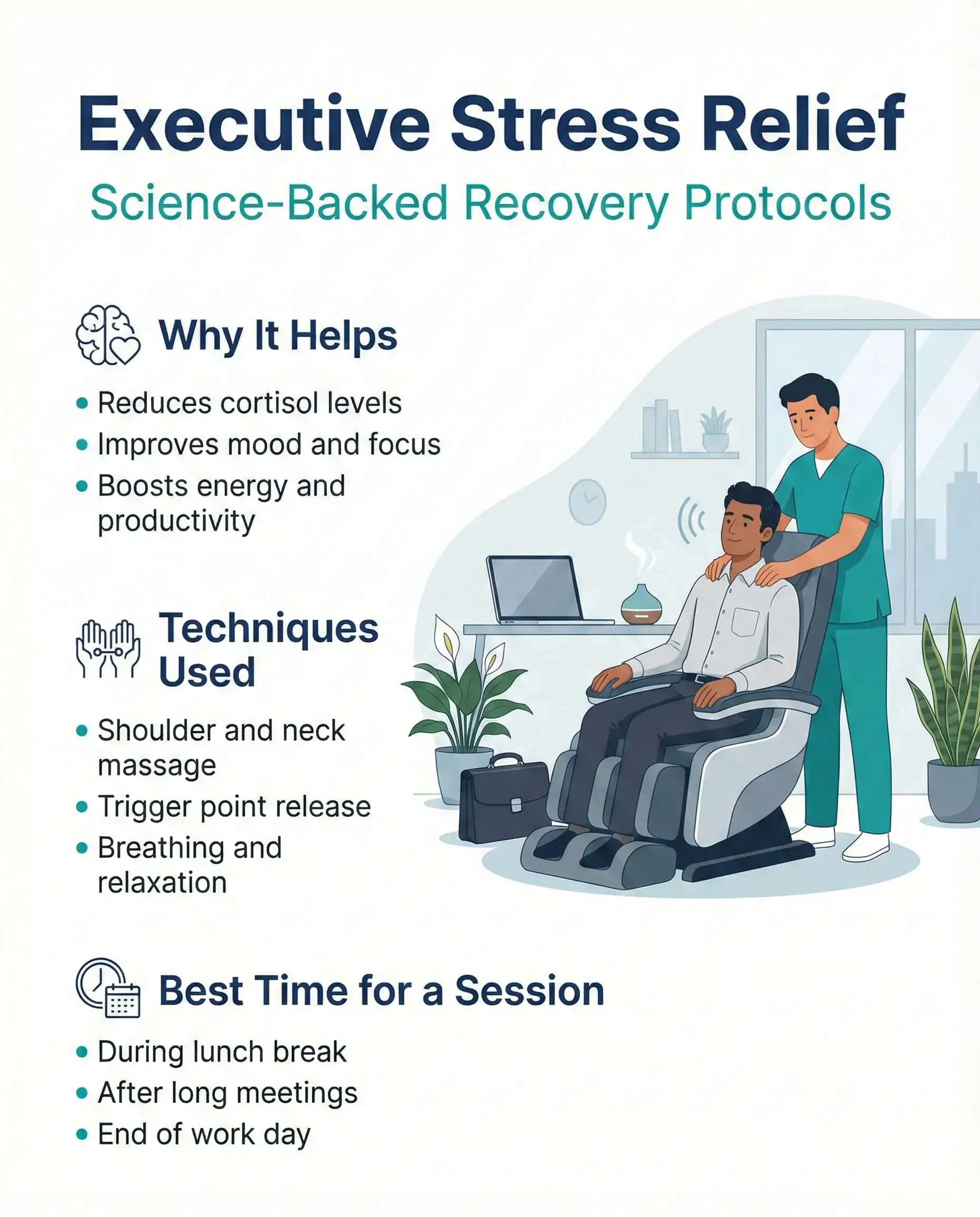
Executive Stress Relief: Science-Backed Recovery Protocols
How high-pressure decision-making creates unique stress patterns and the evidence-based recovery protocols that top performers use for demanding careers.
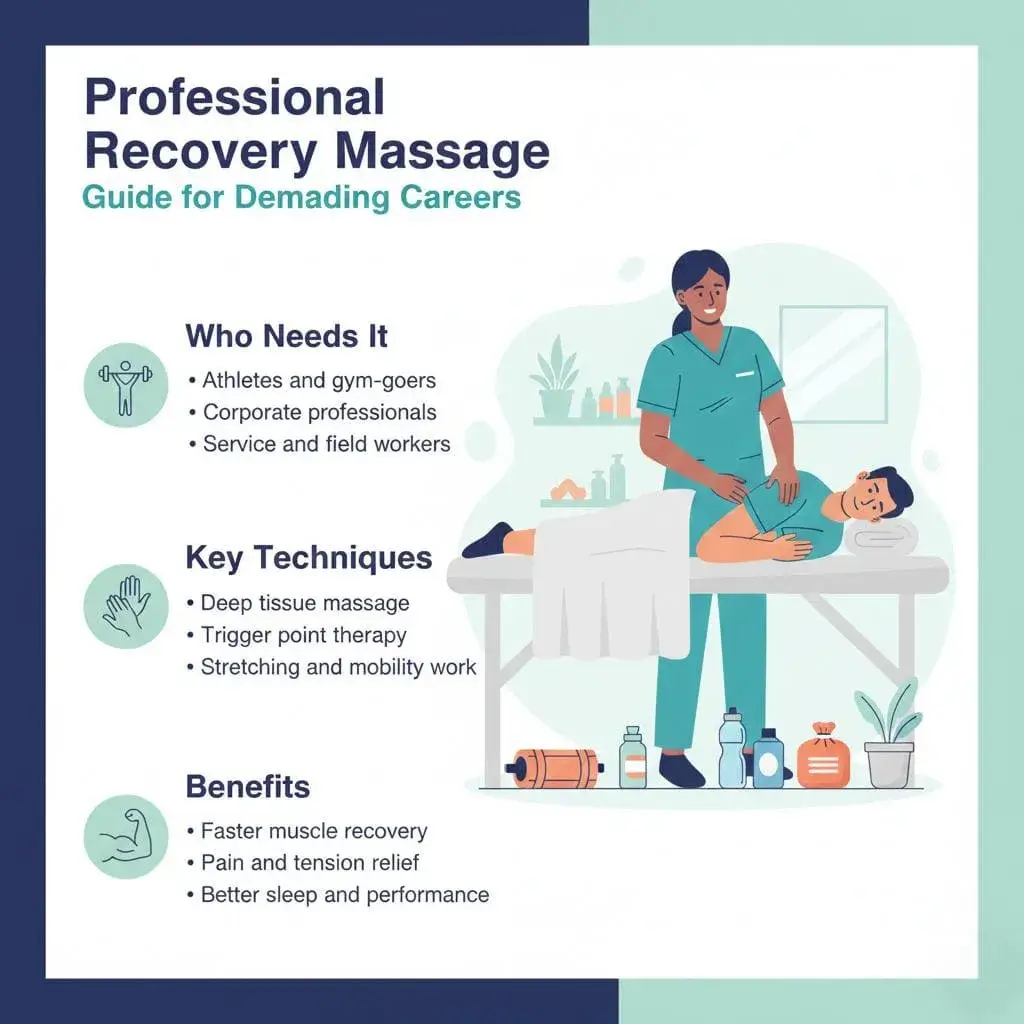
Professional Recovery Massage: Guide for Demanding Careers
How professionals in demanding careers use strategic recovery massage to maintain peak performance. Protocols for physical, cognitive, and travel recovery.
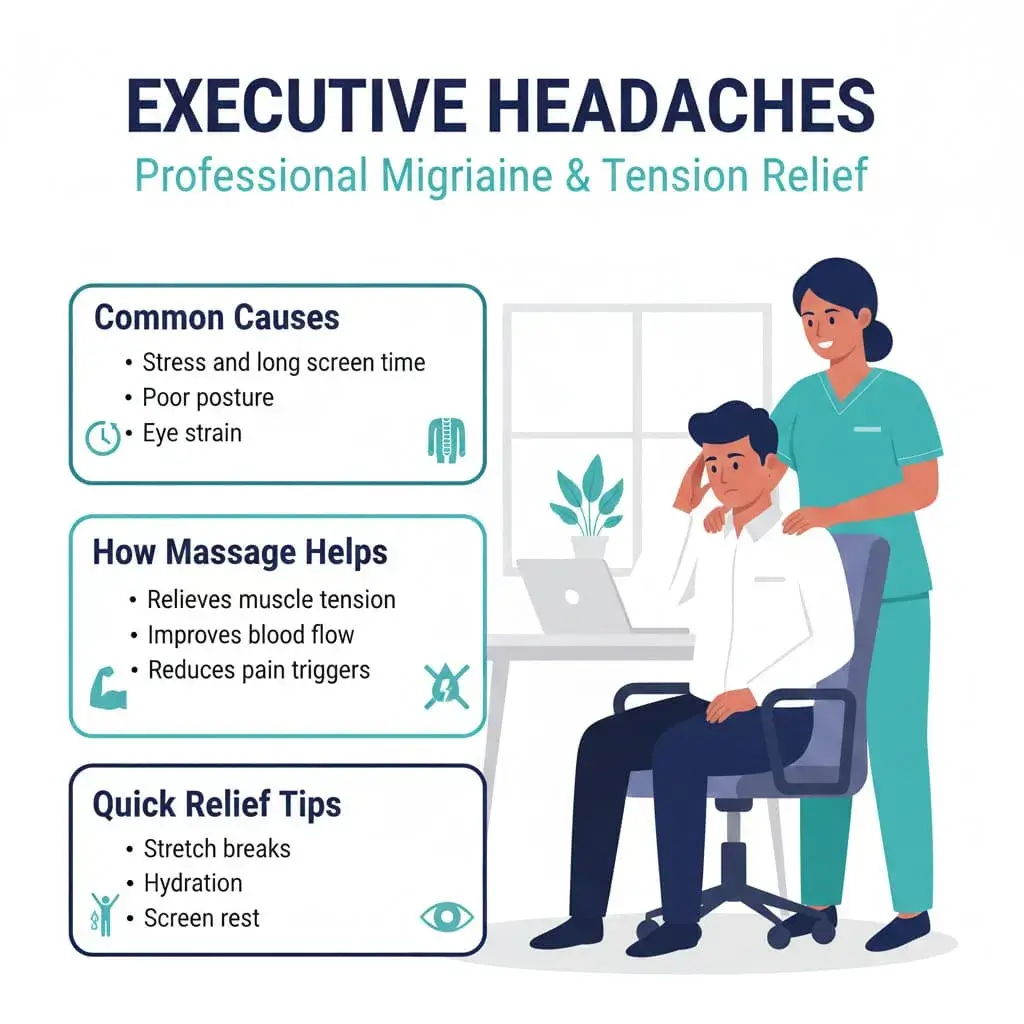
Executive Headaches: Professional Migraine & Tension Relief
How professionals use massage therapy to prevent and relieve tension headaches and migraines. Evidence-based headache management for demanding careers.
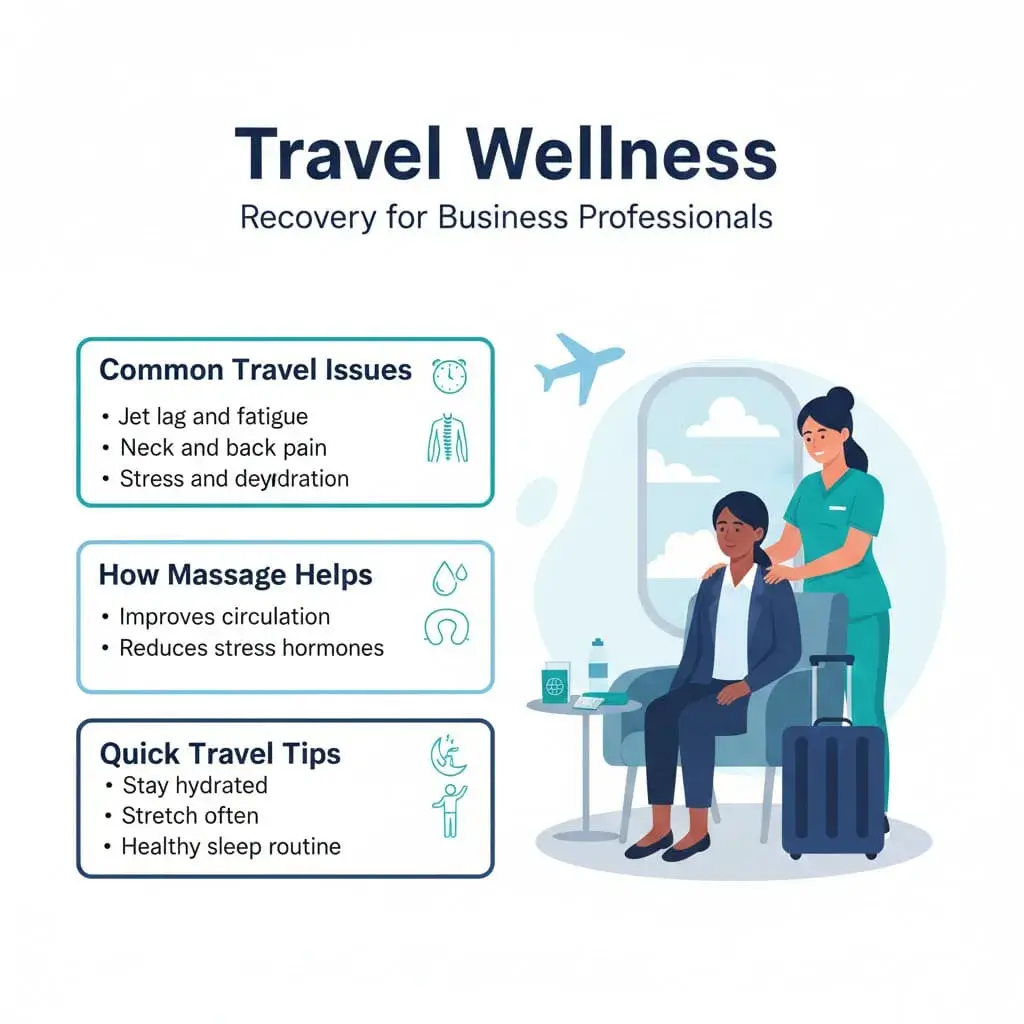
Travel Wellness: Recovery for Business Professionals
How frequent business travelers maintain performance through strategic recovery. Evidence-based approaches to travel fatigue, jet lag, and mobility.
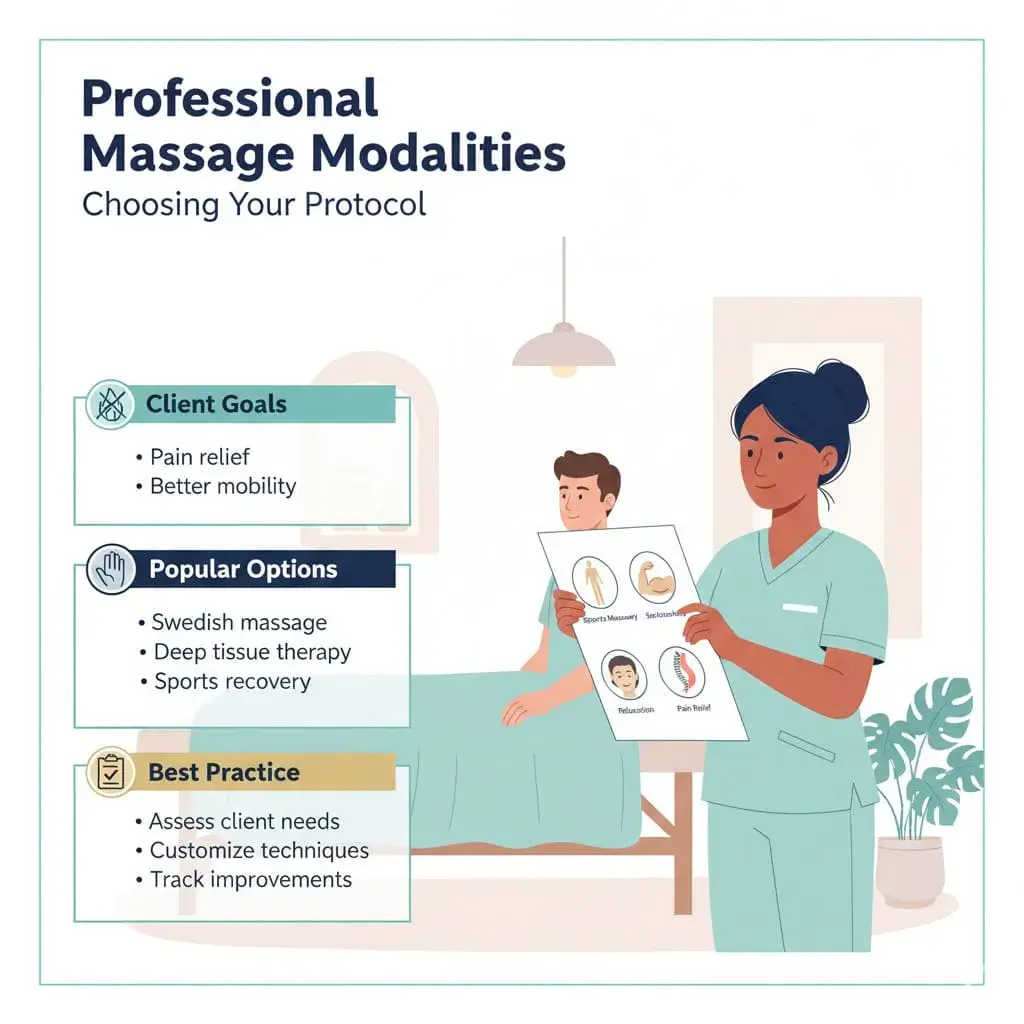
Professional Massage Modalities: Choosing Your Protocol
A decision framework for choosing the right massage type. Compare Swedish, deep tissue, sports, Thai, and other modalities to find your ideal match.