
Executive Headaches: Professional Migraine & Tension Relief
Strategic approaches to headache prevention and management
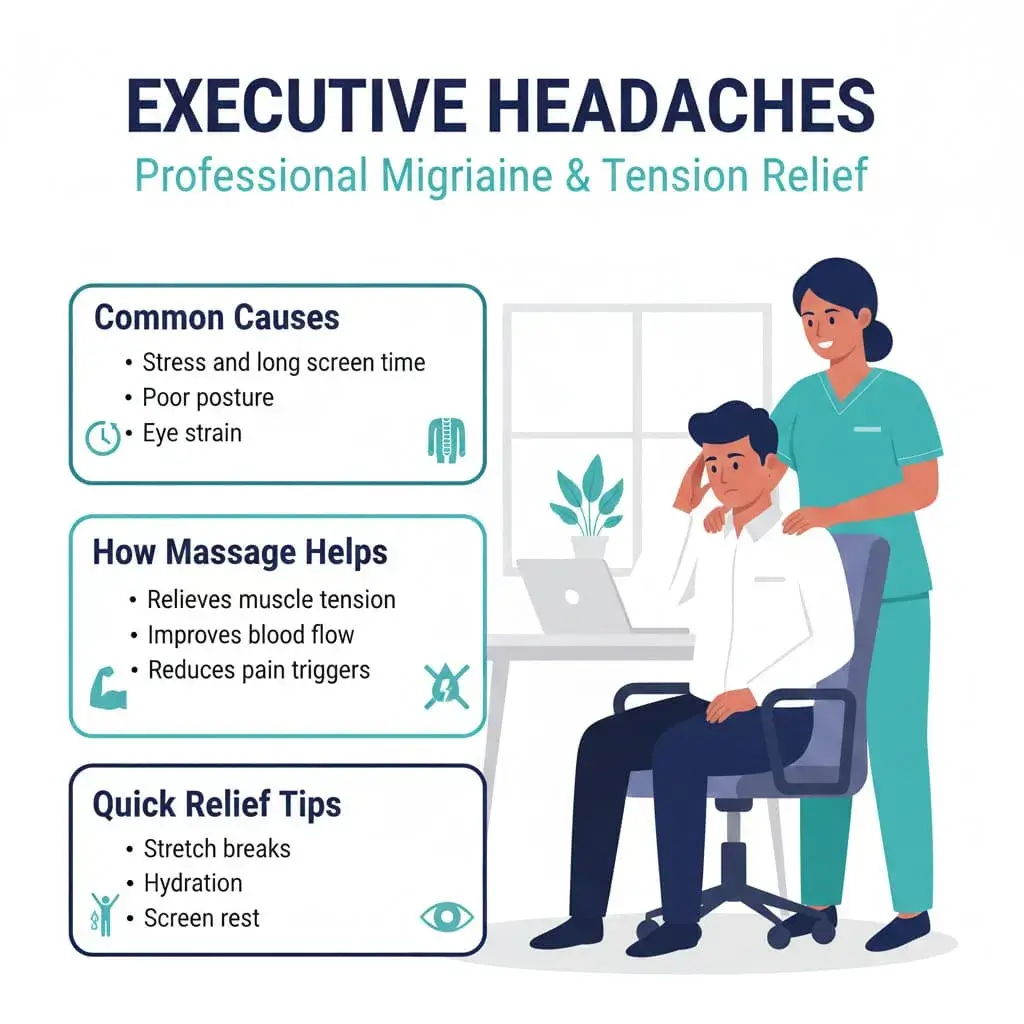
The headache announces itself mid-afternoon—that familiar pressure building behind your eyes or tightening across your skull. You have three more hours of meetings. A presentation to finalize. Decisions that require clear thinking. But your cognitive capacity is now divided between the work and managing the pain. You push through, knowing your output quality is compromised, hoping it resolves before tomorrow's demands.
For professionals in demanding careers, headaches aren't just personal discomfort—they're performance impairments with measurable costs. Tension headaches and migraines rank among the leading causes of productivity loss in professional settings, often interconnected with executive stress patterns. The professional who experiences chronic headaches operates at reduced capacity for hours or days at a time, with cumulative impact on output quality and career sustainability.
The Professional Cost of Chronic Headaches
Before exploring solutions, understanding the stakes clarifies why headache management matters strategically:
Productivity Impact
Research published in the Journal of Occupational and Environmental Medicine estimates that migraine alone costs employers significant productivity losses annually—not through absence, but through presenteeism: employees working while impaired. The professional attending meetings with a headache is physically present but cognitively diminished. Decision quality suffers. Creative capacity disappears. Errors increase.
Cognitive Function Degradation
Headache pain demands cognitive resources. Your brain cannot fully engage with complex problems while simultaneously processing pain signals. Research demonstrates measurable reductions in working memory, attention, and processing speed during headache episodes. The strategic decisions, creative solutions, and nuanced communications that professional roles require become significantly harder.
Cumulative Career Impact
Chronic headache sufferers often develop compensatory patterns: avoiding demanding projects during vulnerable periods, declining opportunities that might trigger episodes, building buffer time into schedules for potential impairment. Over years, these accommodations compound into constrained career trajectories. Managing headaches isn't about comfort—it's about removing limitations on professional capacity.
Understanding Professional Headache Types
Different headache types have different causes and respond to different interventions. Understanding your pattern helps target treatment effectively:
Tension-Type Headaches
The most common headache type among professionals, tension headaches present as bilateral pressure or tightness—often described as a band around the head. They're directly linked to muscle tension in the neck, shoulders, and scalp—patterns common among desk workers. Sustained screen work, poor posture, stress, and inadequate breaks all contribute. These headaches respond exceptionally well to massage therapy because the cause is primarily muscular.
- Bilateral pressure or tightness (both sides of head)
- Mild to moderate intensity (functional but impaired)
- No nausea or light sensitivity typically
- Worsens through the workday
- Associated with neck and shoulder tension
- Often triggered by screen work, stress, poor posture
Cervicogenic Headaches
These headaches originate from dysfunction in the cervical spine (neck) and refer pain to the head. Common among desk workers, they typically present as one-sided pain starting at the base of the skull and radiating forward. Neck movement often triggers or worsens symptoms. Cervicogenic headaches are highly responsive to massage and manual therapy targeting the neck structures.
- Usually one-sided, starting from neck/base of skull
- Triggered or worsened by neck movement
- Associated with reduced neck mobility
- Often accompanied by shoulder and arm discomfort
- Common in forward-head posture (screen work)
- Highly responsive to targeted neck work
Migraines
Migraines are neurological events with complex triggers, often including muscular tension as a contributing factor. They typically present as throbbing one-sided pain with sensitivity to light and sound, sometimes with nausea or visual disturbances (aura). While migraines have neurological components beyond muscle tension, massage therapy can reduce frequency and severity by addressing muscular triggers and reducing overall stress load.
- Often one-sided, throbbing or pulsating quality
- Moderate to severe intensity (often debilitating)
- Light and sound sensitivity common
- May include nausea, visual disturbances
- Multiple triggers including stress, sleep disruption, muscle tension
- Massage addresses trigger factors, may reduce frequency
| Type | Presentation | Primary Cause | Massage Effectiveness |
|---|---|---|---|
| Tension-type | Bilateral pressure, band-like | Muscle tension, stress, posture | Very high—directly addresses cause |
| Cervicogenic | One-sided, neck origin | Cervical dysfunction, posture | Very high—targets source |
| Migraine | Throbbing, light/sound sensitivity | Neurological + multiple triggers | Moderate—reduces triggers and frequency |
How Massage Relieves Headaches
Massage therapy addresses headaches through multiple mechanisms, making it particularly effective for the tension-dominant headaches common among professionals:
Direct Muscle Release
The primary mechanism for tension headaches is straightforward: tight muscles cause pain, and massage releases tight muscles. The suboccipital muscles at the skull base, the upper trapezius, the levator scapulae, the SCM (sternocleidomastoid), and the scalenes all refer pain to the head when chronically contracted. Skilled massage directly addresses these muscles, breaking the tension-pain cycle.
Trigger Point Deactivation
Trigger points—hyperirritable spots in muscle tissue—commonly refer pain to distant locations. Trigger points in the upper trapezius refer pain to the temple. Suboccipital trigger points refer pain behind the eye. SCM trigger points can cause frontal headache and even dizziness. Targeted trigger point therapy deactivates these referral patterns, often producing immediate headache relief.
Improved Circulation
Chronically contracted muscles restrict blood flow, creating local ischemia (oxygen deprivation) that contributes to pain. Massage increases circulation to treated areas, delivering oxygen and nutrients while clearing metabolic waste. This circulatory improvement supports tissue health and reduces the conditions that generate pain signals.
Nervous System Calming
Chronic headaches often involve sensitized pain pathways—the nervous system becomes hypervigilant, interpreting normal signals as painful. Massage activates the parasympathetic nervous system, reducing overall nervous system activation and potentially helping to reset pain sensitivity. This mechanism is particularly relevant for chronic sufferers whose pain has become partially centralized.
Stress Hormone Reduction
Stress is a primary trigger for both tension headaches and migraines. Research shows massage reduces cortisol by approximately 31% while increasing serotonin. This hormonal shift addresses executive stress as a headache trigger while also improving the sleep quality that affects headache susceptibility.
The Headache Prevention Protocol
Reactive treatment—addressing headaches after they start—provides relief but doesn't prevent recurrence. Strategic protocols focus on prevention: maintaining the muscular and stress conditions that keep headaches from developing.
Weekly Maintenance Protocol
For professionals with chronic or frequent headaches, weekly massage focused on the neck, shoulders, and upper back prevents tension accumulation that triggers episodes. This maintenance approach often reduces headache frequency by 50% or more after consistent implementation.
- ✓60-90 minute session focusing on neck, shoulders, upper back
- ✓Include suboccipital release and scalp massage
- ✓Consistent weekly timing for cumulative benefit
- ✓Communication about current tension patterns
- ✓Adjustment based on headache frequency response
Acute Relief Protocol
When headaches develop despite prevention efforts, targeted massage can provide relief faster and more sustainably than medication for tension-type headaches. Schedule acute sessions as soon as headache symptoms begin rather than waiting for full development.
- ✓Schedule at first sign of headache development
- ✓Focus specifically on neck and suboccipital region
- ✓Include temple, jaw, and scalp work
- ✓Gentler pressure than maintenance sessions (inflamed tissues)
- ✓45-60 minutes often sufficient for acute relief
High-Risk Period Protocol
Certain periods predictably increase headache risk: intense project deadlines, extensive travel, high-stress negotiations, quarter-end pressures. Increase massage frequency during these periods—twice weekly if needed—to prevent stress and tension from accumulating to headache-triggering levels.
| Protocol | Frequency | Focus | Goal |
|---|---|---|---|
| Weekly maintenance | 1x/week | Neck, shoulders, upper back | Prevent tension accumulation |
| Acute relief | As needed | Neck, suboccipitals, scalp | Resolve active headache |
| High-risk periods | 2x/week | Full upper body + stress reduction | Prevent trigger accumulation |
| Migraine prevention | Weekly + trigger management | Full relaxation + specific triggers | Reduce frequency and severity |
Key Areas for Headache Relief
Effective headache massage targets specific muscle groups that commonly contribute to head pain:
Suboccipital Muscles
The small muscles at the base of your skull are primary contributors to headaches. They control fine head movements and are chronically activated during screen work as they stabilize your head in forward positions. Suboccipital release often produces immediate headache relief and is a cornerstone of headache-focused massage.
Upper Trapezius
The upper trapezius—the muscle between your neck and shoulder—is perhaps the most common site of professional tension. Trigger points here refer pain directly to the temple. Chronic upper trap tension from desk work, stress, and poor posture contributes significantly to tension headache patterns.
SCM (Sternocleidomastoid)
The SCM runs along the front/side of your neck. Trigger points in this muscle can cause frontal headache, pain behind the eye, and even dizziness. It's often overlooked because people don't associate front-of-neck tension with headaches, but SCM release can be remarkably effective.
Temporalis and Masseter
The jaw muscles—temporalis at the temple and masseter at the jaw angle—contribute to headaches, especially in those who clench or grind teeth (common stress responses). Jaw tension often accompanies professional stress without conscious awareness. Temple and jaw massage addresses this frequently overlooked contributor.
Scalp Muscles
The scalp contains muscles that can contribute to tension headache patterns. Scalp massage—often neglected in standard massage sessions—provides direct relief and is particularly effective for headaches that feel like pressure across the top of the head.
Massage Types for Headache Management
| Type | Mechanism | Best For |
|---|---|---|
| Deep Tissue | Releases chronic tension, deactivates trigger points | Established tension patterns, chronic headaches |
| Trigger Point Therapy | Specifically targets referral patterns | Headaches with identified trigger points |
| Swedish | General relaxation, circulation improvement | Stress-related headaches, prevention |
| Craniosacral | Subtle nervous system work | Chronic migraines, sensitized pain pathways |
| Myofascial Release | Addresses fascial restrictions | Movement-related headaches, neck restrictions |
For most professional headache sufferers, a combination approach works best: deeper trigger point work on specific problem areas combined with broader relaxation massage for stress reduction. Communicate your headache patterns to your therapist so they can customize the approach.
The Home Service Advantage for Headaches
When managing headaches, premium home wellness offers particular benefits:
Accessibility During Episodes
When a headache is developing, the last thing you want is to drive across the city to a spa. Home massage makes acute treatment accessible—the therapist comes to you when you need relief, without the stimulation and effort of travel that might worsen symptoms.
Controlled Environment
Headache sufferers—especially migraine sufferers—often have environmental sensitivities. At home, you control lighting, sound, and temperature. You can ensure a dim, quiet environment that supports relief rather than aggravates symptoms.
Immediate Rest Afterward
Post-massage rest optimizes headache relief. At home, you can transition immediately to a dark, quiet room after treatment. No checkout process, no driving, no re-exposure to stimulation. The relief compounds rather than dissipating during the trip home.
Complementary Approaches
Massage works best as part of a comprehensive headache management strategy:
Workstation Ergonomics
Poor workstation setup creates the muscular patterns that trigger headaches. Screen at eye level, keyboard and mouse positioned to avoid shoulder elevation, chair supporting neutral spine—these fundamentals reduce the daily tension accumulation that massage then addresses.
Movement Breaks
Sustained postures create sustained tension. Brief movement breaks every 30-60 minutes—even just standing, rolling shoulders, and moving the neck through its range—prevent the static loading that contributes to headaches. These micro-interventions between massage sessions maintain the benefits longer.
Hydration
Dehydration is a common headache trigger that many professionals overlook. Coffee doesn't count—it's a mild diuretic. Adequate water intake supports tissue health and can reduce headache frequency independent of other interventions.
Sleep Quality
Poor sleep both triggers headaches and results from them, creating a vicious cycle. Evening massage protocols that improve sleep quality simultaneously reduce headache susceptibility. Building sustainable wellness habits addresses both sleep and headache patterns.
Frequently Asked Questions
Can massage help during an active migraine?
How quickly can massage relieve a tension headache?
Should I take medication before or after massage?
How often should I get massage for chronic headaches?
What should I tell my massage therapist about my headaches?
Can massage make headaches worse initially?
Is there research supporting massage for headaches?
What's the difference between massage and chiropractic for headaches?
Managing Headaches as a Strategic Priority
Chronic headaches are not an inevitable cost of demanding careers. They're a manageable condition that responds well to strategic intervention. The professional who implements systematic headache prevention reclaims hours of productive capacity weekly—hours currently lost to pain, impaired cognition, and recovery from episodes.
Massage therapy addresses the muscular and stress factors that drive most professional headaches. Regular maintenance prevents tension accumulation. Acute treatment provides faster relief than medication for tension-type headaches. Premium home service makes treatment accessible when and where you need it, without the stimulation of travel that can worsen symptoms. For those whose headaches relate to professional recovery needs, systematic massage protocols deliver sustained improvement.
The question is whether you'll continue accepting headaches as normal or treat them as the performance limitation they are. Professionals who choose strategic management often wonder why they tolerated the impairment for so long. The capacity was always there—it just needed the conditions that allow it to function fully.
Related Articles
Executive Stress Relief: Science-Backed Recovery Protocols
How high-pressure decision-making creates unique stress patterns and the evidence-based recovery protocols that top performers use for demanding careers.
Desk Worker Recovery: Posture & Muscle Tension Relief
How knowledge workers address the physical toll of desk-based careers. Massage protocols for posture correction, tension relief, and productivity.
Better Sleep: Premium Recovery Protocol
How high-performers use strategic massage protocols to optimize sleep quality. Evidence-based sleep recovery approaches for cognitive performance.
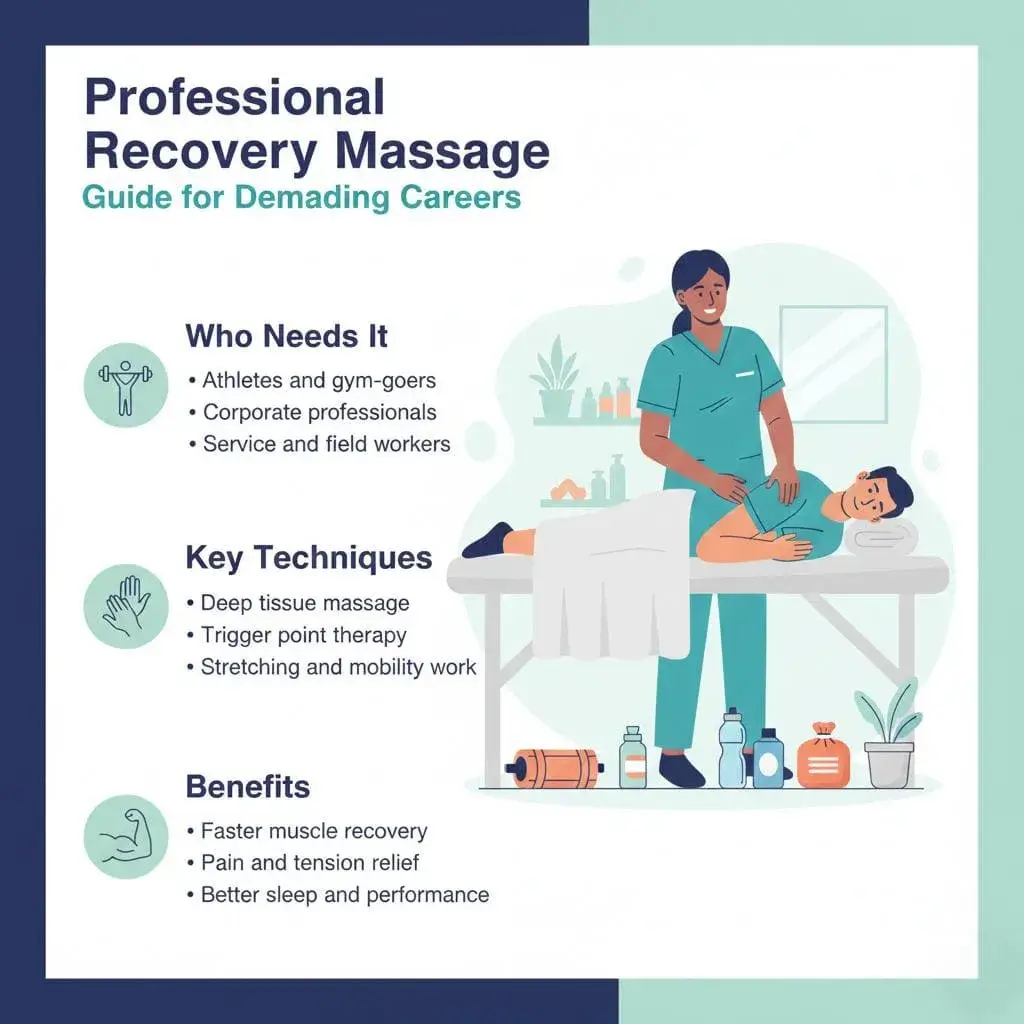
Professional Recovery Massage: Guide for Demanding Careers
How professionals in demanding careers use strategic recovery massage to maintain peak performance. Protocols for physical, cognitive, and travel recovery.

Sustainable Wellness: Building Habits That Last
How busy professionals build wellness routines that actually stick. Evidence-based strategies for making self-care sustainable rather than sporadic.