
Professional Recovery Massage: Guide for Demanding Careers
Strategic recovery protocols for sustained high performance
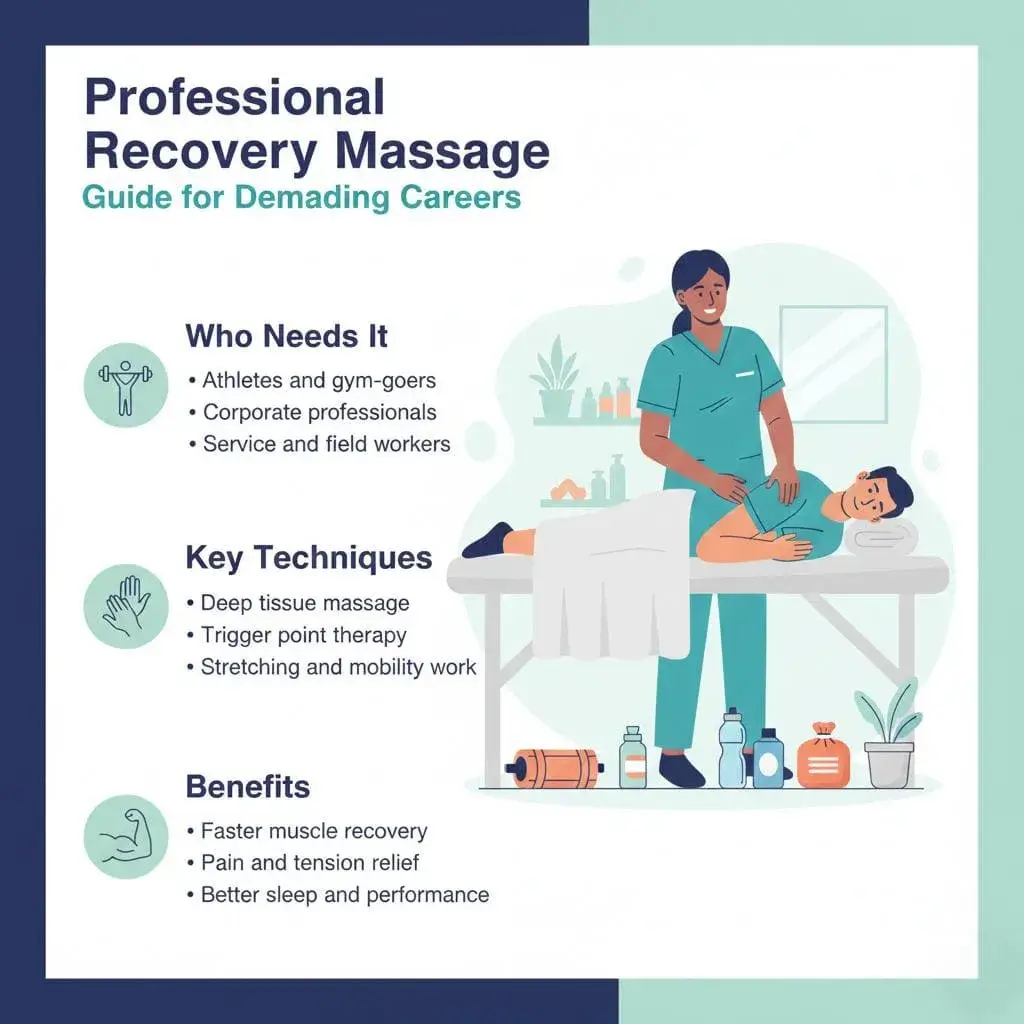
Your career demands sustained performance across years—not just occasional bursts of productivity followed by collapse. Yet most professionals approach recovery reactively: addressing problems after they manifest rather than preventing them systematically. The executive who takes a vacation only after burning out from stress, the consultant who finally gets a massage when their back seizes up, the entrepreneur who rests only when illness forces it. This reactive pattern is inefficient and unsustainable.
High performers in demanding careers increasingly understand that recovery isn't optional—it's a strategic input that determines output capacity. Building sustainable wellness habits requires the same systematic approach elite athletes apply to training. Recovery massage sits at the center of this approach: an intervention that addresses physical fatigue, promotes cognitive restoration, and accelerates adaptation to demanding schedules.
The Three Dimensions of Professional Fatigue
Demanding careers create fatigue across multiple interconnected dimensions. Understanding these categories helps target recovery interventions effectively:
Physical Fatigue
Even 'desk jobs' create significant physical strain. Hours of sitting compress spinal discs and shorten hip flexors—classic desk worker issues. Sustained screen work tightens neck and shoulder muscles, often leading to chronic headaches. Travel—flights, hotels, unfamiliar beds—disrupts sleep and accumulates musculoskeletal stress. Active professionals who exercise add training load atop occupational demands. This physical fatigue manifests as chronic tension patterns, reduced range of motion, and nagging discomforts that erode both performance and quality of life.
Cognitive Fatigue
Complex decisions, sustained attention, creative problem-solving—these drain cognitive resources that require recovery to replenish. Unlike muscles that signal fatigue clearly, cognitive depletion often goes unnoticed until performance degrades. The professional who 'pushes through' mental tiredness is operating at diminished capacity, making poorer decisions and missing insights that a rested mind would catch.
Emotional Fatigue
Managing stakeholders, navigating organizational politics, absorbing client demands, maintaining composure under pressure—these create emotional labor that depletes resilience. Chronic emotional fatigue reduces patience, increases reactivity, and impairs the interpersonal effectiveness that most professional roles require. It's often the least recognized dimension of professional fatigue, yet may have the most significant career impact.
| Dimension | Sources | Symptoms | Recovery Approach |
|---|---|---|---|
| Physical | Sitting, screen work, travel, exercise | Tension, pain, reduced mobility, poor sleep | Direct tissue work, circulation, flexibility |
| Cognitive | Decisions, attention, problem-solving | Mental fog, poor judgment, reduced creativity | Parasympathetic activation, sleep improvement |
| Emotional | Stakeholder management, pressure, politics | Reactivity, reduced patience, detachment | Stress hormone reduction, nervous system reset |
Recovery massage uniquely addresses all three dimensions simultaneously. The physical intervention—hands-on tissue work—directly addresses musculoskeletal fatigue. The physiological effects—cortisol reduction, parasympathetic activation—restore cognitive and emotional capacity. This multi-dimensional impact makes massage particularly valuable for comprehensive professional recovery.
How Recovery Massage Works
Understanding the mechanisms behind recovery massage helps professionals appreciate why it works and how to optimize its benefits:
Circulatory Enhancement
Massage increases blood flow to treated tissues—research shows up to 50% improvement in local circulation. This enhanced circulation delivers oxygen and nutrients needed for tissue repair while accelerating clearance of metabolic waste. For professionals dealing with accumulated physical strain, this circulatory boost supports recovery that passive rest alone cannot achieve.
Neuromuscular Release
Chronic tension creates a feedback loop: contracted muscles signal stress to the nervous system, which maintains the contraction. Massage breaks this cycle through direct mechanical pressure and neurological mechanisms. Golgi tendon organs—sensors in muscle-tendon junctions—respond to sustained pressure by signaling muscles to release. This explains why well-applied pressure produces immediate relaxation that stretching often cannot.
Hormonal Modulation
Research published in the International Journal of Neuroscience demonstrates that massage reduces cortisol by approximately 31% while increasing serotonin (28%) and dopamine (31%). This hormonal shift moves the body from chronic stress physiology toward recovery physiology. The effects begin during the session and persist afterward, with cumulative benefits from regular sessions.
Nervous System Reset
The autonomic nervous system has two branches: sympathetic (stress response) and parasympathetic (recovery response). Demanding careers maintain sympathetic dominance—the body remains primed for threat even when physical danger is absent. Massage activates the parasympathetic branch, triggering the 'relaxation response' that supports tissue repair, immune function, and cognitive restoration.
Sleep Architecture Improvement
Recovery occurs primarily during sleep—particularly deep sleep stages when growth hormone release peaks and tissue repair accelerates. Our sleep protocol guide covers this in detail. Massage improves sleep quality through multiple mechanisms: reduced cortisol, increased serotonin (precursor to melatonin), released muscle tension, and nervous system calming. The sleep improvements from evening massage often produce recovery benefits that exceed the direct effects of the massage itself.
Recovery Protocols for Different Demands
Different professional demands require tailored recovery approaches. Here's how to match massage protocols to specific challenges:
Desk-Intensive Work
Professionals in IT, finance, consulting, and similar roles spend hours in seated positions. This creates characteristic strain patterns covered in our desk worker recovery guide: forward head posture, rounded shoulders, compressed lower back, tight hip flexors. Recovery massage for desk workers should prioritize:
- ✓Neck and upper trapezius release (counters forward head posture)
- ✓Shoulder and chest work (addresses rounded shoulder pattern)
- ✓Lower back decompression (relieves seated compression)
- ✓Hip flexor lengthening (reverses chronic shortening)
- ✓Forearm and hand work (addresses mouse/keyboard strain)
For IT professionals in Bangalore, Pune, or Chennai managing 10-12 hour coding sessions, weekly massage targeting these patterns prevents the chronic issues that derail careers. The investment in prevention vastly outweighs the cost of treating established problems.
Travel-Heavy Schedules
Frequent business travel—common for executives, consultants, and sales professionals—creates unique recovery challenges covered in our travel wellness guide. Flight seats compress muscles and restrict circulation. Time zone changes disrupt circadian rhythms. Hotel beds vary in quality. The cumulative effect is accelerated physical and cognitive fatigue.
- ✓Post-flight massage within 24 hours of landing
- ✓Focus on circulation restoration (counteract flight immobility)
- ✓Address travel-specific tension (neck from cramped seats, back from luggage)
- ✓Evening timing to support circadian reset
- ✓Include scalp and face work for jet lag recovery
For executives traveling between Mumbai, Delhi, and international destinations, establishing post-travel massage protocols transforms recovery from chance to certainty. The return flight lands; the massage is already scheduled.
High-Stakes Performance
Professionals facing board presentations, major negotiations, product launches, or critical client meetings need peak cognitive performance at specific times. Strategic recovery massage can optimize readiness:
- ✓Recovery session 24-48 hours before major events
- ✓Focus on stress reduction and sleep improvement
- ✓Moderate pressure (avoid post-massage fatigue)
- ✓Evening timing for optimal sleep before the event
- ✓Post-event session within 48 hours to reset
Active Professionals
Many professionals maintain fitness routines alongside demanding careers—gym sessions, running, cycling, sports leagues. Our post-workout recovery guide addresses this specifically. Training adds physical stress to occupational stress; recovery must address both.
- ✓Post-training massage (same day or next day)
- ✓Target trained muscle groups plus occupational tension areas
- ✓Adjust intensity based on training load
- ✓Schedule around training periodization
- ✓Include mobility work for performance optimization
| Demand Type | Primary Focus | Optimal Timing | Frequency |
|---|---|---|---|
| Desk-intensive | Postural correction, tension release | End of week, evening | Weekly |
| Travel-heavy | Circulation, circadian support | Within 24 hours of landing | After each trip + weekly maintenance |
| High-stakes events | Cognitive optimization, stress reduction | 24-48 hours before + 48 hours after | Event-aligned |
| Active professionals | Training recovery + occupational recovery | Post-training days | Weekly minimum, 2x during heavy training |
Building a Sustainable Recovery Practice
Occasional massage provides temporary relief. Consistent recovery practice produces compounding benefits—your baseline improves over time rather than just returning to a compromised state.
Frequency Guidelines
For professionals in demanding careers, weekly massage delivers optimal results. This frequency maintains benefits between sessions, prevents tension accumulation, and supports consistent performance. Bi-weekly is the minimum for meaningful sustained improvement. Monthly sessions provide maintenance but may not fully address ongoing demands.
| Demand Level | Recommended Frequency | Expected Outcome |
|---|---|---|
| Very high (80+ hour weeks, constant travel) | 2x weekly | Prevent breakdown, maintain function |
| High (60+ hours, regular travel) | Weekly | Optimal recovery, improving baseline |
| Moderate (50+ hours, occasional travel) | Bi-weekly | Sustained maintenance, problem prevention |
| Standard professional | Bi-weekly to monthly | General maintenance, stress management |
Session Duration
For comprehensive professional recovery, 90-minute sessions provide the most value. This duration allows therapists to address multiple tension patterns thoroughly rather than superficially. For maintenance between intensive sessions, 60 minutes works well. Sessions shorter than 60 minutes typically require prioritizing specific areas rather than comprehensive treatment.
Timing Optimization
When you schedule massage affects its benefits:
- Evening sessions (after work): Capitalize on relaxation for sleep improvement
- Weekend sessions: Allow extended recovery time before returning to demands
- Sunday evening: Reset before the week begins
- Post-travel (within 24 hours): Address travel-specific recovery needs
- Pre-major events (24-48 hours): Optimize cognitive readiness
The Home Service Advantage
For busy professionals, where recovery happens matters as much as when. Premium home wellness offers distinct advantages:
Time Efficiency
A spa visit requires travel time, potentially waiting, and return travel. For a 60-minute massage, you might invest 2+ hours. Home massage eliminates transit entirely. The 60 minutes on your calendar is actually 60 minutes of recovery. For time-pressed professionals, this efficiency is decisive.
Schedule Flexibility
Professional schedules don't conform to spa operating hours. Home massage services offer early morning, late evening, and weekend availability. Schedule recovery for 6:30 AM before work, 9:30 PM after evening obligations, or any time that fits your demands. The service adapts to you.
Immediate Rest Transition
After a spa massage, you re-enter stimulating environments—checkout, driving, public spaces. Benefits begin dissipating immediately. At home, when the session ends, you're already in your private space. Continue resting, have a quiet dinner, sleep. The recovery compounds rather than evaporating during the commute home.
Privacy
Professional reputation sometimes requires discretion. At a spa, you might encounter colleagues, clients, or industry contacts. At home, your recovery practice remains private. This matters for professionals in competitive environments or visible positions.
Massage Types for Professional Recovery
Different massage modalities serve different recovery needs. Selection depends on your current state and priorities:
| Type | Best For | When to Choose |
|---|---|---|
| Swedish | General recovery, stress reduction | Weekly maintenance, high cognitive fatigue |
| Deep Tissue | Chronic tension, accumulated strain | Specific problem areas, not when exhausted |
| Sports Massage | Active professionals, training recovery | Post-workout, athletic performance focus |
| Aromatherapy | Sleep improvement, mood support | Sleep issues, emotional fatigue |
| Hot Stone | Deep relaxation, muscle warmth | Particularly tense periods, cooler weather |
Many professionals rotate based on current needs. Communicate your state to your therapist—they'll adjust technique accordingly. The goal is appropriate treatment for your current recovery needs, not rigid adherence to a single approach.
The ROI of Professional Recovery
Professionals evaluate investments by return. Our annual wellness investment guide provides detailed analysis. Here's how to frame recovery investment:
Performance Maintenance
Cognitive performance degrades predictably with accumulated fatigue. Decision quality suffers, creativity diminishes, errors increase. The professional operating at 80% capacity due to chronic fatigue delivers 80% of potential value. Recovery investment that restores full capacity produces returns that dwarf its cost.
Career Longevity
Burnout ends careers. Health crises interrupt them. Chronic issues (back problems, repetitive strain injuries, stress-related conditions) limit options. The professionals who sustain peak performance over decades are those who treat recovery as essential rather than optional. The investment horizon is career-length, not quarterly.
Problem Prevention
Addressing tension patterns before they become injuries, managing stress before it becomes burnout, maintaining mobility before it restricts function—prevention is vastly more cost-effective than treatment. Weekly massage that prevents a back injury requiring surgery represents extraordinary ROI.
Frequently Asked Questions
How is professional recovery massage different from regular massage?
How quickly will I notice benefits?
Should I get massage even when I feel fine?
Can massage replace exercise for recovery?
What should I tell my massage therapist about my work?
Is it worth paying premium prices for home massage?
How do I maintain consistency with a demanding schedule?
Should I get massage before or after important events?
Recovery as Professional Strategy
The professionals who sustain excellence over careers measured in decades share a common understanding: output capacity depends on recovery investment. Managing executive stress through systematic approaches leads to compounding benefits. Working harder without recovering adequately leads to diminishing returns, then declining returns, then breakdown. Strategic recovery isn't a luxury—it's a performance multiplier.
Recovery massage addresses the full spectrum of professional fatigue—physical, cognitive, and emotional—through a single intervention. It fits the time constraints of demanding schedules, particularly through home service that eliminates friction. It compounds over time, with consistent practice producing improving baselines rather than just returning to compromised states.
The question isn't whether you can afford recovery investment. It's whether you can afford to operate indefinitely without it—and what that costs in performance, health, and career longevity. High performers increasingly answer this question by making recovery systematic rather than reactive. Couples who prioritize shared recovery practices see multiplied benefits.
Related Articles
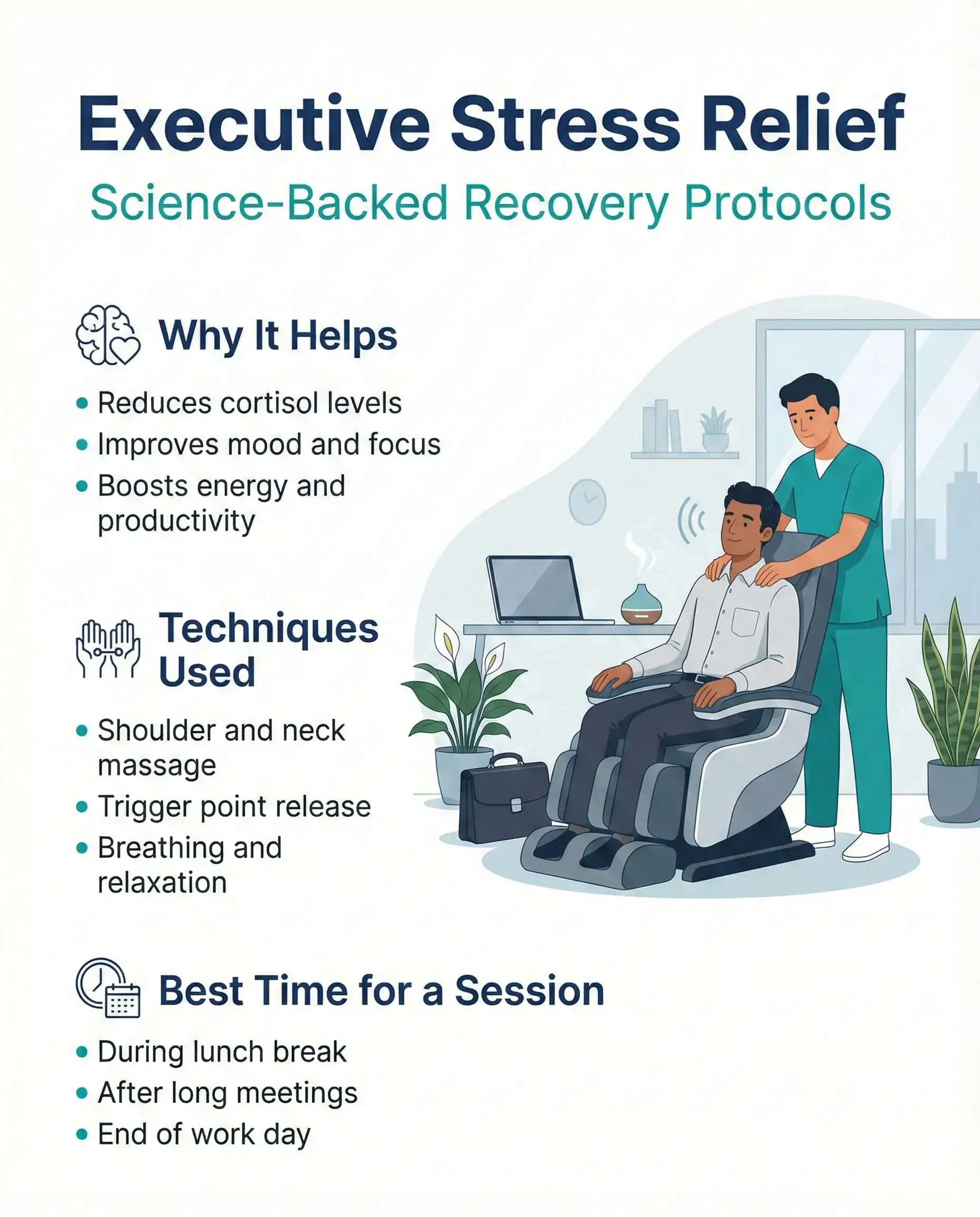
Executive Stress Relief: Science-Backed Recovery Protocols
How high-pressure decision-making creates unique stress patterns and the evidence-based recovery protocols that top performers use for demanding careers.
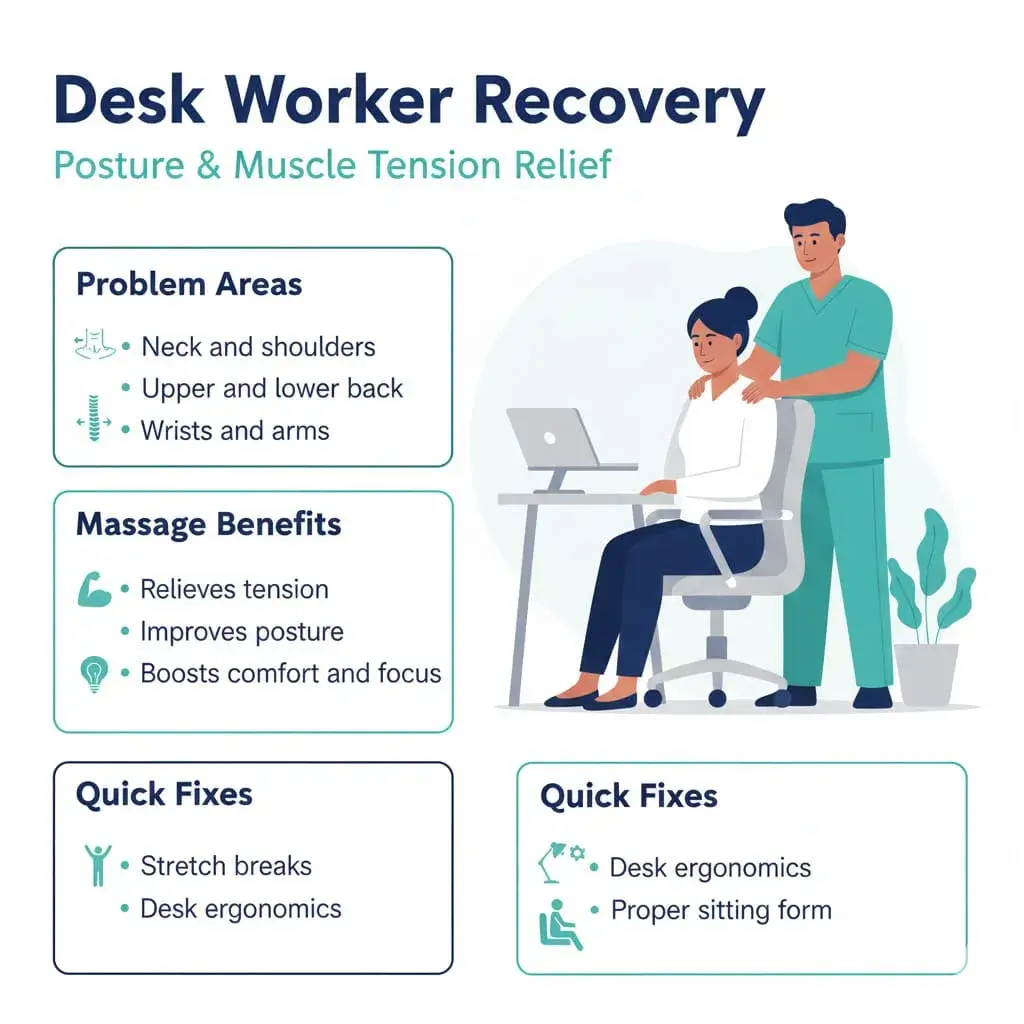
Desk Worker Recovery: Posture & Muscle Tension Relief
How knowledge workers address the physical toll of desk-based careers. Massage protocols for posture correction, tension relief, and productivity.
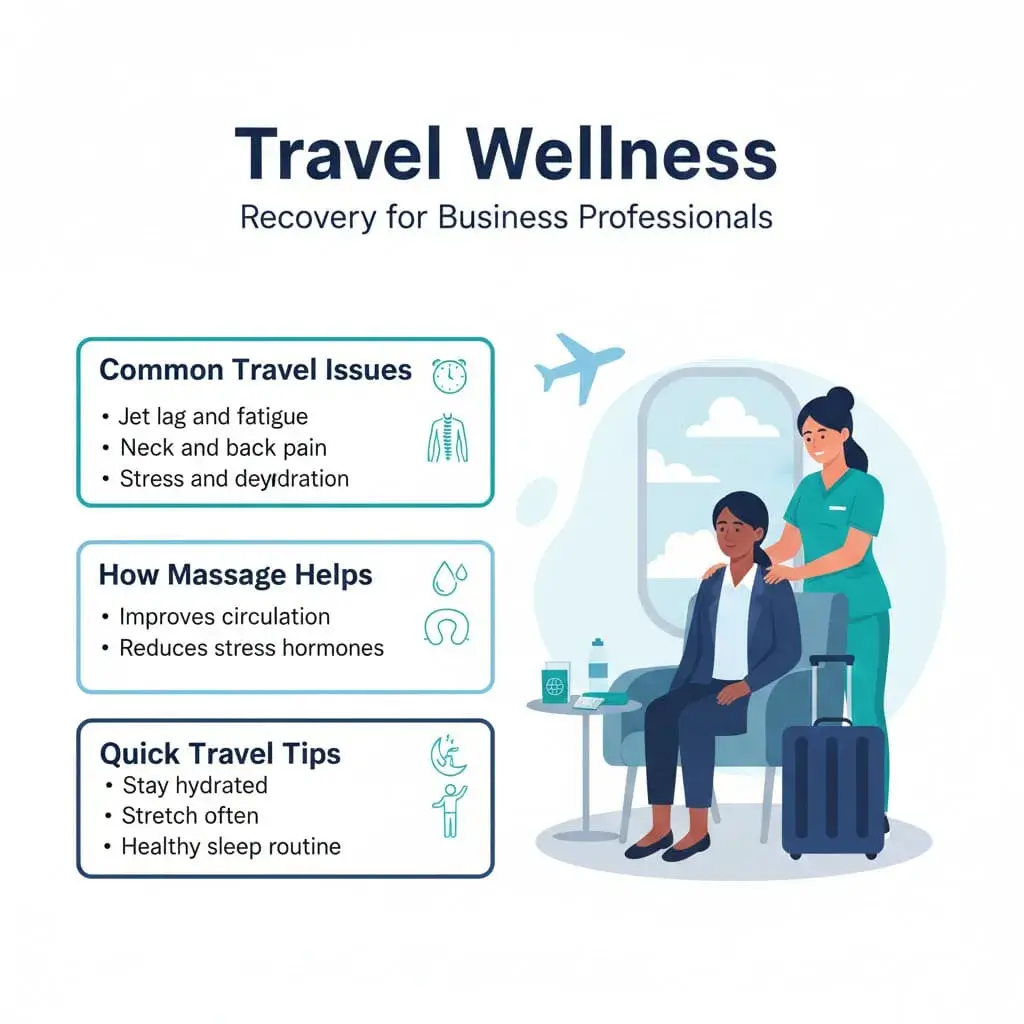
Travel Wellness: Recovery for Business Professionals
How frequent business travelers maintain performance through strategic recovery. Evidence-based approaches to travel fatigue, jet lag, and mobility.
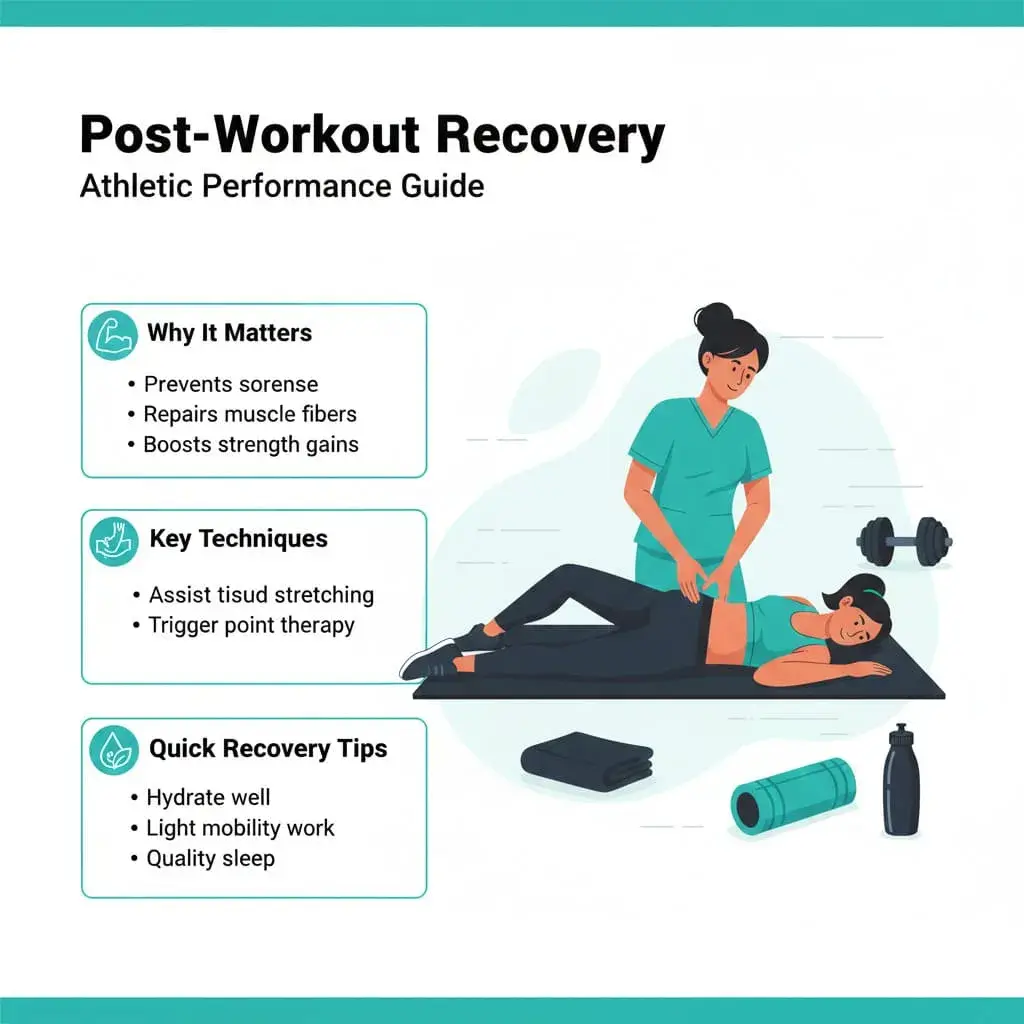
Post-Workout Recovery: Athletic Performance Guide
How active professionals optimize training adaptation through strategic recovery. Evidence-based massage protocols for performance and injury prevention.
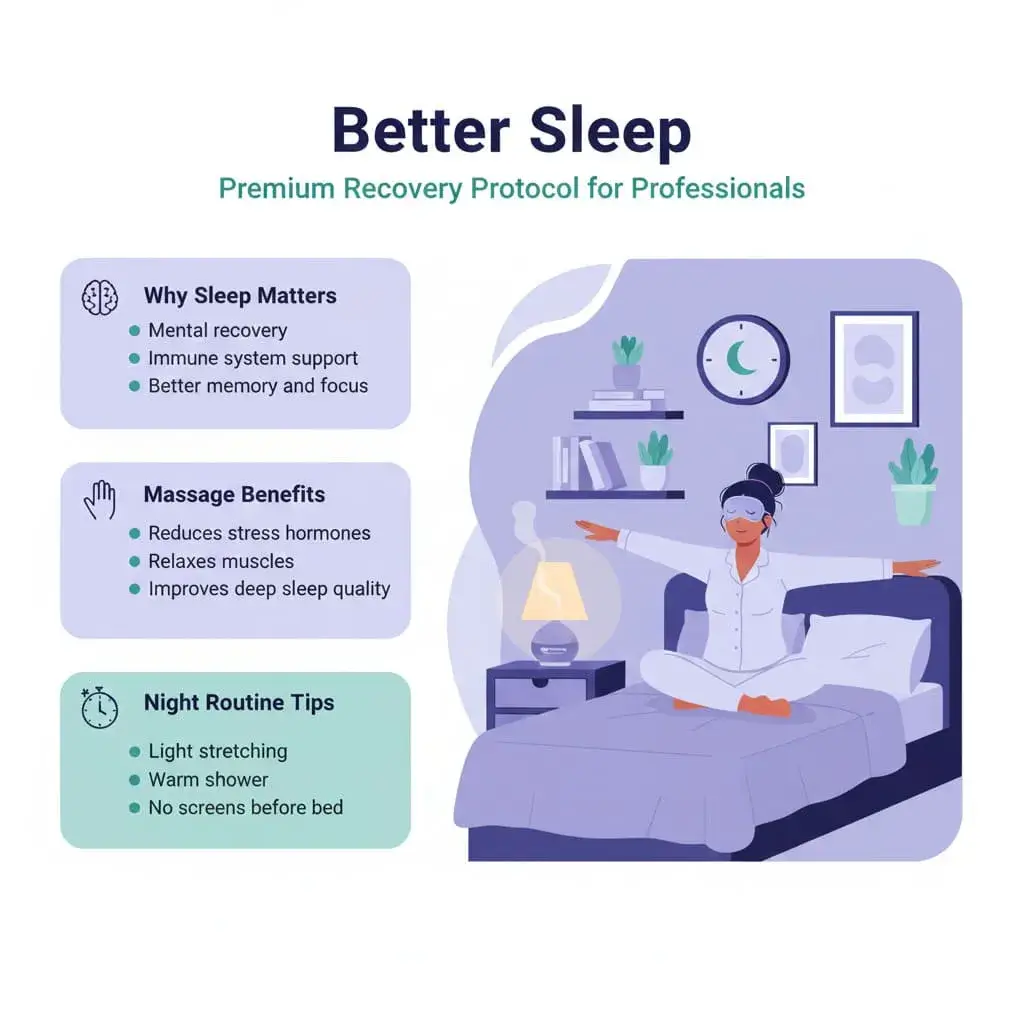
Better Sleep: Premium Recovery Protocol
How high-performers use strategic massage protocols to optimize sleep quality. Evidence-based sleep recovery approaches for cognitive performance.