
Post-Workout Recovery: Athletic Performance Guide
Strategic recovery for professionals who train seriously
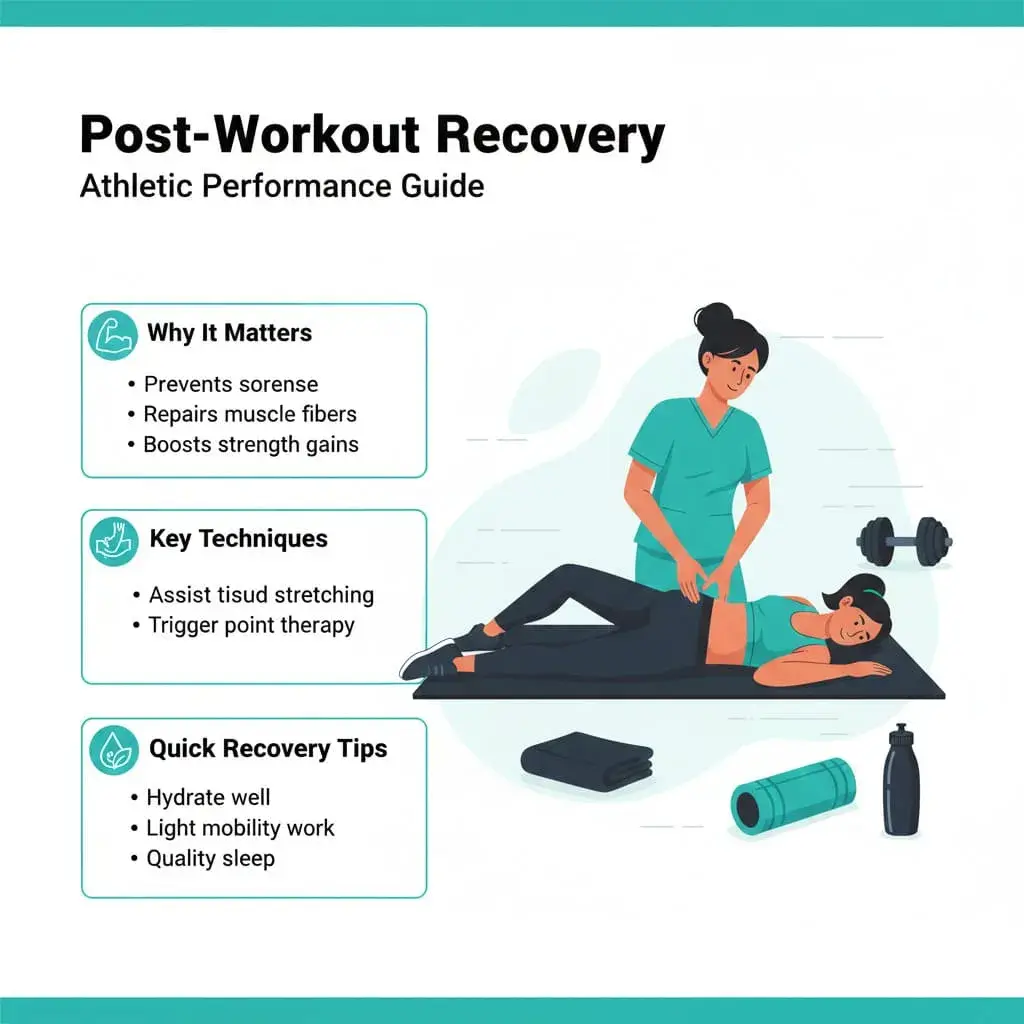
You train seriously. Early morning runs before the workday begins. Evening sessions at the gym after meetings conclude. Weekend cycling, swimming, or sports that demand genuine athletic effort. Fitness isn't a casual pursuit—it's a disciplined practice that requires the same strategic thinking you apply to your career.
Yet many active professionals underinvest in recovery. They understand that training stimulus drives adaptation, but treat recovery as passive—something that happens automatically between sessions. Building sustainable wellness habits that include recovery is essential. This approach leaves performance gains on the table and increases injury risk. The professional who trains five days weekly but recovers poorly may see less improvement than one who trains four days with strategic recovery.
Massage is one of the most effective recovery interventions available. Research demonstrates its impact on muscle recovery, inflammation management, and training adaptation. For professionals who balance serious training with demanding careers, strategic massage can be the difference between sustainable progress and chronic fatigue or injury.
Understanding Exercise Recovery
Training works by creating controlled damage. Resistance training causes microscopic muscle fiber tears. Endurance training depletes glycogen stores and creates metabolic stress. High-intensity work accumulates metabolic byproducts. This stress signals the body to adapt—to rebuild stronger, more efficient, more capable.
But adaptation doesn't happen during the workout; it happens during recovery. The training session is the stimulus; sleep, nutrition, and recovery practices are when the body actually improves. Insufficient recovery means insufficient adaptation—and eventually, overtraining, injury, or burnout.
The Recovery Process
- Immediate (0-2 hours): Inflammation begins, metabolic byproducts clear, muscle protein synthesis initiates
- Short-term (2-24 hours): Muscle repair accelerates, glycogen replenishment, continued inflammation management
- Medium-term (24-72 hours): Tissue remodeling, strength/endurance adaptations consolidate
- Long-term (72+ hours): Full recovery for intense sessions, supercompensation if recovery adequate
Massage can positively influence each phase of this process, though timing and technique matter for optimizing different outcomes.
How Massage Enhances Recovery
Research has identified several mechanisms through which massage accelerates exercise recovery:
Reduced Inflammation
A landmark 2012 study in Science Translational Medicine found that massage reduces inflammatory cytokines (IL-6, TNF-α) in muscle tissue after exercise. This isn't about eliminating the inflammatory response—some inflammation is necessary for adaptation—but about managing excessive inflammation that impairs recovery.
Enhanced Circulation
Massage increases blood flow to treated areas, delivering oxygen and nutrients needed for repair while clearing metabolic waste products. This enhanced circulation supports the muscle protein synthesis and tissue remodeling that constitute actual recovery.
Reduced Muscle Tension
Exercise creates muscle tension that persists after the workout ends. This residual tension can impair subsequent training, limit range of motion, and create compensatory patterns that lead to injury. Massage releases this tension, restoring muscles to functional baseline.
Decreased DOMS
Delayed onset muscle soreness (DOMS)—that deep muscle ache 24-72 hours after intense training—responds well to massage. Multiple studies show massage reduces DOMS severity and duration, allowing return to effective training sooner.
Improved Range of Motion
Training can temporarily reduce flexibility as muscles tighten. Massage restores and often improves range of motion, maintaining the movement quality essential for effective training and injury prevention.
Parasympathetic Activation
Intense training activates the sympathetic nervous system—the 'fight or flight' response. Recovery requires shifting to parasympathetic dominance—'rest and digest.' Massage promotes this shift, supporting the physiological state in which recovery actually occurs.
Timing Your Recovery Massage
When you get massage relative to training affects what benefits you receive:
| Timing | Primary Benefits | Best For |
|---|---|---|
| Immediately post-workout (0-2 hrs) | Circulation boost, metabolic clearance | Intense sessions, competition recovery |
| Same day evening | Tension release, sleep enhancement | Morning training, general recovery |
| Next day (12-24 hrs) | DOMS reduction, inflammation management | Heavy strength training, new exercises |
| 24-48 hours post | Deep tissue work, mobility restoration | Muscle soreness, range of motion issues |
| Rest day (48-72 hrs) | Comprehensive recovery, injury prevention | Regular maintenance, accumulated fatigue |
Post-Training Same Day
Massage within a few hours of training capitalizes on elevated circulation and the body's natural recovery processes. Light to moderate pressure works best—this isn't the time for deep tissue work on muscles that are already stressed. Focus on flushing, circulation, and relaxation.
Next Day Recovery
24 hours post-training, DOMS is developing and inflammation is active. Massage at this point can significantly reduce DOMS severity and duration. Moderate pressure targeting worked muscle groups is appropriate.
Rest Day Maintenance
On rest days—48-72+ hours from intense training—deeper work becomes appropriate. This is the time for addressing specific tension areas, improving mobility restrictions, and comprehensive recovery work that might be too intense closer to training.
Recovery by Training Type
Different training modalities create different recovery needs:
Strength Training
Heavy resistance training creates significant muscle damage and tension. Recovery massage should target the specific muscle groups trained, with attention to both the primary movers and stabilizers. Deep tissue work is valuable but best scheduled 48+ hours post-training to allow initial recovery.
- Focus on trained muscle groups plus opposing muscles
- Address joint areas stressed by heavy loading
- Include stretching and range of motion work
- Consider 24-48 hour spacing from next heavy session
Endurance Training
Running, cycling, swimming, and other endurance activities create repetitive stress patterns. Massage for endurance athletes should address the primary movers (legs for runners/cyclists, shoulders for swimmers) plus commonly tight areas like hip flexors, IT band, and calves.
- Emphasize circulation and metabolic clearance
- Address repetitive stress areas before they become injuries
- Focus on hip mobility for runners and cyclists
- Include foot and lower leg work for runners
High-Intensity Interval Training (HIIT)
HIIT combines metabolic stress with muscle tension. Recovery should address both: circulation work for metabolic clearance and tension release for the muscle groups involved. Full-body recovery is often appropriate given HIIT's typically comprehensive nature.
Sports and Athletics
Sport-specific recovery addresses the unique demands of each activity. Tennis requires shoulder and arm focus. Football involves full-body impact recovery. Cricket demands attention to bowling arm, back, and legs. Communicate your specific sport and recent activity to guide treatment focus.
| Training Type | Primary Focus Areas | Key Techniques |
|---|---|---|
| Strength training | Trained muscle groups, joints | Deep tissue, trigger point, stretching |
| Running | Legs, hips, lower back | Circulation, IT band work, hip mobility |
| Cycling | Quads, hip flexors, lower back | Tension release, hip opening, back work |
| Swimming | Shoulders, lats, chest | Rotator cuff, chest opening, lat release |
| HIIT/CrossFit | Full body, high-stress areas | Circulation, comprehensive tension release |
| Racquet sports | Dominant arm, shoulders, legs | Arm/shoulder work, lateral movement recovery |
The Active Professional Protocol
For professionals who train regularly while managing demanding careers, a systematic recovery approach maximizes training benefit without compromising work performance:
Weekly Maintenance
One comprehensive 60-90 minute session weekly provides baseline recovery support. Schedule on a rest day or light training day, at least 24 hours from your most intense sessions. This session addresses accumulated fatigue, maintains mobility, and prevents issue accumulation.
Training Block Intensification
During high-volume training blocks—marathon preparation, competition season, or intensified gym phases—increase to twice weekly. The additional recovery support allows your body to adapt to increased training load without breaking down.
Competition/Event Support
Around important events—races, matches, fitness challenges—adjust timing strategically. Light massage 2-3 days before for relaxation and circulation. Avoid deep work 24-48 hours pre-event. Post-event recovery massage within 24-48 hours to accelerate return to baseline.
Injury Prevention Focus
Communicate developing issues early. That slight hamstring tightness, the shoulder that's not quite right, the persistent calf tension—addressing these proactively prevents the acute injuries that sideline training for weeks or months.
Sports Massage vs. Other Modalities
Understanding massage types helps you choose appropriately:
Sports Massage
Specifically designed for athletes and active individuals. Combines techniques based on training phase and needs: pre-event stimulation, post-event recovery, maintenance, and rehabilitation approaches. Therapists understand athletic demands and training cycles.
Deep Tissue Massage
Focuses on deeper muscle layers and connective tissue. Valuable for chronic tension and adhesions, but intense enough to require recovery time itself. Best scheduled on rest days, not immediately after training.
Swedish Massage
General relaxation and circulation focus. Appropriate for light recovery days and general maintenance. Less targeted than sports massage but valuable for overall recovery and stress management.
Myofascial Release
Addresses the fascial system—connective tissue that surrounds muscles. Particularly valuable for mobility restrictions, chronic tightness, and movement quality issues. Complements other modalities well.
Home Service for Active Professionals
For professionals balancing training with demanding careers, premium home wellness offers particular advantages:
Training Schedule Integration
Schedule recovery that fits your training calendar. Evening session after morning run. Rest day afternoon massage. Post-long-run Sunday recovery. Home service adapts to your schedule rather than requiring you to work around spa availability.
No Additional Fatigue
After a hard training session, the last thing you need is a commute. Home service means recovery happens without additional physical or logistical demands. Finish your workout, shower, and the therapist arrives—recovery without friction.
Post-Session Optimization
After massage, you can immediately eat your recovery meal, do your prescribed stretches, and transition to sleep—all without leaving home. The recovery window remains uninterrupted by travel or transition.
Consistency Support
The convenience of home service supports the consistency that makes recovery effective. When massage doesn't require additional planning and travel, it happens more reliably. Consistent recovery produces better results than occasional intensive sessions.
Complementary Recovery Practices
Massage works best as part of comprehensive recovery:
Sleep
Sleep is when the majority of recovery and adaptation occurs. Growth hormone release, tissue repair, and neural adaptation happen primarily during sleep. Massage enhances sleep quality, making this primary recovery mechanism more effective.
Nutrition
Protein for muscle repair, carbohydrates for glycogen replenishment, and adequate hydration are recovery fundamentals. Massage enhances circulation that delivers these nutrients to recovering tissues.
Active Recovery
Light movement on recovery days—walking, easy swimming, gentle cycling—promotes blood flow without adding stress. This complements massage's circulatory benefits.
Stretching and Mobility
Regular stretching maintains the range of motion that massage helps restore. Post-massage is an excellent time for stretching—tissues are warm and pliable, making flexibility work more effective.
Frequently Asked Questions
How soon after working out should I get a massage?
Will massage help me build more muscle?
Should I get massage before or after a race/competition?
How often should athletes get massage?
Can massage replace stretching?
What if I feel sore after sports massage?
Should I eat before a post-workout massage?
Can massage help with recurring injuries?
Training Smarter
The professionals who maintain serious training alongside demanding careers aren't necessarily those with the most time—they're those who use their time strategically. They understand that training stimulus without adequate recovery is wasted effort. They recognize that sustainable athletic progress requires treating recovery as seriously as the workouts themselves.
Massage is one of the most time-efficient recovery interventions available. In 60-90 minutes, you receive benefits that would require hours of other recovery modalities. For the busy professional who trains seriously, this efficiency matters—you get maximum recovery benefit for minimum time investment.
Your training represents significant investment—time, effort, discipline. Strategic recovery ensures that investment produces returns. Understanding different modalities helps you choose the right treatment for your training. The post-workout massage isn't indulgence; it's protecting and maximizing the value of every workout you complete.
Related Articles
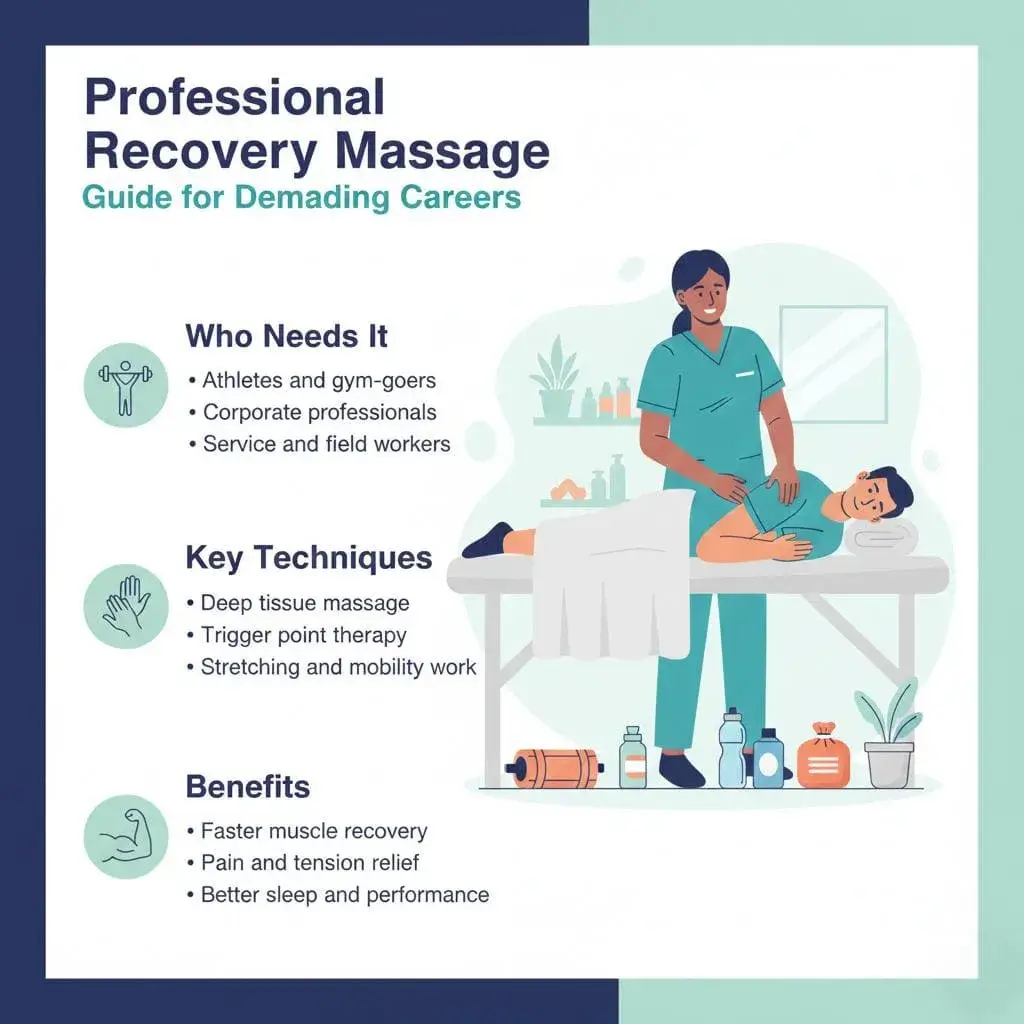
Professional Recovery Massage: Guide for Demanding Careers
How professionals in demanding careers use strategic recovery massage to maintain peak performance. Protocols for physical, cognitive, and travel recovery.
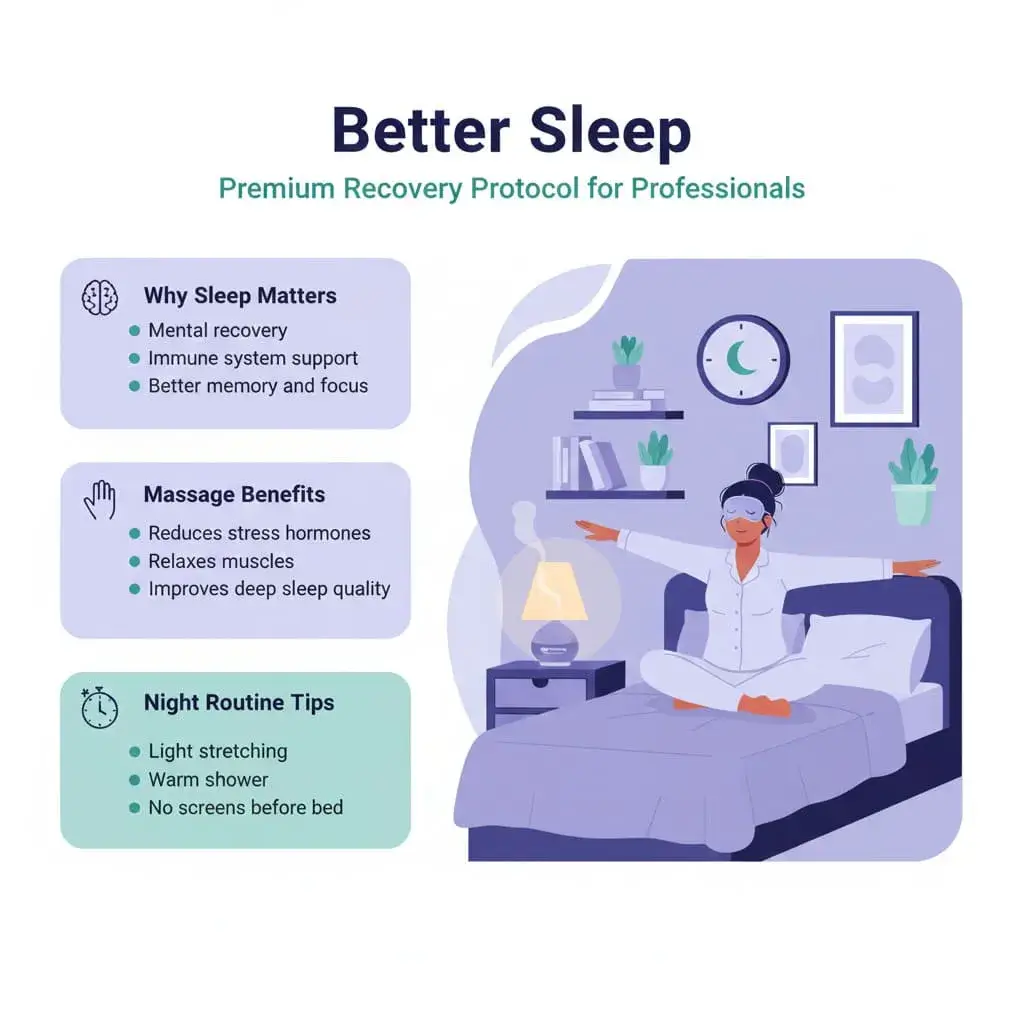
Better Sleep: Premium Recovery Protocol
How high-performers use strategic massage protocols to optimize sleep quality. Evidence-based sleep recovery approaches for cognitive performance.
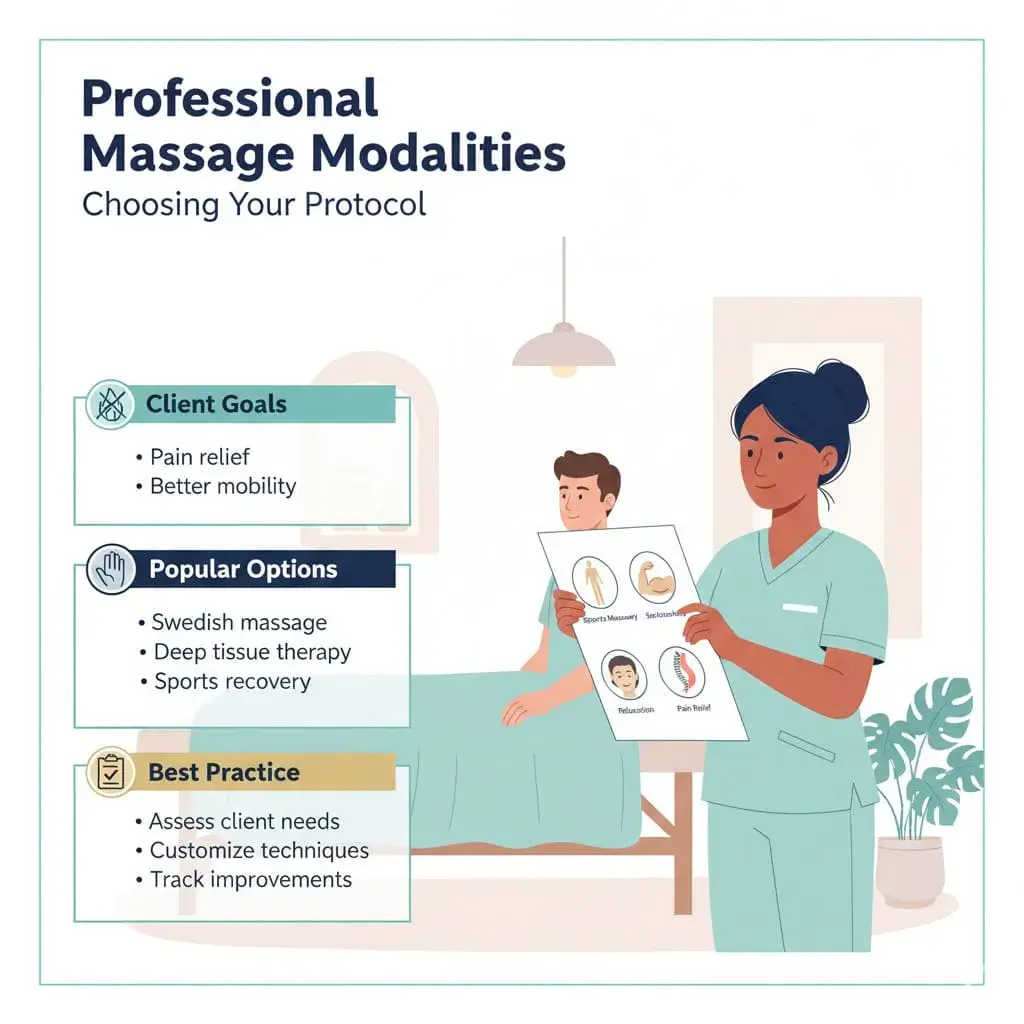
Professional Massage Modalities: Choosing Your Protocol
A decision framework for choosing the right massage type. Compare Swedish, deep tissue, sports, Thai, and other modalities to find your ideal match.

Sustainable Wellness: Building Habits That Last
How busy professionals build wellness routines that actually stick. Evidence-based strategies for making self-care sustainable rather than sporadic.

Premium Home Wellness: Why Professionals Choose Home Services
Why successful professionals choose home massage over traditional spas. Discover the productivity, privacy, and quality advantages of home wellness.