
Professional Massage Modalities: Choosing Your Protocol
A decision framework for selecting the right massage type
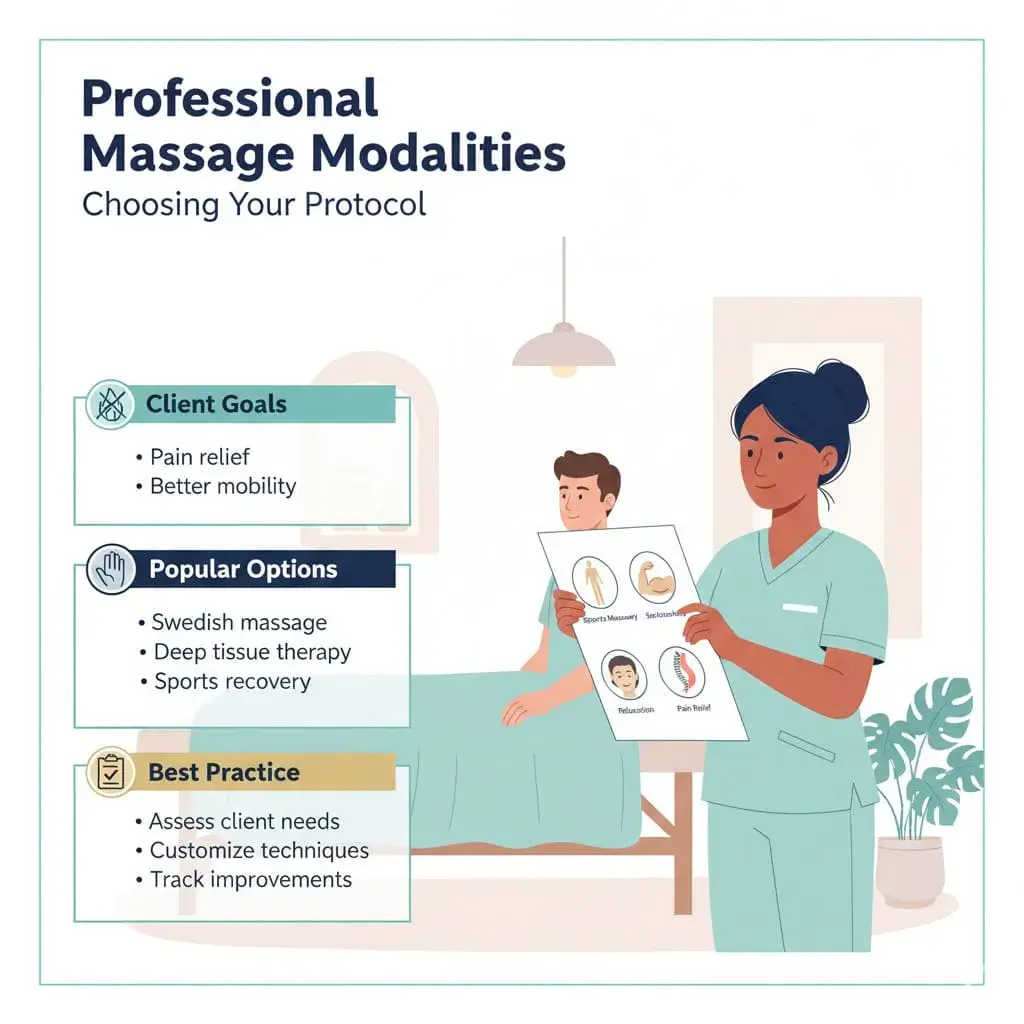
When booking a massage, most people default to what's familiar—usually Swedish or 'relaxation' massage—without considering whether it's actually the best choice for their needs. This is like ordering the same dish at every restaurant regardless of cuisine or occasion. Different massage modalities exist because different situations require different approaches.
For professionals investing time and money in massage, understanding these differences matters. The executive with chronic neck tension needs different treatment than the marathon runner recovering from a race. The desk worker with postural issues requires a different approach than someone seeking pure stress relief. Choosing appropriately means getting results rather than just getting rubbed.
This guide provides a decision framework for selecting massage modalities. Rather than lengthy descriptions of history and philosophy, we focus on practical questions: What does each modality actually do? When is it the right choice? When should you choose something else?
The Core Modalities
These fundamental massage types form the foundation of most professional practice:
Swedish Massage
The most common massage modality worldwide. Swedish massage uses five core techniques: effleurage (long gliding strokes), petrissage (kneading), friction (circular pressure), tapotement (rhythmic tapping), and vibration. Pressure ranges from light to moderate.
What It Does
- Promotes general relaxation and stress relief
- Improves circulation throughout the body
- Releases mild to moderate muscle tension
- Supports lymphatic drainage
- Activates parasympathetic nervous system
Best For
- ✓General stress relief and relaxation
- ✓First-time massage recipients
- ✓Regular maintenance sessions
- ✓When you want to feel better without specific treatment goals
- ✓Sleep improvement and anxiety reduction
Not Ideal For
- Chronic deep muscle tension requiring intensive work
- Specific injury rehabilitation
- Athletes needing sport-specific recovery
- Significant mobility restrictions
Deep Tissue Massage
Deep tissue massage uses slower strokes and more direct pressure to reach deeper muscle layers and fascia (connective tissue). Despite the name, 'deep' refers to the tissue layers addressed, not necessarily pain level—though deeper work is often more intense.
What It Does
- Releases chronic muscle tension and adhesions
- Breaks up scar tissue and fascial restrictions
- Addresses deep-seated knots and trigger points
- Improves range of motion in restricted areas
- Provides relief for chronic pain patterns
Best For
- ✓Chronic tension that lighter massage hasn't resolved
- ✓Specific problem areas requiring focused attention
- ✓Recovery from accumulated physical stress
- ✓Postural issues with established muscle patterns
- ✓When you need results, not just relaxation
Not Ideal For
- Immediately after intense exercise (muscles need initial recovery)
- When seeking pure relaxation without therapeutic intensity
- Acute injuries or inflammation (may worsen)
- If you have low pain tolerance and prefer gentle work
Sports Massage
Sports massage is specifically designed for athletes and active individuals. It combines techniques from Swedish, deep tissue, and other modalities, adapted based on the athlete's sport, training phase, and immediate needs.
What It Does
- Accelerates recovery from training and competition
- Addresses sport-specific muscle patterns and stress points
- Improves flexibility and range of motion
- Supports injury prevention through early issue detection
- Prepares muscles for performance (pre-event) or recovery (post-event)
Best For
- ✓Regular exercisers and serious athletes
- ✓Pre-event preparation or post-event recovery
- ✓Training cycle support and periodization
- ✓Active individuals with sport-specific tension patterns
- ✓Injury prevention for those with heavy training loads
Not Ideal For
- Pure relaxation without athletic recovery goals
- Sedentary individuals without exercise-related needs
- When seeking gentle, flowing massage experience
Thai Massage
Thai massage differs fundamentally from table-based Western modalities. Performed on a floor mat with the recipient clothed, it combines acupressure, assisted stretching, and yoga-like positioning. The therapist uses hands, elbows, knees, and feet to apply pressure while moving your body through stretches.
What It Does
- Dramatically improves flexibility and range of motion
- Combines compression with passive stretching
- Works energy lines (sen) throughout the body
- Addresses full-body mobility, not just isolated areas
- Creates both relaxation and energization
Best For
- ✓Flexibility improvement and mobility work
- ✓Those who feel stiff and restricted in movement
- ✓Active individuals wanting stretching assistance
- ✓When you want to feel looser and more mobile afterward
- ✓Those who prefer remaining clothed during massage
Not Ideal For
- Those with significant joint issues or hypermobility
- Recent injuries that limit movement
- When you want to lie passively and relax
- Severe mobility restrictions requiring gradual approach
| Modality | Pressure | Primary Purpose | Best For |
|---|---|---|---|
| Swedish | Light-Moderate | Relaxation, circulation | Stress relief, maintenance |
| Deep Tissue | Moderate-Firm | Chronic tension release | Specific issues, recovery |
| Sports | Variable | Athletic recovery/preparation | Athletes, active individuals |
| Thai | Moderate | Flexibility, mobility | Stiffness, movement improvement |
Specialized Modalities
Beyond core modalities, specialized approaches address specific needs:
Trigger Point Therapy
Trigger points are hyperirritable spots in muscle tissue that cause local and referred pain. Trigger point therapy applies sustained pressure to these specific points to release them. It's often incorporated into deep tissue or sports massage rather than performed as a standalone modality.
Best For
- ✓Specific pain patterns that radiate to other areas
- ✓Persistent knots that haven't responded to general massage
- ✓Tension headaches originating from neck/shoulder trigger points
- ✓Chronic pain with identifiable trigger locations
Myofascial Release
Fascia is the connective tissue that surrounds muscles, bones, and organs. Myofascial release uses sustained pressure and stretching to release fascial restrictions that limit movement and cause pain. Techniques are slower and held longer than traditional massage strokes.
Best For
- ✓Chronic restrictions that feel like tightness throughout an area
- ✓Post-injury tissue that feels bound or stuck
- ✓Movement limitations that don't respond to stretching alone
- ✓Full-body integration and postural improvement
Aromatherapy Massage
Aromatherapy massage combines Swedish or other techniques with essential oils selected for therapeutic properties. Different oils are chosen based on desired outcomes—lavender for relaxation, eucalyptus for invigoration, peppermint for muscle relief.
Best For
- ✓Enhanced relaxation and stress relief
- ✓Mood improvement and emotional well-being
- ✓Sensory experience beyond physical manipulation
- ✓Those who respond well to scent-based relaxation
Hot Stone Massage
Heated basalt stones are placed on the body and used as massage tools. The heat penetrates deeply, relaxing muscles and allowing the therapist to work more effectively. The warmth itself is therapeutic, improving circulation and promoting deep relaxation.
Best For
- ✓Deep relaxation and stress relief
- ✓Those who enjoy heat therapy
- ✓Muscle tension that responds well to warmth
- ✓Cold weather or when seeking warming experience
Lymphatic Drainage Massage
Very light, rhythmic massage specifically designed to support lymphatic system function. Uses gentle pressure in specific patterns to encourage lymph flow. Much gentler than other modalities.
Best For
- ✓Post-surgical recovery (when appropriate)
- ✓Immune system support
- ✓Fluid retention and swelling
- ✓Detoxification support
The Decision Framework
Choosing the right modality starts with clarifying what you actually need:
Question 1: What Is Your Primary Goal?
| If Your Goal Is... | Consider... |
|---|---|
| Pure relaxation and stress relief | Swedish, Aromatherapy, Hot Stone |
| Releasing chronic tension and knots | Deep Tissue, Trigger Point |
| Athletic recovery and performance | Sports Massage |
| Improving flexibility and mobility | Thai Massage, Myofascial Release |
| Addressing specific pain patterns | Deep Tissue, Trigger Point, Myofascial |
| General maintenance and wellness | Swedish, Sports (for active individuals) |
Question 2: What Is Your Current Physical State?
- Exhausted and depleted → Gentler modalities (Swedish, Aromatherapy)
- Tight and restricted → Mobility-focused (Thai, Myofascial)
- Post-training recovery → Sports Massage or Swedish
- Chronic accumulated tension → Deep Tissue
- Specific injury or pain → Targeted work (Trigger Point, focused Deep Tissue)
Question 3: What Is Your Pressure Preference?
Be honest about your pressure tolerance. Deeper isn't always better—the right pressure is what produces results without causing you to tense up or dread the experience.
- Prefer light touch → Swedish, Aromatherapy, Lymphatic
- Comfortable with moderate pressure → Most modalities
- Want firm pressure and can tolerate intensity → Deep Tissue, Sports
- Enjoy being stretched and moved → Thai Massage
Question 4: How Much Time Do You Have for Recovery?
Some modalities require recovery time—you may feel tired or slightly sore afterward. Consider your schedule:
- Need to function immediately after → Swedish, lighter work
- Have evening free and can rest → Any modality appropriate
- Before important event (24-48 hrs) → Avoid intensive Deep Tissue
- Rest day with full recovery time → Deep Tissue, intensive work fine
Modality Selection by Profession
Different professional demands create different needs:
Desk-Based Professionals
IT professionals, analysts, consultants, and others who sit for extended periods develop predictable patterns: forward head posture, rounded shoulders, tight hip flexors, lower back compression. Our desk worker recovery guide covers this in depth.
- Primary: Deep Tissue focusing on neck, shoulders, and lower back
- Alternative: Thai Massage for full-body mobility restoration
- Maintenance: Swedish with focus on problem areas
- Complement with: Myofascial work for postural patterns
Executive and High-Stress Roles
Leaders and executives face decision fatigue, chronic stress, and often travel demands. Recovery needs often center on stress relief and maintaining function under pressure.
- Primary: Swedish for parasympathetic activation and stress relief
- Alternative: Aromatherapy for enhanced relaxation
- When tension accumulates: Deep Tissue for specific areas
- Travel recovery: Sports Massage techniques for circulation
Active Professionals and Athletes
Those who train seriously alongside professional demands need recovery that supports both athletic and work performance.
- Primary: Sports Massage for training recovery
- Heavy training periods: Increased Deep Tissue work
- Flexibility focus: Thai Massage for mobility
- Pre-competition: Light Swedish or circulation work
Frequent Travelers
Business travelers deal with flight-induced compression, disrupted sleep, and variable stress levels across locations. Our travel wellness guide explores comprehensive solutions.
- Post-flight: Swedish with circulation emphasis, or Sports Massage
- Jet lag support: Aromatherapy with sleep-supporting oils
- Accumulated travel fatigue: Deep Tissue for chronic tension
- Quick recovery: Focused work on legs, back, and neck
Building Your Modality Rotation
Rather than choosing one modality forever, consider a rotation that serves different needs. Building sustainable wellness habits often involves adapting your approach to current circumstances:
Weekly Maintenance
For regular sessions, Swedish or Sports Massage (depending on activity level) provides effective maintenance without requiring significant recovery time.
Monthly Deep Work
Schedule deeper work—intensive Deep Tissue or extended Thai sessions—on rest days or before low-demand periods. This addresses accumulated issues that lighter maintenance doesn't resolve.
Situational Selection
Adapt based on current circumstances: pre-travel Swedish, post-travel Sports focus, post-training recovery emphasis, pre-presentation stress relief.
Seasonal Adjustment
Consider seasonal factors: Hot Stone in colder months, Thai for maintaining flexibility during inactive periods, increased Sports Massage during athletic seasons.
Communicating with Your Therapist
Effective modality selection requires clear communication:
Before the Session
- State your primary goal clearly
- Describe specific problem areas or concerns
- Mention recent activities (training, travel, stressful periods)
- Share relevant health information
- Express pressure preferences
During the Session
- Give feedback on pressure—too much, too little, just right
- Mention if an area needs more or less attention
- Speak up if anything causes actual pain (not productive discomfort)
- Request focus shifts if needed
After the Session
- Note which approaches felt most effective
- Report any issues (excessive soreness, areas missed)
- Discuss what to focus on next time
- Build therapist understanding of your patterns over time
Frequently Asked Questions
Which massage type is best for first-timers?
Is deep tissue supposed to hurt?
How do I know if I need deep tissue or Swedish?
Can I request multiple modalities in one session?
How often should I switch modalities?
Is Thai massage suitable if I am not flexible?
What should I avoid before a massage?
How do I find a therapist skilled in multiple modalities?
Informed Selection
Understanding massage modalities transforms you from a passive recipient to an informed consumer. You can articulate what you need, evaluate whether you're receiving it, and adjust your approach based on results. This isn't about becoming an expert—it's about knowing enough to make good decisions.
The right modality produces tangible results: tension that releases, mobility that improves, stress that dissipates, recovery that accelerates. The wrong modality wastes time and money on outcomes you didn't need. Taking a few minutes to consider your actual needs before booking ensures you get what you actually came for.
Your needs will change over time—with training phases, work demands, travel patterns, and life circumstances. Making massage part of your annual wellness investment and choosing premium home wellness delivery helps you adapt your choices accordingly, treating massage as the flexible, responsive tool it should be rather than a one-size-fits-all routine.
Related Articles
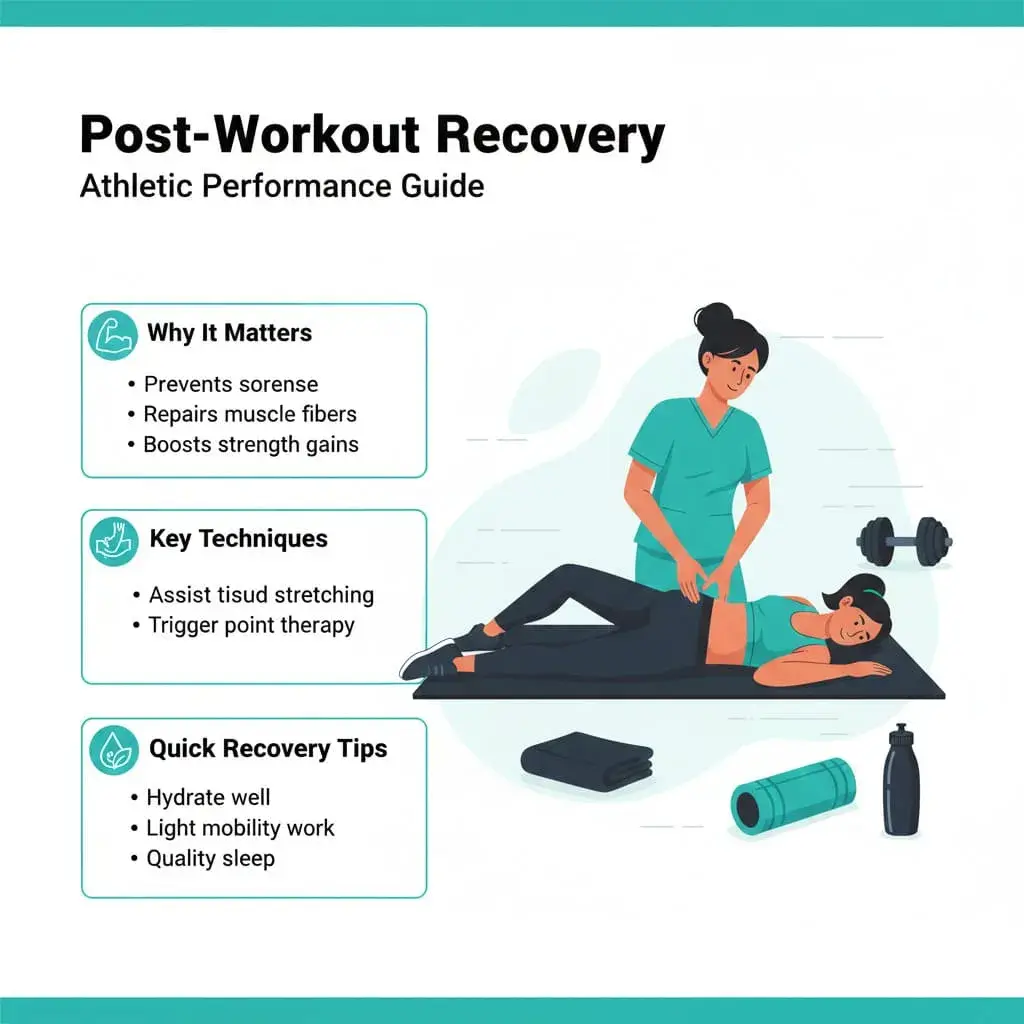
Post-Workout Recovery: Athletic Performance Guide
How active professionals optimize training adaptation through strategic recovery. Evidence-based massage protocols for performance and injury prevention.
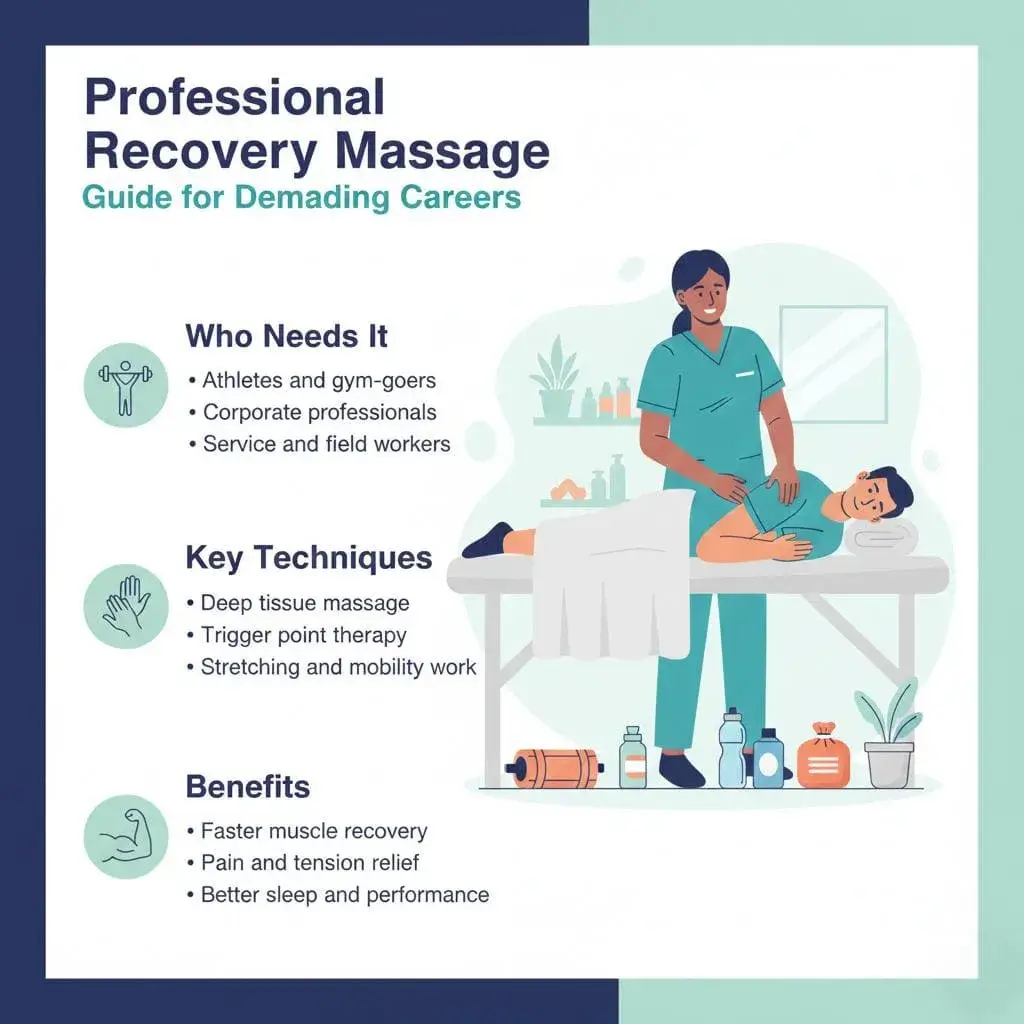
Professional Recovery Massage: Guide for Demanding Careers
How professionals in demanding careers use strategic recovery massage to maintain peak performance. Protocols for physical, cognitive, and travel recovery.
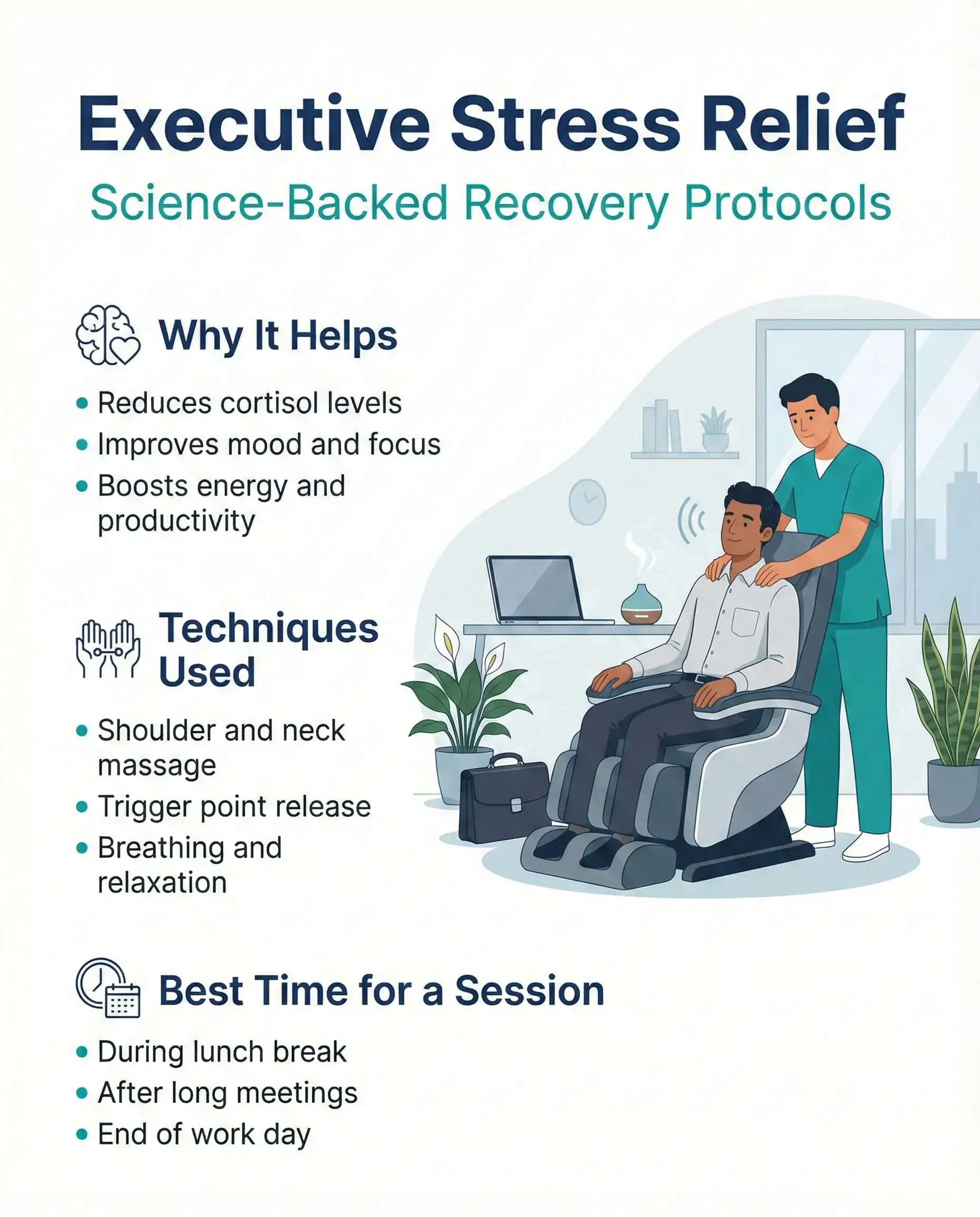
Executive Stress Relief: Science-Backed Recovery Protocols
How high-pressure decision-making creates unique stress patterns and the evidence-based recovery protocols that top performers use for demanding careers.
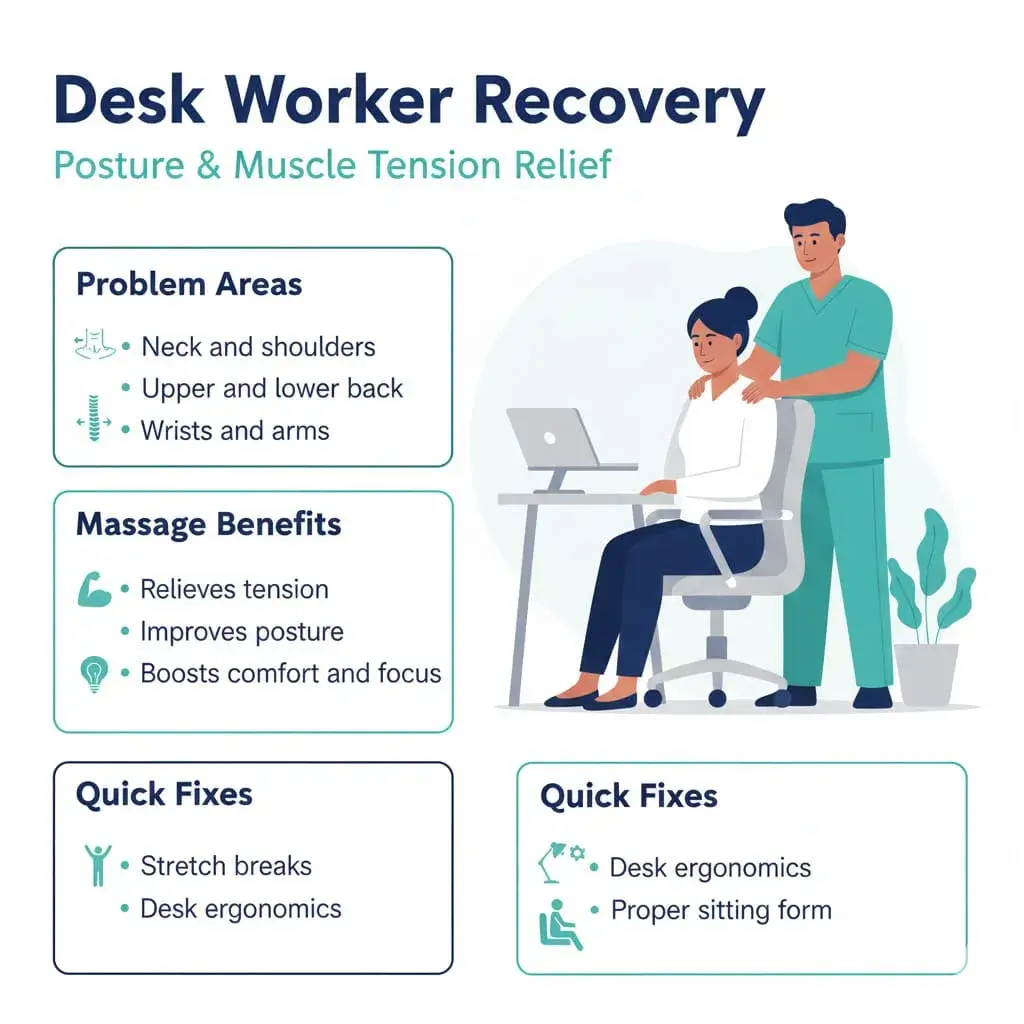
Desk Worker Recovery: Posture & Muscle Tension Relief
How knowledge workers address the physical toll of desk-based careers. Massage protocols for posture correction, tension relief, and productivity.
Sustainable Wellness: Building Habits That Last
How busy professionals build wellness routines that actually stick. Evidence-based strategies for making self-care sustainable rather than sporadic.