
Desk Worker Recovery: Posture & Muscle Tension Relief
Strategic recovery for the physical demands of knowledge work
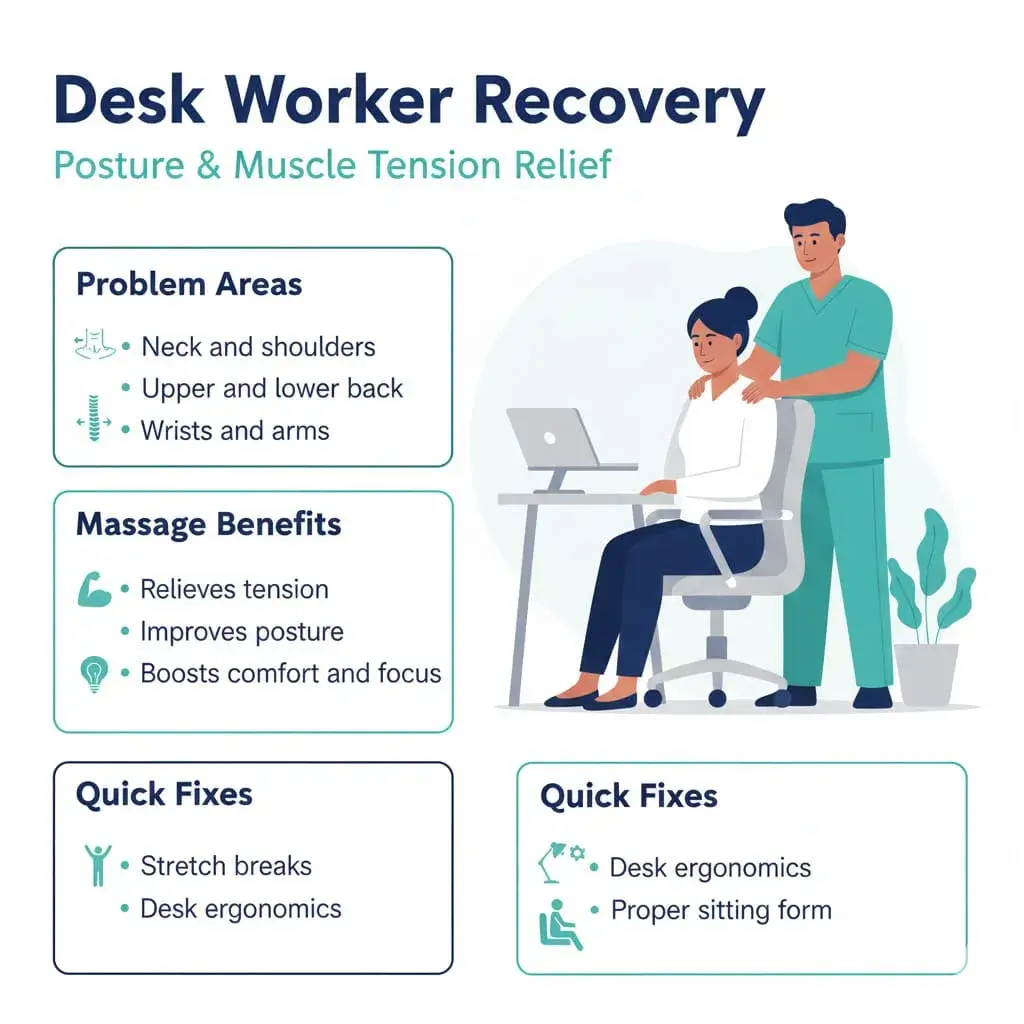
Eight hours at a desk. Ten hours. Sometimes twelve. Your body wasn't designed for this—humans evolved for movement, not sustained stillness in seated positions. Yet modern knowledge work demands exactly what biology didn't prepare us for: prolonged sitting, fixed gaze at screens, repetitive small movements with hands and fingers. The physical toll accumulates silently until it announces itself through pain, stiffness, and diminished capacity.
For IT professionals, consultants, analysts, and knowledge workers across Bangalore, Pune, Mumbai, and Delhi, desk-related physical issues aren't occasional inconveniences—they're occupational hazards that affect both immediate comfort and long-term career sustainability. The developer who ignores mounting neck tension today faces chronic headaches and other issues that limit productivity tomorrow. Strategic recovery isn't optional for desk-intensive careers; it's maintenance required to sustain the physical foundation that cognitive work depends upon.
The Desk Worker Body: What Happens Over Time
Desk work creates predictable physical adaptations. Understanding these patterns helps target recovery interventions effectively:
Forward Head Posture
Your head weighs approximately 5 kg. In neutral alignment, this weight stacks efficiently over your spine. But screen work pulls the head forward—often 5-10 cm ahead of neutral. For every 2.5 cm of forward displacement, the effective load on your neck muscles increases by roughly 4.5 kg. A 5 cm forward head position means your neck muscles are supporting the equivalent of 14 kg instead of 5 kg. Eight hours daily.
This forward head posture overloads the suboccipital muscles at the skull base, strains the posterior neck muscles, and compresses the cervical spine. The result: chronic neck tension, tension headaches, and often pain that radiates into the shoulders and upper back.
Rounded Shoulders and Chest Tightness
Keyboard and mouse work positions the arms forward, gradually pulling the shoulders into internal rotation. The chest muscles (pectoralis major and minor) shorten and tighten. The upper back muscles (rhomboids, middle trapezius) become overstretched and weak. This imbalance creates the rounded shoulder posture visible in many desk workers—and contributes to shoulder impingement, rotator cuff issues, and upper back pain.
Upper Back Tension
The thoracic spine—your upper and mid-back—loses mobility when you sit in fixed positions for hours. The muscles between your shoulder blades (rhomboids, middle and lower trapezius) become chronically fatigued from fighting the forward pull. Many desk workers describe a burning sensation between the shoulder blades by afternoon—these muscles signaling distress from sustained strain.
Lower Back Compression
Sitting compresses the lumbar spine significantly more than standing. The hip flexors (particularly the psoas) shorten in seated positions. The glutes—your largest muscles—essentially shut off during prolonged sitting. This combination creates anterior pelvic tilt, increased lumbar compression, and the lower back pain that affects the majority of desk workers at some point in their careers.
Hip Flexor Shortening
Your hip flexors maintain a shortened position throughout seated work. Over months and years, they adaptively shorten—becoming tight even when you stand. This hip flexor tightness pulls the pelvis forward, increases lumbar curve, and contributes to lower back strain. Standing up after long sitting sessions feels stiff because these muscles need time to lengthen back to functional range.
| Pattern | Cause | Symptoms | Massage Focus |
|---|---|---|---|
| Forward head posture | Screen positioning, sustained gaze | Neck tension, headaches, upper back pain | Suboccipitals, posterior neck, upper traps |
| Rounded shoulders | Keyboard/mouse positioning | Shoulder pain, chest tightness, upper back strain | Pectorals, rotator cuff, rhomboids |
| Upper back tension | Postural strain, sustained positions | Burning between shoulder blades, stiffness | Rhomboids, middle/lower traps, thoracic spine |
| Lower back compression | Prolonged sitting, poor chair support | Low back pain, stiffness on standing | Lumbar paraspinals, QL, glutes |
| Hip flexor tightness | Seated hip position (90° flexion) | Difficulty standing straight, anterior pelvic tilt | Psoas, iliacus, rectus femoris |
The IT Professional Challenge
Software developers, engineers, and IT professionals face intensified versions of desk worker issues. The cognitive demands of coding—sustained concentration, complex problem-solving—make it difficult to interrupt work for movement. Deep focus states can extend sitting sessions far beyond healthy limits. And the nature of IT work often involves additional factors:
- Multiple monitor setups that may encourage head rotation and asymmetric posture
- Deadline pressure that overrides physical discomfort signals
- Remote/WFH environments with suboptimal ergonomic setups
- Late-night coding sessions when fatigue compounds postural strain
- High cognitive load making physical awareness secondary
- Sedentary culture where physical issues are normalized
For IT professionals in tech hubs like Bangalore and Pune, these factors combine with long commutes and high-pressure project environments. The result is accelerated physical strain compared to general desk workers, often compounded by executive stress. Recovery protocols need to account for this intensity.
How Massage Addresses Desk Worker Issues
Strategic massage directly counters the physical patterns that desk work creates:
Releasing Chronically Shortened Muscles
Muscles that spend hours in shortened positions develop chronic tension and sometimes adhesions. The chest muscles, hip flexors, and suboccipitals all shorten during desk work. Massage releases this chronic shortening through sustained pressure, stretching techniques, and trigger point work. The result is restored length and reduced pull on postural alignment.
Relieving Overstretched, Fatigued Muscles
While some muscles shorten, others become chronically overstretched and fatigued—particularly the upper back muscles fighting forward posture. These muscles need different treatment: improved circulation to support recovery, release of fatigue-induced tension, and sometimes facilitation to restore proper activation. Skilled therapists adjust technique based on whether muscles are shortened or overstretched.
Restoring Mobility
Prolonged sitting reduces mobility throughout the spine and hips. Massage techniques that mobilize the thoracic spine, release hip restrictions, and address fascial adhesions help restore the movement capacity that desk work diminishes. This mobility work may help reduce the progressive stiffening that compounds over years of sedentary work.
Breaking Pain-Tension Cycles
Chronic tension creates pain; pain creates protective tension; the cycle perpetuates. Massage breaks this cycle through direct mechanical release and neurological mechanisms. The nervous system learns to release guarding patterns when skilled touch demonstrates that the area can be safely addressed.
Improving Circulation
Sitting compresses tissues and restricts circulation, particularly in the hips and lower back. Massage increases blood flow to treated areas, delivering oxygen and nutrients while clearing metabolic waste. This circulatory boost supports tissue health in areas compromised by sustained compression.
Key Treatment Areas for Desk Workers
Effective desk worker massage targets specific muscle groups and regions:
Neck and Suboccipitals
The small muscles at the skull base (suboccipitals) work constantly to stabilize your head during screen work. They're primary contributors to tension headaches and neck stiffness. Skilled release of these muscles often produces immediate relief and should be included in every desk worker massage session.
Upper Trapezius and Levator Scapulae
These muscles connect your neck to your shoulders and are chronically overworked in desk postures. The upper trapezius develops trigger points that refer pain to the temple; the levator scapulae creates that specific pain at the neck-shoulder junction that desk workers know well. Thorough work on these muscles is essential.
Chest and Anterior Shoulders
The pectoralis major and minor shorten and tighten, pulling shoulders forward. Releasing these muscles helps restore shoulder position—but this area is often neglected in standard massage sessions. Request specific chest and anterior shoulder work as part of your desk worker protocol.
Rhomboids and Mid-Back
The muscles between your shoulder blades become fatigued and often painful from constantly resisting forward pull. This area needs circulation support and gentle release rather than aggressive deep tissue work. The goal is recovery of overstretched muscles, not further stress.
Lower Back and Glutes
The lumbar paraspinals, quadratus lumborum (QL), and gluteal muscles all suffer from prolonged sitting. Lower back work addresses compression effects; gluteal work reactivates muscles that essentially shut down during sitting. Both areas should be included in comprehensive desk worker treatment.
Hip Flexors
The psoas and iliacus—deep hip flexors—shorten significantly during seated work. Releasing these muscles requires specific positioning and skilled technique, but the benefit is substantial: reduced lower back strain, improved standing posture, and better hip mobility.
Forearms and Hands
Keyboard and mouse work creates repetitive strain in the forearm muscles and hands. While not always included in standard sessions, forearm and hand work may help reduce the risk of progression to conditions like carpal tunnel syndrome and tennis elbow that can significantly impact desk workers.
| Area | Issue | Technique | Priority |
|---|---|---|---|
| Neck/Suboccipitals | Forward head strain | Release, trigger points | Essential |
| Upper traps/Levator | Chronic tension | Deep tissue, trigger points | Essential |
| Chest/Anterior shoulder | Shortening | Stretch, release | High |
| Rhomboids/Mid-back | Fatigue | Circulation, gentle release | High |
| Lower back/Glutes | Compression, inactivation | Release, activation | High |
| Hip flexors | Shortening | Positional release | Moderate-High |
| Forearms/Hands | Repetitive strain | Release, circulation | Moderate |
The Desk Worker Recovery Protocol
Strategic recovery for desk workers follows a structured approach:
Weekly Maintenance
For professionals in desk-intensive roles, weekly 60-90 minute sessions provide optimal maintenance. This frequency helps reduce tension accumulation between sessions, maintains mobility gains, and catches developing issues before they become established patterns.
- ✓60-90 minute sessions covering all key areas
- ✓Consistent weekly timing (end of week often works well)
- ✓Communication about current problem areas
- ✓Adjustment based on work intensity that week
- ✓Include both shortened and overstretched muscles
Intensive Recovery Periods
After project deadlines, extended crunch periods, or when symptoms have accumulated, increase to twice weekly for 2-3 weeks. This intensive period addresses built-up tension that weekly maintenance couldn't fully prevent during high-demand periods.
WFH-Specific Considerations
Remote work often means suboptimal ergonomic setups—kitchen tables, couches, beds as workspaces. WFH professionals may need more frequent massage to compensate for poor positioning, plus specific attention to whatever asymmetric patterns their home setup creates.
Massage Types for Desk Workers
| Type | Best For | When to Choose |
|---|---|---|
| Deep Tissue | Chronic tension, established patterns | When specific areas need focused work |
| Swedish | General maintenance, circulation | Weekly maintenance, stress reduction |
| Myofascial Release | Fascial restrictions, mobility issues | Progressive stiffening, movement limitations |
| Trigger Point Therapy | Referral patterns, specific pain points | Headaches, specific pain locations |
| Sports Massage | Active desk workers who also exercise | Combined desk + training recovery |
Most desk workers benefit from a combination approach: deeper work on chronically tight areas (neck, chest, hip flexors), gentler work on fatigued areas (upper back), and myofascial techniques for mobility. Communicate your specific issues so your therapist can customize the approach.
The Home Service Advantage
For desk workers, premium home wellness offers particular benefits:
No Additional Sitting
After 8-10 hours at a desk, the last thing your body needs is more sitting in a car or auto driving to a spa. Home massage eliminates transit entirely—the therapist comes to you, and you avoid adding to your daily sitting total.
End-of-Day Scheduling
Schedule massage immediately after work ends—7 PM, 8 PM, whenever your day finishes. No need to factor in travel time or spa operating hours. The service adapts to your schedule, not the reverse.
Immediate Transition to Movement or Rest
After your session, you can immediately do the stretches your therapist recommends, take a walk to extend the mobility benefits, or simply rest. No drive home means no return to the seated position you're trying to counteract.
Complementary Practices
Massage works best as part of a comprehensive approach to desk worker health:
Movement Breaks
Brief movement every 30-60 minutes prevents the static loading that creates problems. Even 30 seconds of standing, shoulder rolls, and neck movement interrupts the pattern. Set reminders if deep focus makes you forget.
Workstation Setup
Screen at eye level, keyboard positioned so shoulders can relax, chair supporting lumbar curve—proper ergonomics reduce the strain that massage then addresses. Consider a professional ergonomic assessment, especially for WFH setups.
Targeted Stretching
Your massage therapist can recommend specific stretches for your patterns. Hip flexor stretches, chest openers, and neck stretches done daily extend the benefits of massage sessions. Even 5-10 minutes daily makes a measurable difference.
Strengthening
While massage addresses tension and restrictions, some muscles need strengthening rather than just releasing. The deep neck flexors, lower trapezius, and glutes often need activation work to maintain improved posture. Simple exercises complement massage protocols.
Frequently Asked Questions
How often should desk workers get massage?
Can massage fix my posture permanently?
Should I get massage even if I exercise regularly?
What if I can only afford monthly massage?
How do I know if my issues need massage or medical attention?
Should I mention my desk work setup to my therapist?
Is it normal to feel sore after massage?
Can massage help with carpal tunnel symptoms?
Investing in Your Physical Foundation
Your career depends on your ability to sit at a desk and think clearly for years—potentially decades. The physical foundation that enables this capacity requires maintenance. Ignoring the cumulative strain of desk work doesn't make it disappear; it makes the eventual consequences more severe and harder to reverse.
Strategic massage addresses the predictable patterns that desk work creates: the forward head, the rounded shoulders, the compressed lower back, the shortened hip flexors. Regular treatment may help prevent these patterns from becoming permanent postural changes and chronic pain conditions. Premium home service makes this maintenance accessible without adding to your sitting time or requiring complex scheduling. Building sustainable wellness habits early in your career pays dividends over decades.
The professionals who sustain productive careers over decades are those who treat their bodies as infrastructure worth maintaining. Desk work extracts a physical toll; recovery practices repay that debt. The investment in regular massage is an investment in continued capacity to do the work that matters to you.
Related Articles
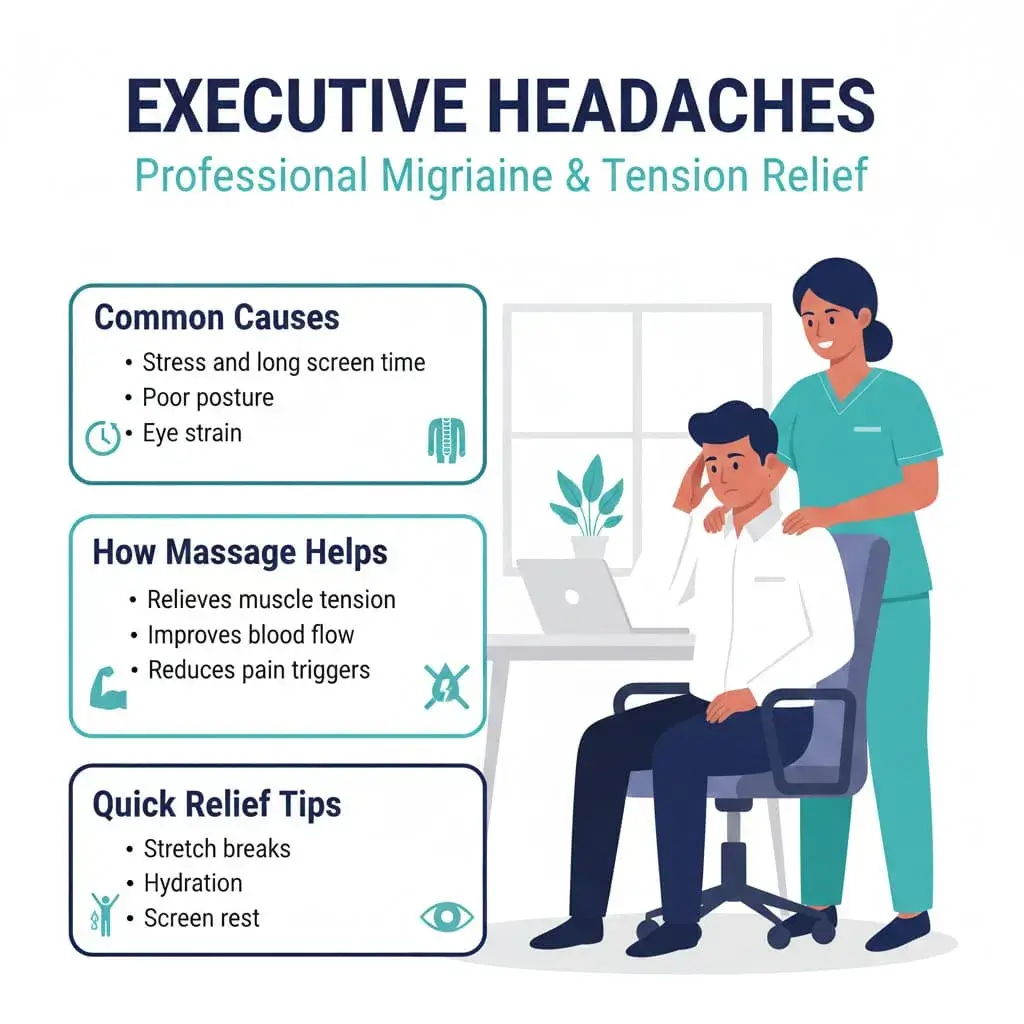
Executive Headaches: Professional Migraine & Tension Relief
How professionals use massage therapy to prevent and relieve tension headaches and migraines. Evidence-based headache management for demanding careers.
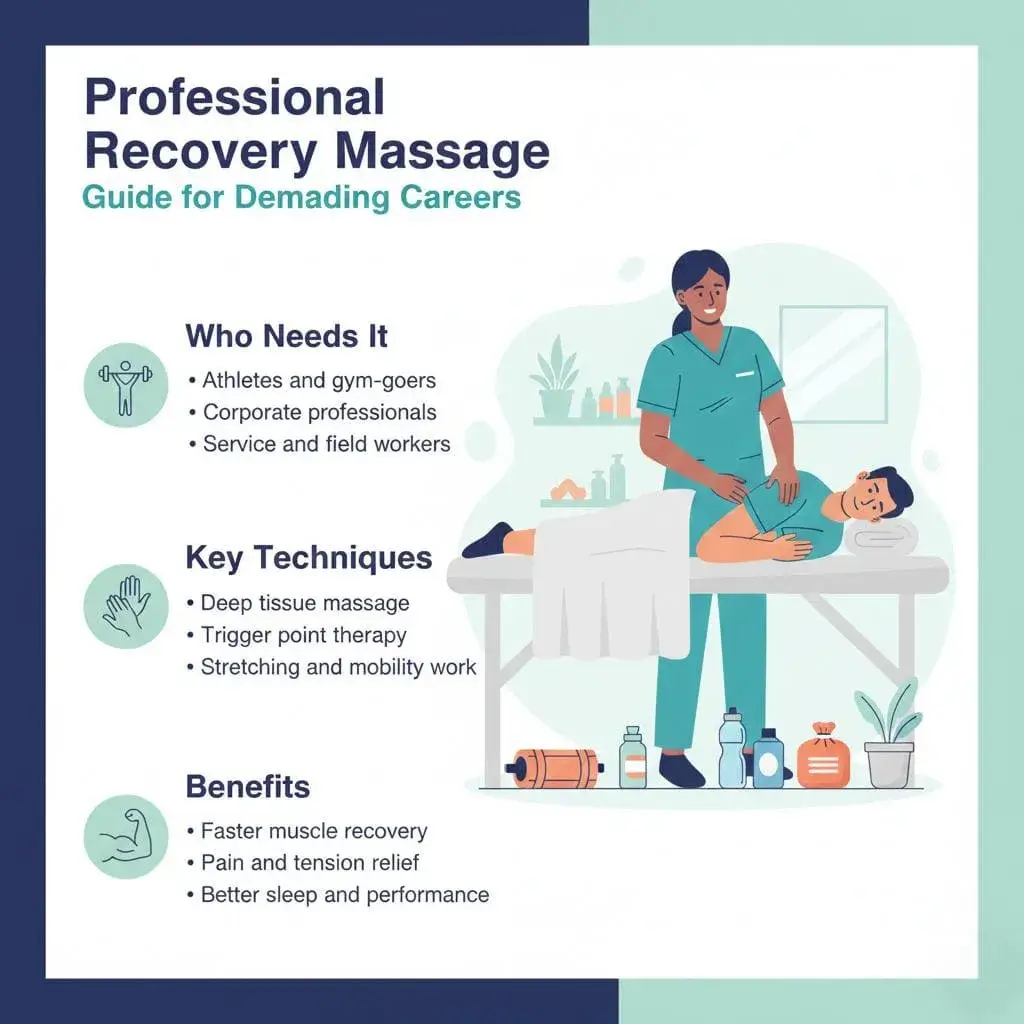
Professional Recovery Massage: Guide for Demanding Careers
How professionals in demanding careers use strategic recovery massage to maintain peak performance. Protocols for physical, cognitive, and travel recovery.
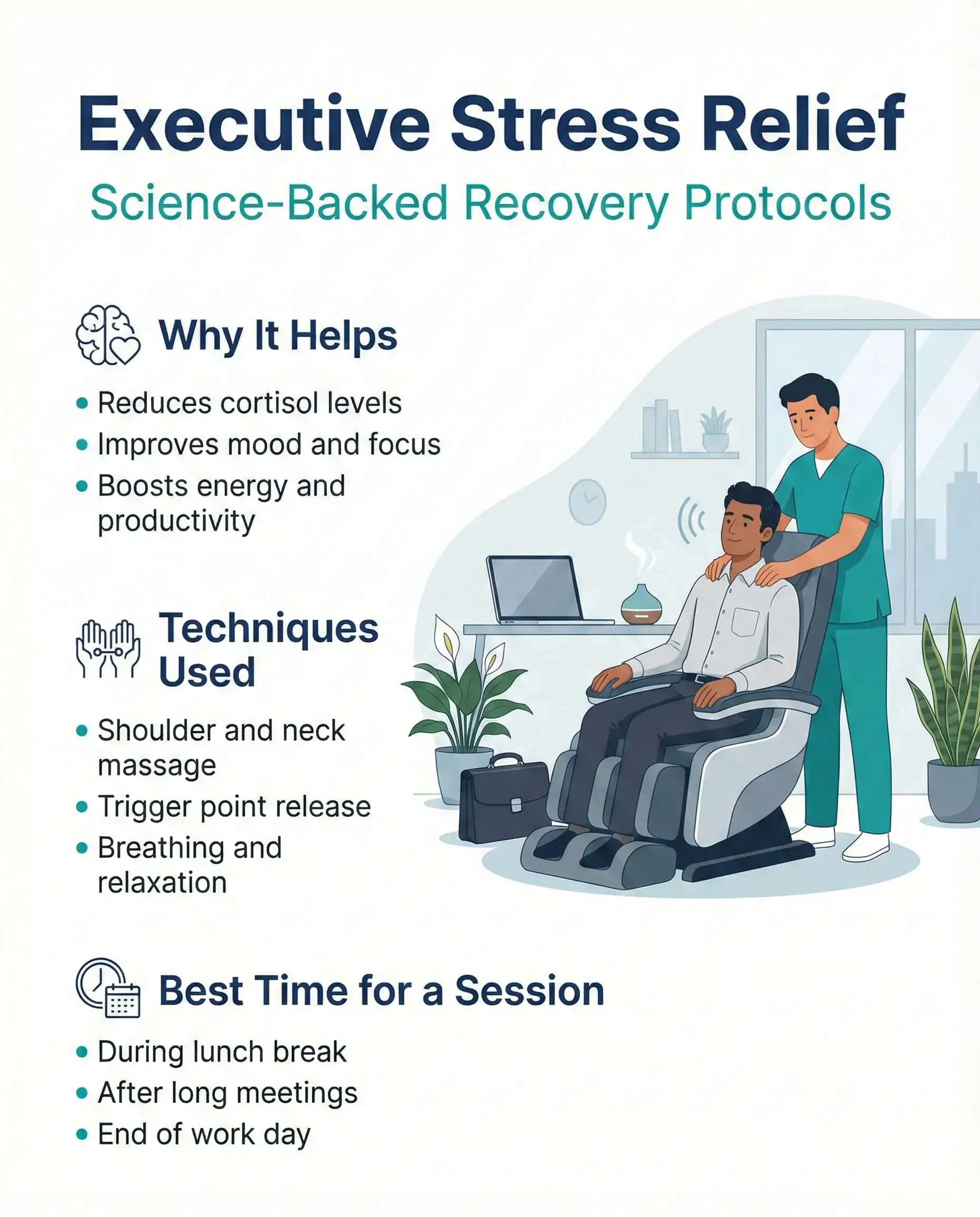
Executive Stress Relief: Science-Backed Recovery Protocols
How high-pressure decision-making creates unique stress patterns and the evidence-based recovery protocols that top performers use for demanding careers.

Sustainable Wellness: Building Habits That Last
How busy professionals build wellness routines that actually stick. Evidence-based strategies for making self-care sustainable rather than sporadic.
Post-Workout Recovery: Athletic Performance Guide
How active professionals optimize training adaptation through strategic recovery. Evidence-based massage protocols for performance and injury prevention.