
Sustainable Wellness: Building Habits That Last
Making self-care consistent rather than occasional
You've started wellness routines before. The gym membership in January. The meditation app downloaded with good intentions. The massage scheduled once, then not again for months. Each time, you began with motivation and ended with abandonment. The pattern is familiar: enthusiasm, consistency for a few weeks, gradual decline, eventual disappearance.
This isn't a character flaw—it's a design problem. Most wellness approaches rely on motivation and willpower, both of which are finite resources that demanding careers rapidly deplete. The executive who exercises discipline all day making difficult decisions has little willpower left for evening self-care. The consultant who travels constantly can't maintain location-dependent routines.
Sustainable wellness requires different architecture. It needs systems that don't depend on feeling motivated, routines that survive schedule disruption, and practices integrated into life rather than added on top of it. The professionals who maintain wellness long-term aren't more disciplined—they've built better systems.
Why Wellness Habits Fail
Understanding why habits fail helps design ones that succeed:
Motivation Dependency
Habits built on motivation fail when motivation fades—which it always does. The enthusiasm of starting something new is temporary. Sustainable habits must function when you don't feel like it, when you're tired, when work was brutal, when motivation is absent.
Friction Accumulation
Every obstacle between you and the habit—driving to the gym, packing a bag, finding parking, waiting for equipment—is friction that makes abandonment more likely. High-friction habits require high motivation. When motivation drops, friction wins.
All-or-Nothing Thinking
Missing once feels like failure, leading to complete abandonment. The professional who misses Monday's workout skips the whole week. The one who can't do a full session does nothing instead. This perfectionism destroys more habits than laziness ever could.
Identity Disconnection
Habits that feel like obligations rather than expressions of identity are fragile. 'I should exercise' is weaker than 'I'm someone who stays fit.' 'I need to relax' is weaker than 'I prioritize recovery because I perform better.' Identity-aligned habits persist; obligation-based habits erode.
Unrealistic Scope
Starting with ambitious commitments—daily meditation, five gym sessions weekly, complete dietary overhaul—overwhelms limited capacity for change. Sustainable habits start small and expand, not the reverse.
The Architecture of Lasting Habits
Sustainable wellness habits share common structural elements:
Principle 1: Reduce Friction Ruthlessly
Every step between deciding and doing is an opportunity to quit. Sustainable habits minimize these steps. Home massage eliminates travel friction. Pre-scheduled sessions remove decision friction. Automatic booking removes planning friction. The goal is making the healthy choice the easy choice.
- Pre-schedule recurring appointments rather than booking each time
- Choose services that come to you rather than requiring travel
- Prepare everything needed in advance (clothes, space, schedule)
- Remove decisions—same time, same day, same therapist
- Make cancellation harder than following through
Principle 2: Stack with Existing Habits
New habits attached to established ones are more likely to stick. 'After my Sunday long run, I get post-workout massage' links new behavior to existing routine. The established habit becomes the trigger for the new one, reducing the mental load of remembering and deciding.
- Link wellness to existing weekly patterns (after Sunday dinner, before Monday meetings)
- Connect massage to travel patterns (evening of return from trips)
- Attach recovery to training days (post-workout Thursdays)
- Pair with other self-care (massage followed by early sleep)
Principle 3: Make It Identity-Consistent
Reframe wellness from something you do to something you are. You're not someone who 'tries to exercise'—you're an athlete. You're not someone who 'should relax more'—you're a professional who understands recovery drives performance. Identity-based habits feel natural rather than forced.
Principle 4: Start Smaller Than Feels Reasonable
Ambitious starts create unsustainable expectations. Better to begin with less than you think you need and expand than to start with more and contract. Monthly massage that you actually do beats weekly massage that you abandon after two months.
Principle 5: Design for Consistency, Not Intensity
Moderate practice maintained for years outperforms intense practice abandoned in months. The professional who gets monthly massage for a decade accumulates far more benefit than one who does weekly massage for three months then quits. Prioritize sustainability over optimization.
Building Your Wellness System
A practical framework for sustainable wellness:
Step 1: Audit Current Patterns
Before adding new habits, understand existing ones. When do you have time and energy? What's already working? What have you tried and abandoned? What triggered the abandonment? This audit reveals where new habits can integrate and what patterns to avoid.
- Map your typical week—energy levels, commitments, transition times
- Identify existing habits that wellness could stack with
- Note when previous wellness attempts failed and why
- Find the path of least resistance in your schedule
Step 2: Choose Your Anchor Practice
Select one wellness practice to establish first—not five. This anchor practice should be high-value, low-friction, and sustainable. For many professionals, scheduled massage works well: it's effective, requires minimal personal effort during the session, and can be pre-booked to eliminate ongoing decision-making. Understanding different modalities helps you choose the right approach for your needs.
Step 3: Set Implementation Intentions
Vague intentions fail; specific ones succeed. 'I'll get massage more often' accomplishes nothing. 'Every Thursday at 7 PM, I receive massage at home' creates a concrete commitment. Research shows implementation intentions—specifying when, where, and how—dramatically increase follow-through.
| Vague Intention | Implementation Intention |
|---|---|
| I should get massage regularly | Every Thursday at 7 PM, massage at home |
| I need to exercise more | Monday/Wednesday/Friday at 6 AM, gym before work |
| I want to sleep better | Phone charges outside bedroom from 10 PM |
| I should manage stress better | After returning from any trip, book recovery massage |
Step 4: Remove Friction Systematically
For your anchor practice, identify and eliminate every source of friction:
- Decision friction → Pre-schedule recurring sessions
- Travel friction → Use home services
- Booking friction → Set up automatic recurring bookings
- Payment friction → Pre-authorize or use packages
- Preparation friction → Same time, same setup, same routine
- Cancellation friction → Make it easier to show up than to cancel
Step 5: Create Accountability Structures
External accountability strengthens habits. Financial commitment (pre-paid packages), social commitment (telling others about your routine), or professional commitment (your therapist expects you) all increase follow-through. The appointment on your calendar that someone else is counting on is harder to skip than self-directed intentions.
Step 6: Plan for Disruption
Travel, illness, crises, and unusual demands will disrupt any routine. Sustainable habits include contingency plans: what's the minimum version when normal isn't possible? Having a scaled-down option prevents all-or-nothing abandonment.
- Travel week: Schedule post-return session before you leave
- Unusually busy period: Maintain frequency, possibly reduce duration
- Missed session: Reschedule within the week, don't skip entirely
- Budget constraints: Reduce frequency rather than stopping completely
The Massage Habit Framework
Applying these principles specifically to massage:
Making Massage Sustainable
- ✓Schedule recurring sessions at fixed times (same day, same time weekly or bi-weekly)
- ✓Use home service to eliminate travel friction entirely
- ✓Pre-book 4-8 weeks ahead so sessions are committed, not decided
- ✓Work with the same therapist to build relationship and continuity
- ✓Link to existing patterns (post-travel, end of week, after training)
- ✓Set up packages or subscriptions for financial commitment
Frequency That Lasts
Start with frequency you're confident you'll maintain, then increase if capacity allows:
| Starting Point | After 2-3 Months | Long-Term Stable | |
|---|---|---|---|
| Very busy professionals | Monthly | Bi-weekly | Weekly or bi-weekly |
| Moderate schedules | Bi-weekly | Weekly | Weekly |
| Active individuals | Weekly | Weekly | Weekly + post-event |
| High-stress roles | Bi-weekly | Weekly | Weekly |
Handling Common Obstacles
"I Don't Have Time"
Time scarcity is usually priority scarcity. A 60-minute home massage session requires less total time than most activities you currently make time for. The question isn't whether you have time but whether you've prioritized it. Schedule it like a meeting—immovable.
"It's Too Expensive"
Consider the cost of not maintaining wellness: reduced productivity, increased sick days, potential health issues, diminished quality of life. Many professionals spend more on daily coffee than monthly wellness. Viewing it as an annual wellness investment rather than an expense changes the calculation entirely. It's a budget allocation choice, not an affordability issue.
"I Keep Forgetting"
If you're forgetting, the habit isn't systematized enough. Pre-schedule recurring sessions. Set calendar reminders. Use automatic booking. The goal is removing the need to remember by making it automatic.
"My Schedule Is Too Unpredictable"
Even unpredictable schedules have patterns. Perhaps you can't commit to a specific day but can commit to 'once per week, scheduled each Monday for that week.' Or 'within 48 hours of returning from travel.' Find the predictable within the unpredictable.
Beyond Massage: Integrated Wellness
Once your anchor practice is stable, consider expanding to complementary habits:
Sleep Optimization
Sleep is the foundation of recovery. Consistent sleep and wake times, bedroom environment optimization, and pre-sleep routines compound with massage benefits. Consider evening massage sessions as part of a sleep-enhancement protocol.
Movement Integration
Regular movement—whether structured exercise or simply more walking—complements massage by maintaining the mobility and circulation that sessions enhance. The effects of both reinforce each other.
Stress Management
Massage addresses stress effects; additional practices can address stress sources. Brief mindfulness, boundary-setting at work, or simply protected recovery time can reduce the stress load that massage then helps manage.
Nutrition Basics
Adequate protein, hydration, and basic nutritional quality support the tissue repair and recovery that massage facilitates. You don't need dietary perfection—just consistent adequacy.
Frequently Asked Questions
How long until a wellness habit feels automatic?
What if I miss a scheduled session?
Should I start with multiple wellness habits at once?
How do I maintain habits during travel?
What if my partner or family doesn't support my wellness routine?
Is it better to have a strict schedule or flexible timing?
How do I restart after completely falling off track?
What's the minimum frequency for massage to be worthwhile?
The Long Game
Sustainable wellness is a long game. The professional who maintains modest but consistent practices for decades outperforms one who cycles through intense efforts and abandonments. Whether it's addressing desk worker strain or managing executive headaches, the goal isn't perfection or optimization—it's persistence.
Building these habits requires honest assessment of what you'll actually do, not what you think you should do. It requires systems that function when motivation is absent. It requires starting smaller than feels significant and trusting the compound effect of consistency over time.
The difference between professionals who maintain wellness and those who don't isn't willpower, time, or money. It's systems. Build the right systems—low friction, identity-aligned, disruption-resistant—and wellness becomes something you are rather than something you're trying to do. Explore the wellness experience that fits your lifestyle.
Related Articles
Customized Wellness Plans: Annual Investment Strategy
How professionals structure annual wellness investments for maximum return. Strategic massage frequency, timing, and customization for lasting results.
Premium Home Wellness: Why Professionals Choose Home Services
Why successful professionals choose home massage over traditional spas. Discover the productivity, privacy, and quality advantages of home wellness.
Executive Stress Relief: Science-Backed Recovery Protocols
How high-pressure decision-making creates unique stress patterns and the evidence-based recovery protocols that top performers use for demanding careers.
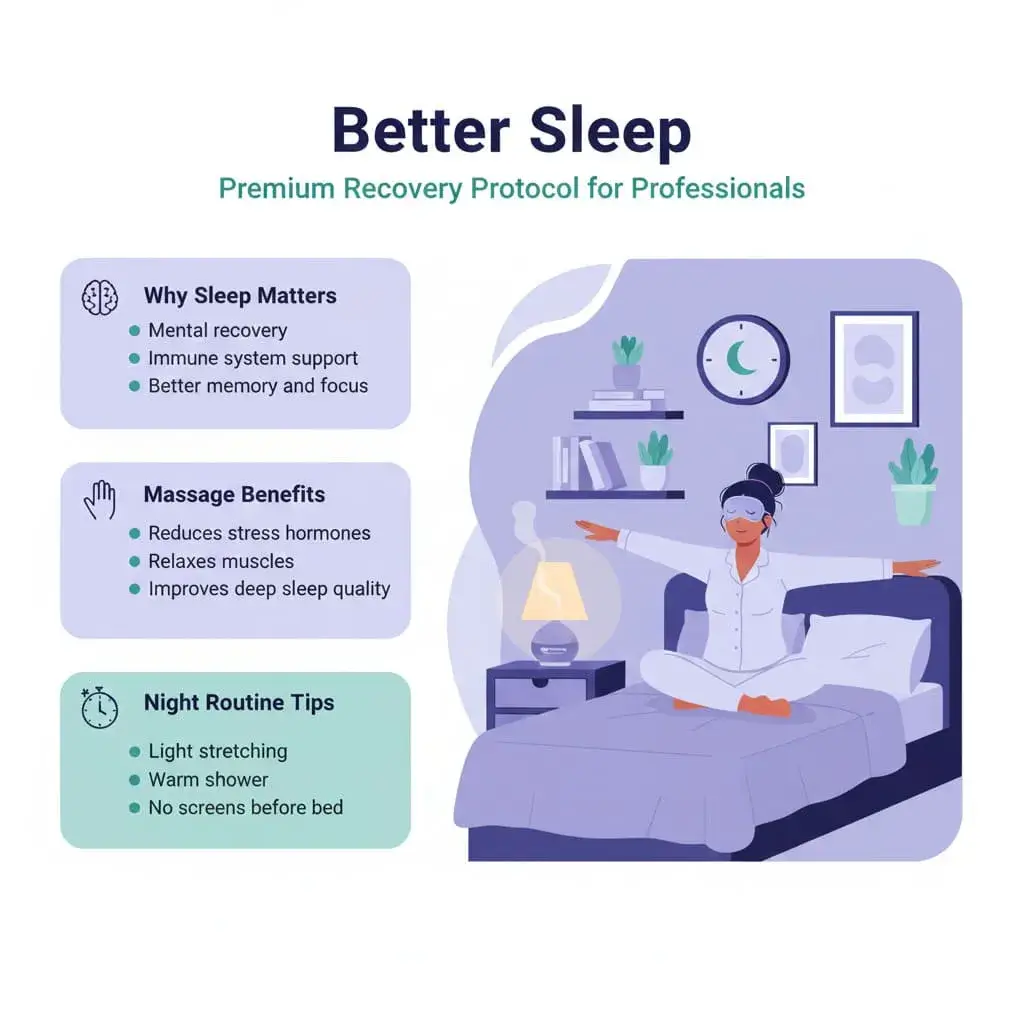
Better Sleep: Premium Recovery Protocol
How high-performers use strategic massage protocols to optimize sleep quality. Evidence-based sleep recovery approaches for cognitive performance.
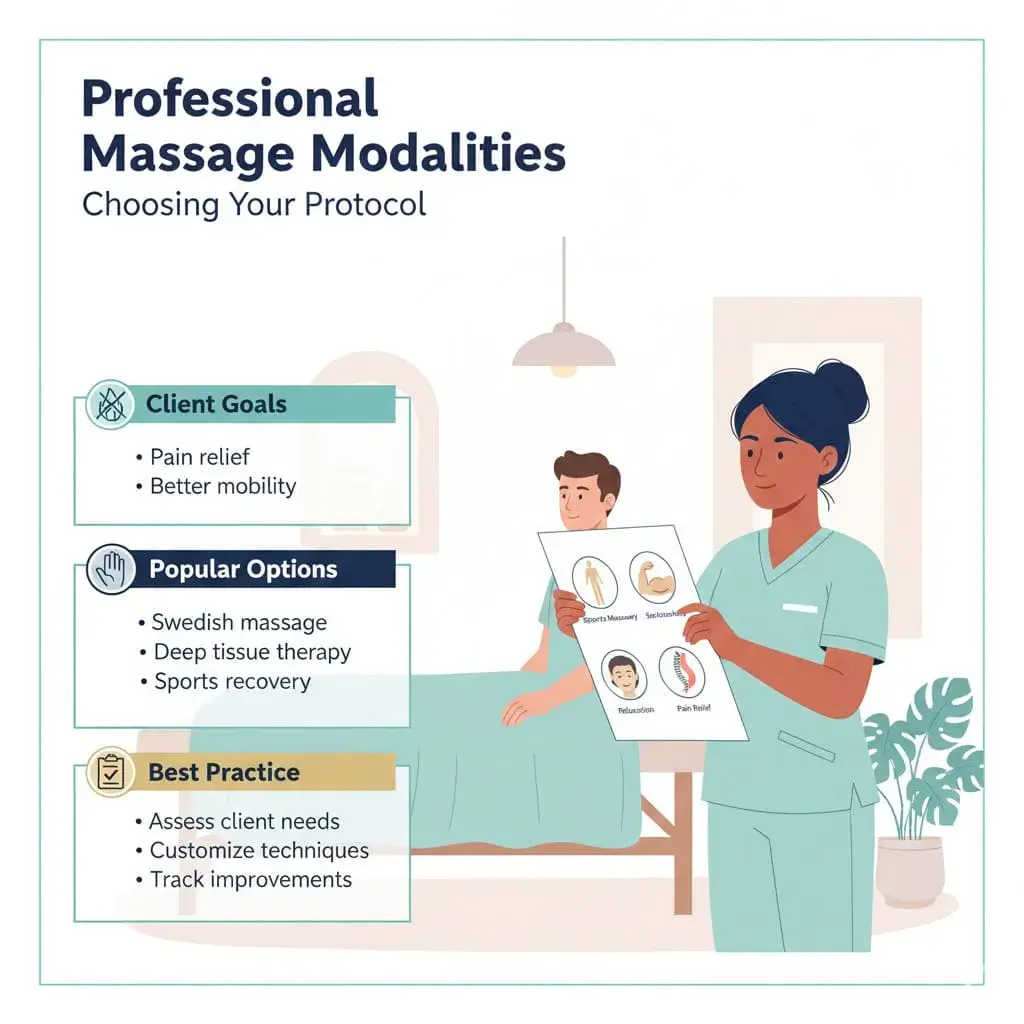
Professional Massage Modalities: Choosing Your Protocol
A decision framework for choosing the right massage type. Compare Swedish, deep tissue, sports, Thai, and other modalities to find your ideal match.