
Executive Wellness: Home Massage for Busy Professionals
Strategic self-care for those who drive results
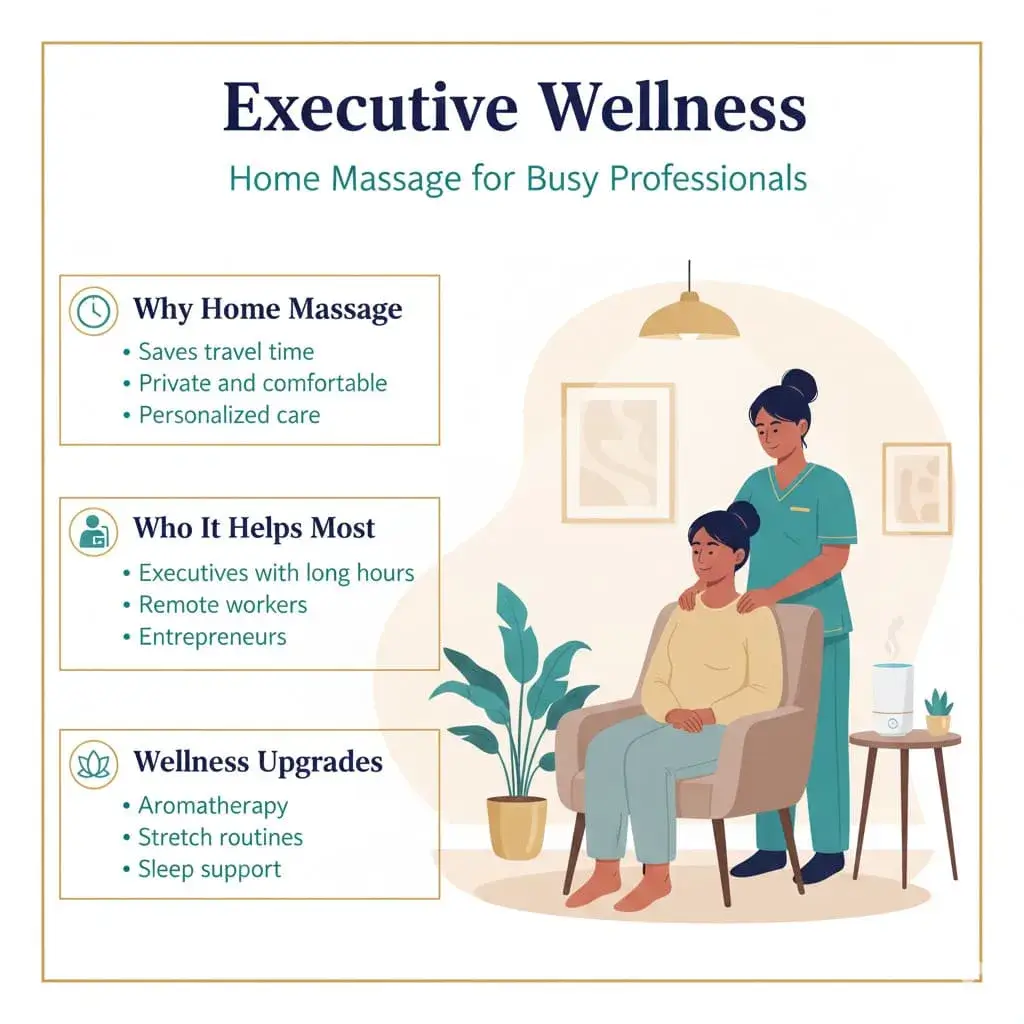
You manage teams, navigate complex decisions, and drive results under pressure. Your calendar is measured in 15-minute increments. The idea of "self-care" might sound like a luxury you can't afford—something for people with more time and less responsibility. But here's what high performers increasingly understand: strategic recovery isn't optional. It's a competitive advantage.
The executives, entrepreneurs, and senior professionals who sustain excellence over decades don't just work hard—they recover intelligently. Premium home massage has become a cornerstone of executive wellness programs worldwide, not because it's indulgent, but because it works. The ROI is measured in sustained cognitive performance, better decision-making, and the physical resilience to handle demanding schedules.
The Executive Stress Profile
Leadership positions create a distinctive stress pattern that differs from general workplace stress. Understanding this profile helps explain why targeted interventions like massage are particularly valuable for professionals in demanding roles.
Cognitive Load
You're not just completing tasks—you're holding multiple complex situations in mind simultaneously, anticipating scenarios, and making decisions with incomplete information. This sustained cognitive demand fatigues the brain in ways that physical rest alone doesn't address.
Responsibility Weight
Your decisions affect others' livelihoods, your organization's trajectory, and stakeholders who depend on outcomes. This weight creates a background stress that's always present, even during nominal "downtime." The body doesn't distinguish between physical threat and responsibility anxiety—both activate stress responses.
Schedule Fragmentation
Back-to-back meetings, constant context-switching, and the inability to complete focused work create a particular kind of exhaustion. Your attention is pulled in many directions, rarely settling long enough for the deep focus that feels satisfying.
Physical Neglect
Long hours seated—creating desk worker issues—meals eaten at desks or skipped entirely, exercise sacrificed for urgent priorities, sleep compressed to create more working hours. The body accumulates damage that's easy to ignore until it can't be ignored anymore.
Always-On Connectivity
Smartphones mean you're never truly off. The expectation of availability creates low-grade vigilance that prevents genuine rest. Even when you're not working, part of your mind is monitoring for the next demand.
| Factor | General Work Stress | Executive Stress |
|---|---|---|
| Decision scope | Task-level decisions | Strategic decisions affecting many |
| Accountability | Individual performance | Organizational outcomes |
| Schedule control | Often structured | Constantly shifting demands |
| Recovery time | Evenings/weekends often free | Boundaries blur, always accessible |
| Physical toll | Varies by role | Consistently sedentary, high cortisol |
Why Massage Works for Executive Stress
Massage isn't just pleasant—it produces specific physiological changes that directly counter executive stress patterns:
Cortisol Reset
Chronic stress keeps cortisol elevated. Research shows massage reduces cortisol by approximately 31% while increasing serotonin and dopamine. This hormonal shift moves you from chronic stress mode toward recovery mode—something your body may rarely experience otherwise.
Forced Disconnection
During a massage, you can't check email, take calls, or solve problems. For professionals who struggle to disconnect, massage creates a structured window where disconnection is the only option. This enforced break often provides mental clarity that continuous work doesn't.
Physical Restoration
The accumulated tension from desk work, travel, and stress-related muscle contraction gets addressed directly. Chronic neck pain, shoulder tension, and lower back issues—common executive complaints often causing tension headaches—respond well to regular massage.
Sleep Quality Improvement
Many executives sacrifice sleep or experience stress-related sleep disruption. Massage improves sleep quality through multiple mechanisms: reduced cortisol, increased serotonin (precursor to melatonin), and physical relaxation. Better sleep improves every aspect of executive function.
Cognitive Performance Support
A rested, less-stressed brain makes better decisions. The mental clarity following massage often leads to insights and improved problem-solving. Many executives report their best strategic thinking happens after—not during—periods of intense work.
Why Home Massage for Executives
For busy professionals, home massage isn't just a convenience preference—it's often the difference between getting massage and not getting it at all. Here's why home service makes sense for demanding schedules:
Time Efficiency
Spa visits require travel time, often waiting, and return travel. For a 60-minute massage, you might invest 2+ hours. Home massage eliminates transit entirely. The therapist arrives, provides treatment, and leaves. Your 60 minutes is actually 60 minutes.
Schedule Flexibility
Home massage services often offer early morning, late evening, and weekend availability that spas don't. Fit massage into the gaps in your schedule—6 AM before the day begins, 9 PM after a dinner meeting, Sunday evening to reset for the week.
Privacy and Discretion
No running into colleagues, clients, or competitors at the spa. No small talk with reception staff. Your wellness practices remain private. For high-profile professionals, this discretion matters.
Immediate Post-Massage Recovery
After a spa massage, you re-enter the world: get dressed, deal with checkout, navigate traffic. The relaxation dissipates. At home, when the massage ends, you're already in your private space. Continue resting, have a quiet meal, go to sleep. The benefits compound rather than evaporate.
Consistent Quality
With home massage, you can work with the same therapist consistently. They learn your body, your preferences, your problem areas. This continuity improves results over time—your therapist becomes part of your wellness team rather than a random service provider.
| Factor | Spa Massage | Home Massage |
|---|---|---|
| Total time investment | 2-3 hours (including travel) | 60-90 minutes actual |
| Schedule flexibility | Limited to spa hours | Early/late/weekend options |
| Privacy | Public environment | Complete privacy |
| Post-massage | Must transition back to world | Already home, can continue resting |
| Consistency | Different therapists often | Same therapist relationship |
| Environment control | Spa environment | Your preferred setting |
Integrating Massage Into Executive Life
The challenge isn't understanding the benefits—it's implementation. Here's how successful professionals make massage a sustainable part of their routine:
Schedule It Like a Meeting
Block massage appointments in your calendar as firmly as any business commitment. If it's not scheduled, it won't happen. Treat it as a standing meeting with your most important client—yourself. Your EA should know it's protected time.
Find Your Rhythm
Weekly massage provides optimal benefits for high-stress executives. Bi-weekly is the minimum for meaningful impact. Some executives schedule twice weekly during particularly demanding periods. Find the frequency that sustains your performance and make it routine.
Strategic Timing
Consider when massage serves you best:
- Sunday evening: Reset before the week, arrive Monday refreshed
- Wednesday evening: Mid-week recovery to sustain through Friday
- Post-travel: Address jet lag, travel tension, and sleep disruption
- Before major presentations/negotiations: Peak performance requires recovery
- After intense periods: Prevent accumulated stress from becoming chronic
Travel Integration
For executives who travel frequently, massage becomes even more important. Long flights, hotel beds, unfamiliar environments, and disrupted routines create physical and mental stress. Schedule massage for the day after returning from trips to accelerate recovery and prevent travel stress from accumulating.
The ROI Perspective
Executives think in terms of return on investment. Here's how to frame massage as an investment rather than an expense:
Productivity Gains
Sleep deprivation and chronic stress significantly impair cognitive function—studies show effects comparable to alcohol intoxication. If massage improves your sleep and reduces stress, the productivity gains likely exceed the time invested. One better decision can justify a year of massage.
Health Cost Avoidance
Chronic stress contributes to cardiovascular disease, immune dysfunction, and mental health issues. The medical costs, lost time, and career impact of serious health problems dwarf any investment in prevention. Massage is maintenance that prevents expensive repairs.
Longevity of Performance
Burnout ends careers. Executives who sustain peak performance over decades are those who manage their resources—including their physical and mental reserves. Regular massage supports the longevity that compounds success over time.
Relationship Quality
Stress doesn't stay at work—it affects relationships with family and friends. Executives who manage stress effectively are better partners, parents, and friends. This dimension of ROI is harder to quantify but often the most valuable.
Massage Styles for Executive Needs
Different massage modalities serve different executive needs:
| Type | Best For | When to Choose |
|---|---|---|
| Swedish Massage | General stress relief, relaxation | Regular maintenance, sleep improvement |
| Deep Tissue | Chronic tension, desk-related pain | Accumulated physical stress, specific problem areas |
| Sports Massage | Active executives, gym recovery | If you maintain a fitness routine |
| Aromatherapy | Enhanced relaxation, mood support | High anxiety periods, sleep focus |
| Hot Stone | Deep relaxation, muscle tension | Particularly stressful periods, winter months |
Many executives rotate between styles based on current needs—deep tissue when tension accumulates, Swedish for general maintenance, aromatherapy when sleep is the priority.
Common Executive Concerns Addressed
"I Don't Have Time"
You don't have time not to recover. The question isn't whether you can afford 60-90 minutes weekly—it's whether you can afford the cognitive decline, health risks, and eventual burnout of never recovering. Home massage minimizes time investment while maximizing benefit.
"It Seems Indulgent"
Reframe it: athletes have trainers and physiotherapists because their bodies are their instruments. Your mind and body are your instruments for professional performance. Maintaining them isn't indulgence—it's professional responsibility.
"I Should Be Able to Handle Stress"
You likely handle stress better than most—that's partly how you reached your position. But human physiology has limits. Acknowledging those limits and working with them is wisdom, not weakness. The most resilient executives are those who recover strategically.
Frequently Asked Questions
How often should busy executives get massage?
What's the best time of day for executive massage?
How do I explain scheduling massage during work hours?
Can massage help with jet lag?
Is it worth getting massage if I can only do it monthly?
Should I mention work stress to my massage therapist?
How does massage compare to other executive wellness options?
What if I fall asleep during the massage?
Your Highest-Value Asset
You've invested years in developing expertise, building relationships, and earning your position. Your ability to perform at that level depends on physical and mental resources that aren't unlimited. The most successful long-term performers are those who treat recovery as seriously as they treat work.
Home massage removes the barriers that prevent busy professionals from getting the recovery they need. No travel time. Flexible scheduling. Privacy. Immediate transition to rest. It's designed for how you actually live, not how wellness programs imagine you should live.
The question isn't whether you can afford regular massage. It's whether you can afford to operate indefinitely without strategic recovery—and what that costs you in performance, health, and longevity of success. Building sustainable wellness habits now pays dividends throughout your career. For couples in demanding roles, shared recovery practices strengthen both individual performance and relationships.
Related Articles
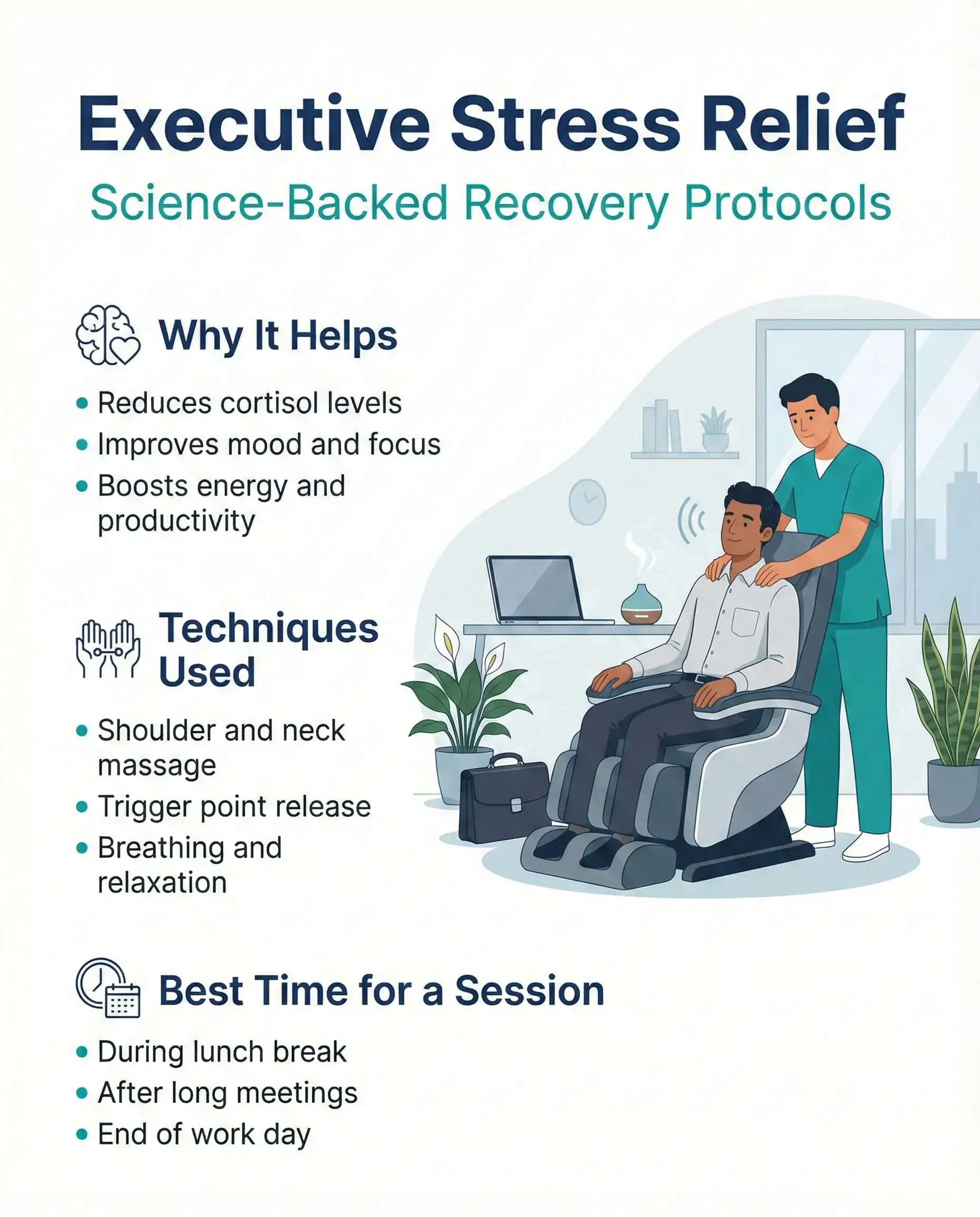
Executive Stress Relief: Science-Backed Recovery Protocols
How high-pressure decision-making creates unique stress patterns and the evidence-based recovery protocols that top performers use for demanding careers.
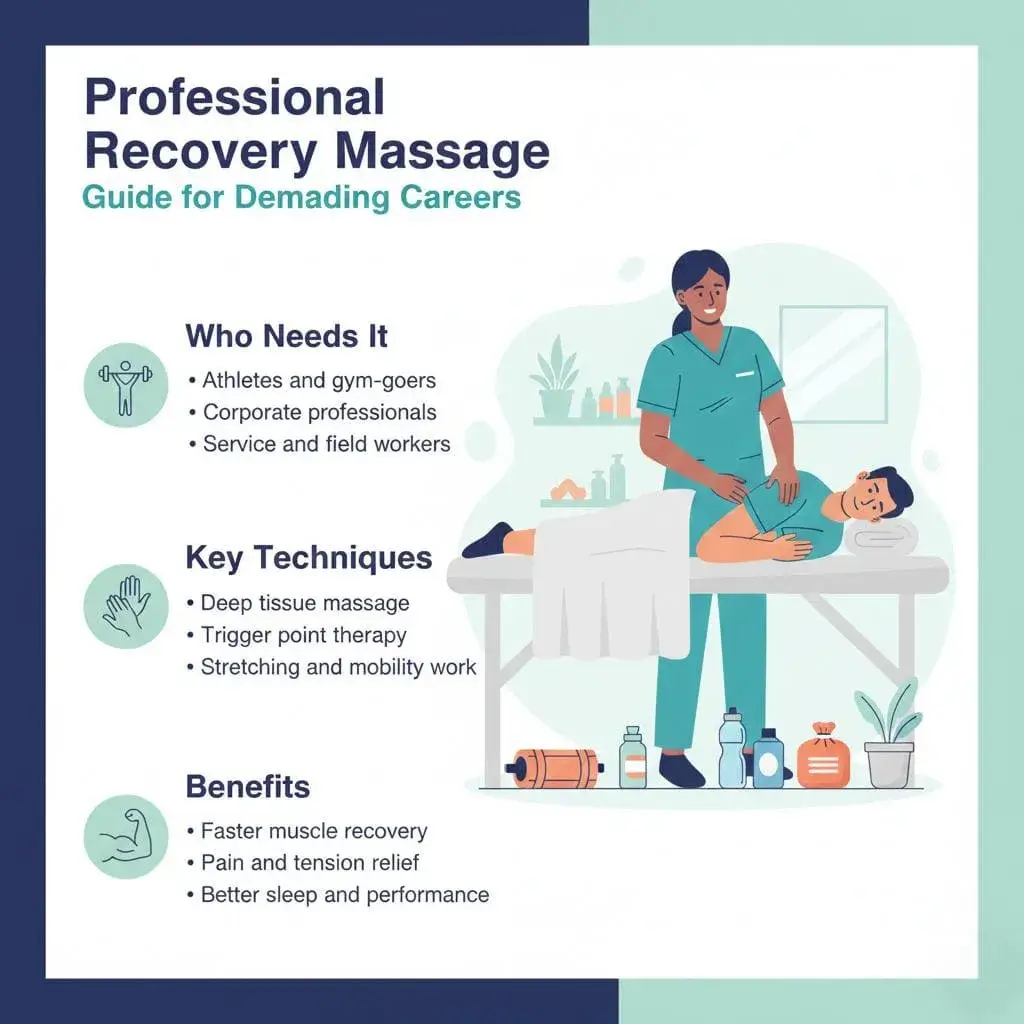
Professional Recovery Massage: Guide for Demanding Careers
How professionals in demanding careers use strategic recovery massage to maintain peak performance. Protocols for physical, cognitive, and travel recovery.
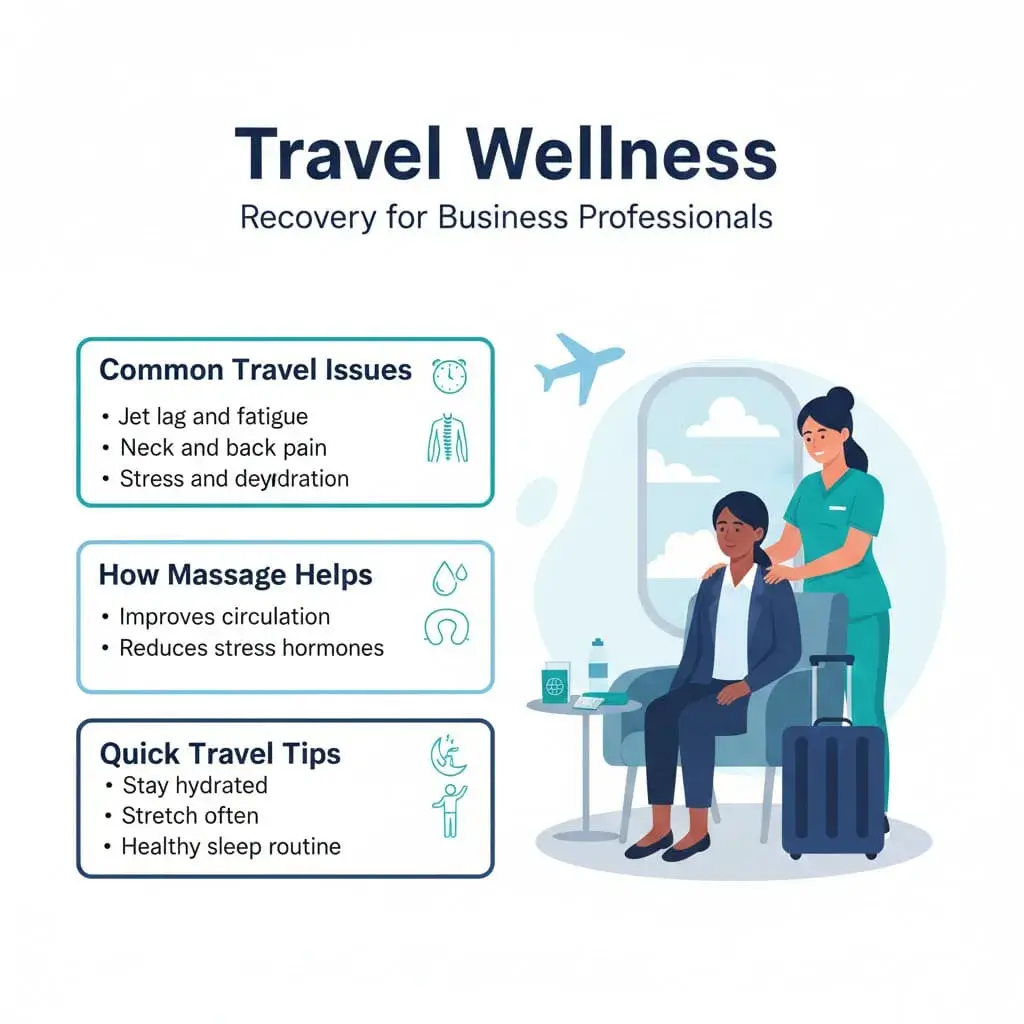
Travel Wellness: Recovery for Business Professionals
How frequent business travelers maintain performance through strategic recovery. Evidence-based approaches to travel fatigue, jet lag, and mobility.
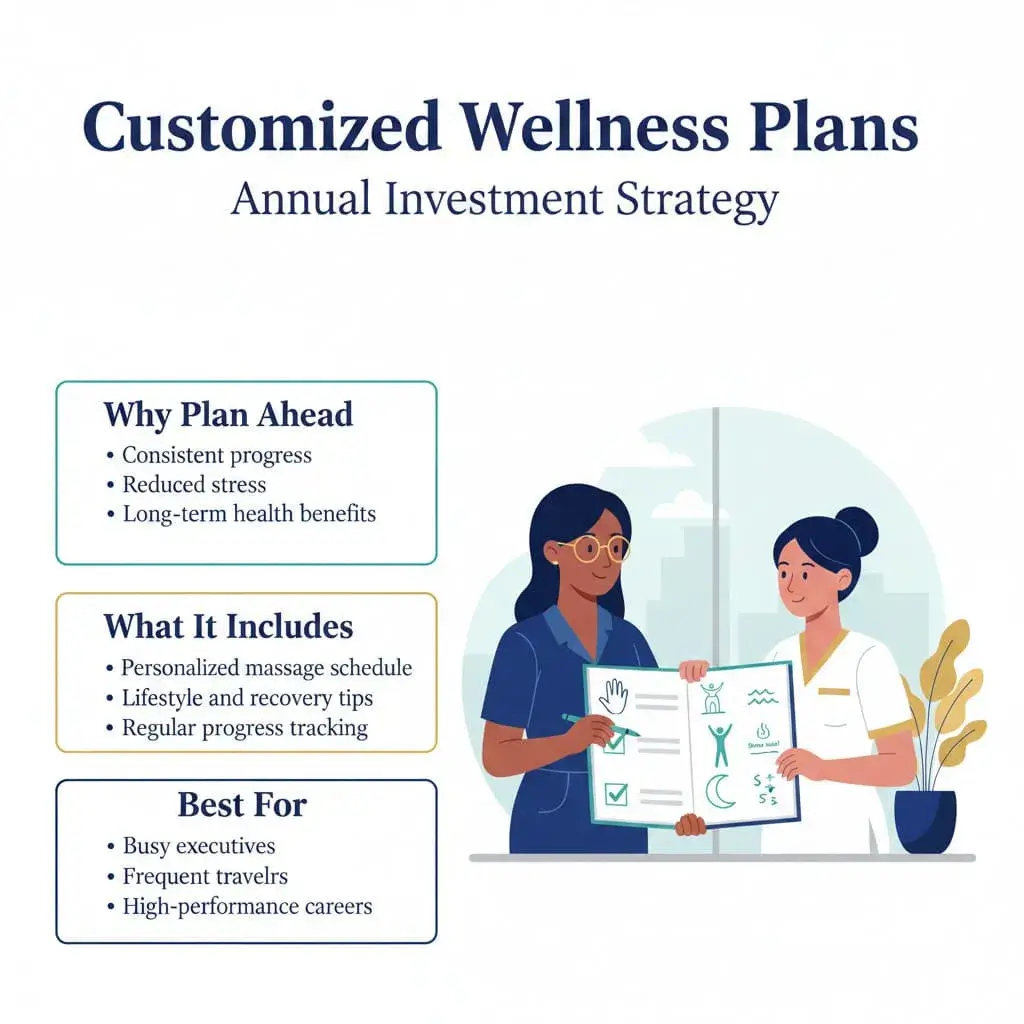
Customized Wellness Plans: Annual Investment Strategy
How professionals structure annual wellness investments for maximum return. Strategic massage frequency, timing, and customization for lasting results.

Sustainable Wellness: Building Habits That Last
How busy professionals build wellness routines that actually stick. Evidence-based strategies for making self-care sustainable rather than sporadic.