
Travel Wellness: Recovery for Business Professionals
Maintaining performance through strategic travel recovery
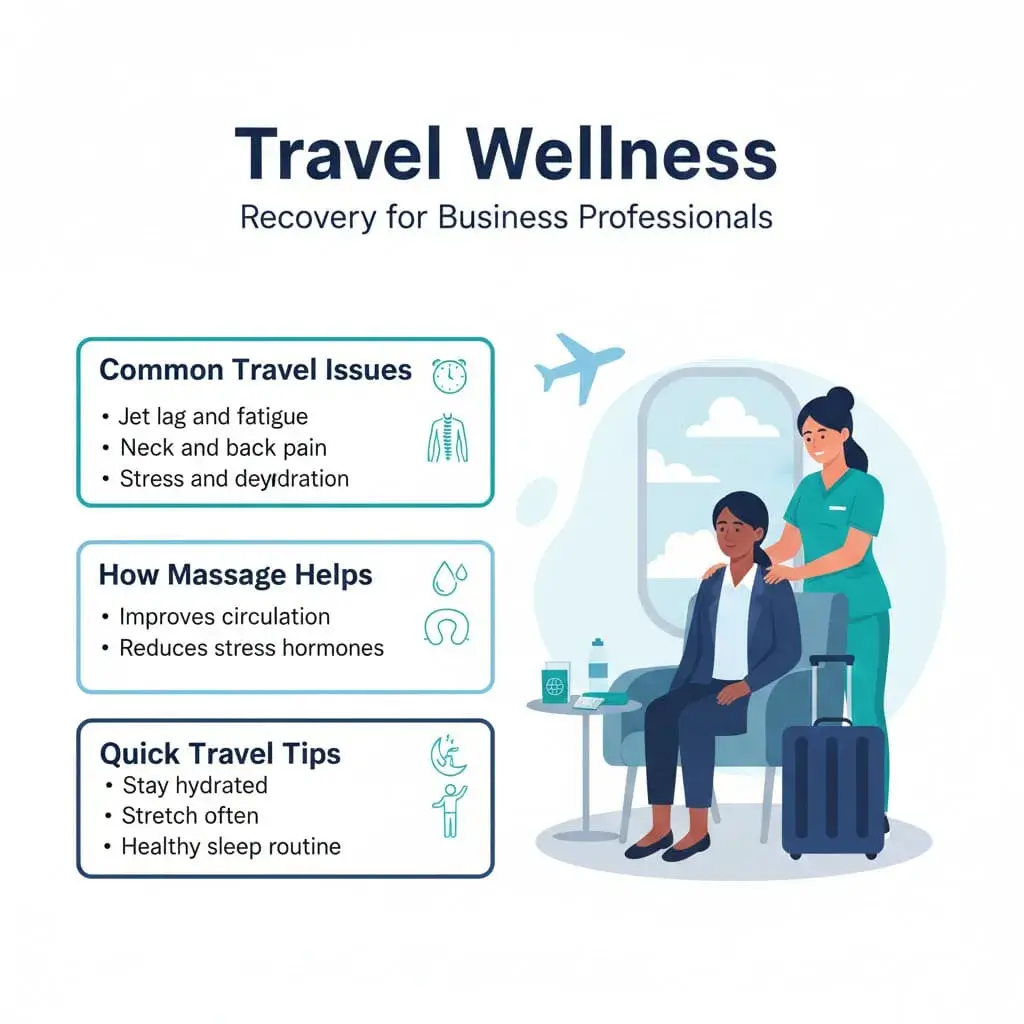
Mumbai to Bangalore. Delhi to Chennai. Pune to Hyderabad. The domestic business traveler's circuit is demanding enough—cramped flights, airport waits, unfamiliar hotel beds, meetings that start before your body has adjusted. Add international travel to Singapore, Dubai, London, or the US, and the physical demands compound. Jet lag. Circadian disruption. Hours in economy seats designed for someone smaller. The accumulated strain of living out of a suitcase while performing at full capacity.
For professionals whose roles require frequent travel, these aren't occasional inconveniences—they're occupational hazards that accumulate over time. The executive who travels 100+ days annually faces chronic physical challenges that static desk workers don't encounter. Yet the performance expectations remain unchanged. Clients expect sharpness. Deals require presence. The business doesn't pause because your body is three time zones behind.
Strategic travel recovery isn't about luxury—it's about maintaining the capacity that your role demands. Building sustainable wellness habits includes travel recovery. The right recovery protocols, timed correctly, can dramatically reduce the performance impact of frequent travel while preventing the cumulative damage that ends careers prematurely.
What Travel Does to Your Body
Understanding travel's physical impact helps target recovery effectively:
Prolonged Sitting and Compression
A Mumbai-Delhi flight is 2+ hours. Mumbai-Bangalore similar. International flights to Singapore are 5+ hours; to London, 9+ hours; to New York, 16+ hours. Throughout, you're seated in positions that compress the spine, restrict hip flexors, and limit blood flow to the lower extremities. The already-problematic desk worker posture becomes worse in airplane seats designed for space efficiency, not ergonomic health.
This prolonged sitting creates muscle stiffness, joint compression, and circulation restriction. The lower back bears load differently than when standing. Hip flexors remain shortened for hours. Neck and shoulders tense from awkward sleeping positions or screen use during flight.
Circulation Challenges
Cabin pressure at cruising altitude is equivalent to being at 1,800-2,400 meters elevation. This reduced pressure, combined with low humidity (often 10-20% in aircraft cabins) and immobility, challenges circulation. Blood pools in the lower extremities. Tissues dehydrate. The risk of deep vein issues increases, particularly on longer flights.
Circadian Disruption
Crossing time zones disrupts your body's internal clock. Even the 1.5-hour difference between Mumbai and Singapore affects sleep patterns. The 5.5-hour shift to London or 9.5-hour shift to New York creates significant jet lag. Your body expects sleep when you need to be alert; demands alertness when you should be sleeping. Melatonin production, cortisol rhythms, and digestion all fall out of sync.
Sleep Quality Degradation
Hotel beds—even good ones—aren't your bed. Unfamiliar sounds, different pillows, room temperature variations, and the general alertness of being in new environments all compromise sleep quality. Even without time zone changes, business travelers often sleep less effectively on the road than at home.
Stress Accumulation
Travel itself is stressful: navigating airports, managing logistics, dealing with delays, performing immediately upon arrival. This executive stress compounds whatever work stress the trip involves. The meeting, presentation, or negotiation that required travel adds its own demands, often triggering tension headaches. Cortisol levels remain elevated throughout.
The Traveler Recovery Framework
Effective travel recovery addresses these issues through strategic timing and targeted treatment:
Pre-Travel Preparation
For significant trips—international travel or intensive domestic circuits—a massage session 1-2 days before departure provides a foundation:
- Releases existing tension before travel adds more
- Improves circulation baseline before flight-induced restriction
- Addresses any developing issues before they compound during travel
- Promotes better sleep in final nights before departure
- Creates physical reserve for the demands ahead
Post-Travel Recovery
The return home presents the prime recovery opportunity. Scheduling massage within 24-48 hours of returning from significant travel accelerates recovery:
- Addresses flight-induced muscle stiffness and compression
- Restores circulation after prolonged sitting
- Releases travel-accumulated tension in neck, shoulders, and back
- Supports circadian readjustment through relaxation
- Improves sleep quality in the critical first nights back
- Prevents acute travel strain from becoming chronic patterns
During Extended Trips
For trips lasting a week or more, mid-trip recovery can maintain function. Many business hotels offer spa services, though quality varies. Some frequent travelers arrange home service massage in their destination cities when available, maintaining their recovery practice even on the road.
Targeted Treatment for Travel Issues
Different travel demands require different treatment focus:
| Travel Type | Primary Issues | Treatment Focus |
|---|---|---|
| Short domestic flights (1-3 hrs) | Mild compression, posture strain | General maintenance, neck/shoulders |
| Long domestic/regional (3-6 hrs) | Significant stiffness, circulation | Lower back, hips, leg circulation |
| International (6-12 hrs) | Major compression, mild jet lag | Full body, emphasis on legs, sleep support |
| Long-haul international (12+ hrs) | Severe compression, significant jet lag | Intensive full body, circulation focus, circadian support |
| Multi-city trips | Cumulative fatigue, varied stress | Recovery focus, stress relief priority |
Key Areas for Travel Recovery
Certain areas consistently need attention after travel:
Lower Back and Hips
Prolonged sitting in airline seats compresses the lumbar spine and shortens hip flexors. Post-travel massage should include thorough lower back work and hip flexor release—particularly the psoas, which remains shortened throughout flight.
Legs and Circulation
Blood pooling and reduced circulation during flights leaves legs feeling heavy and stiff. Massage techniques that promote circulation—effleurage, compression work moving toward the heart—help restore normal blood flow and reduce post-flight leg discomfort.
Neck and Shoulders
Sleeping in airplane seats creates neck strain. Carrying bags loads the shoulders asymmetrically. Screen use during flights maintains forward head posture. These areas typically need focused attention after any trip.
Upper Back
The thoracic spine stiffens from hours in fixed positions. Travel recovery should include mobility work for the upper back—techniques that restore movement capacity rather than just releasing muscle tension.
Jet Lag and Circadian Support
While massage cannot directly reset your body clock, it can support circadian adjustment:
Evening Sessions for Westward Travel
When traveling west (US to India, Europe to India), your body wants to sleep earlier than local time. Evening massage promotes the relaxation that helps you stay awake until appropriate local bedtime, then sleep through the night. The parasympathetic activation supports the sleep your body needs at the right local time.
Morning Sessions for Eastward Travel
When traveling east (India to US, India to Europe, though this direction is less common for return flights), your body wants to stay awake later than local time. Morning massage can be stimulating rather than sedating, supporting daytime alertness when your body expects sleep.
Sleep Quality Enhancement
Regardless of direction, massage improves sleep quality during jet lag recovery. The physical relaxation, cortisol reduction, and parasympathetic activation all support better sleep—even if that sleep occurs at slightly off-schedule times during adjustment.
The Frequent Traveler Protocol
For professionals traveling multiple times monthly, a systematic approach prevents cumulative damage:
Weekly Baseline Maintenance
Maintain weekly massage even during non-travel weeks. This baseline keeps your body in condition to handle travel demands rather than starting each trip already compromised. Think of it as maintenance that makes travel recovery easier.
Post-Trip Priority Sessions
Every significant trip should have recovery massage scheduled before you leave. Block the evening you return or the following day. This non-negotiable recovery session addresses acute travel strain before it accumulates.
Intensive Recovery Periods
After particularly demanding travel—long international trips, multi-city tours, or back-to-back weeks on the road—increase to twice-weekly sessions for 2-3 weeks. This intensive recovery prevents the deep fatigue that accumulates from sustained travel demands.
| Travel Pattern | Baseline Frequency | Post-Trip Recovery | Special Consideration |
|---|---|---|---|
| Light (1-2 domestic/month) | Weekly | Standard weekly session | Maintain consistency |
| Moderate (weekly domestic) | Weekly | Prioritize post-trip timing | Never skip post-trip session |
| Heavy (2+ trips/week) | Twice weekly | Session within 24 hrs of each return | Consider travel-day evening sessions |
| International regular | Weekly + post-trip | Session within 24-48 hrs | Intensive recovery after long-haul |
Home Service Advantage for Travelers
For frequent travelers, premium home wellness offers particular advantages:
No Additional Travel
After days of airports, flights, and unfamiliar cities, the last thing you need is more travel. Home service brings recovery to you—no driving, no parking, no navigating. You've traveled enough; the service comes to your door.
Immediate Post-Arrival Scheduling
Schedule for the evening you land or the morning after. Traditional spas may not accommodate these specific timing needs. Home service flexes to your return schedule, capturing the optimal recovery window.
Transition to Sleep
A late evening session at home leads directly to sleep in your own bed—often the first quality sleep after days away. No post-massage commute to undo the relaxation. The session ends and you're already where you want to be for recovery sleep.
Familiar Environment Recovery
After days in hotels and unfamiliar spaces, your home environment itself is recovery. Combining that return-to-home comfort with professional massage multiplies the recovery benefit. You're not in another unfamiliar spa space—you're home, being cared for.
Complementary Travel Recovery Practices
Massage works best as part of a comprehensive travel recovery approach:
Hydration
Aircraft cabin humidity is extremely low. Dehydration from flights affects muscle function, circulation, and recovery. Aggressive hydration before, during, and after flights supports the body's ability to recover from travel stress.
Movement
Movement during flights—walking the aisle, ankle circles, standing when possible—reduces the impact of prolonged sitting. Post-flight, gentle walking or stretching before massage helps prepare tissues for treatment.
Sleep Hygiene
Strategic sleep management accelerates jet lag recovery. Exposure to light at appropriate times, avoiding screens before sleep, maintaining sleep-conducive temperature in your bedroom—these practices complement massage's sleep-supporting effects.
Nutrition
Travel often disrupts eating patterns. Returning to regular, nutritious meals supports recovery. Avoiding heavy meals late in the evening, limiting alcohol during adjustment periods, and eating at consistent times all help the body recalibrate.
Frequently Asked Questions
How soon after landing should I get massage?
Is massage safe after long flights?
Should I get massage before or after international travel?
What massage type is best for travel recovery?
How does massage help with jet lag?
What if I travel every week?
Can massage prevent travel-related health issues?
Is it worth getting massage during trips?
Sustaining a Travel Career
Business travel can be sustainable over a long career—but not without deliberate recovery practices. The professionals who maintain travel-intensive roles for decades aren't those who push through without self-care; they're those who systematically counteract travel's physical demands.
Strategic travel recovery treats your body as the infrastructure that makes your career possible. Just as you wouldn't expect a vehicle to perform indefinitely without maintenance, you can't expect your body to sustain frequent travel without recovery support. The investment in post-travel massage pays returns in sustained capacity, reduced sick days, and career longevity.
For the professional whose role requires being in Mumbai Monday, Bangalore Wednesday, and Delhi Friday—or Singapore this week and London next—recovery isn't optional. It's the practice that makes sustained high performance possible despite the demands your career places on your body. Consider incorporating travel recovery into your annual wellness investment planning.
Related Articles
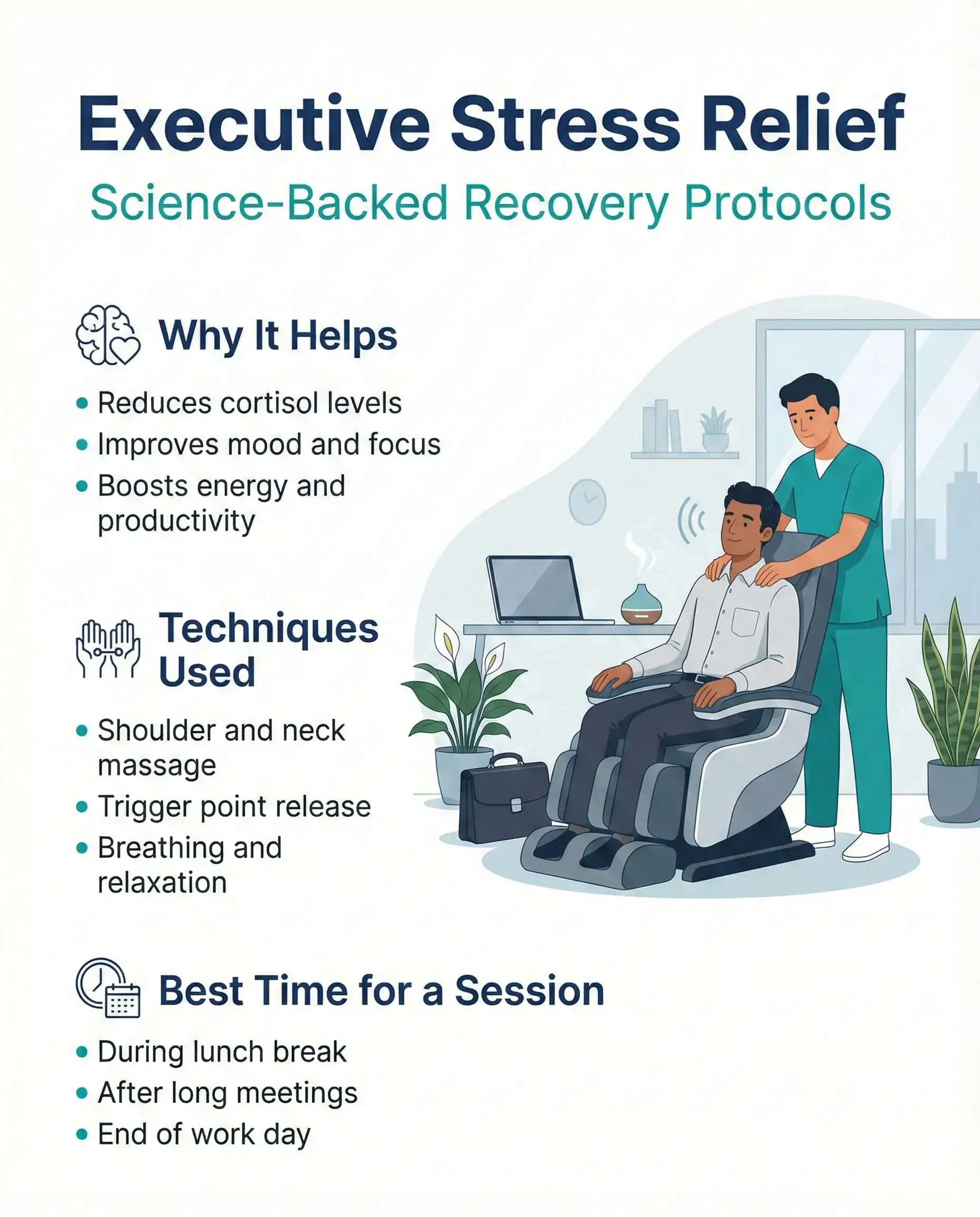
Executive Stress Relief: Science-Backed Recovery Protocols
How high-pressure decision-making creates unique stress patterns and the evidence-based recovery protocols that top performers use for demanding careers.
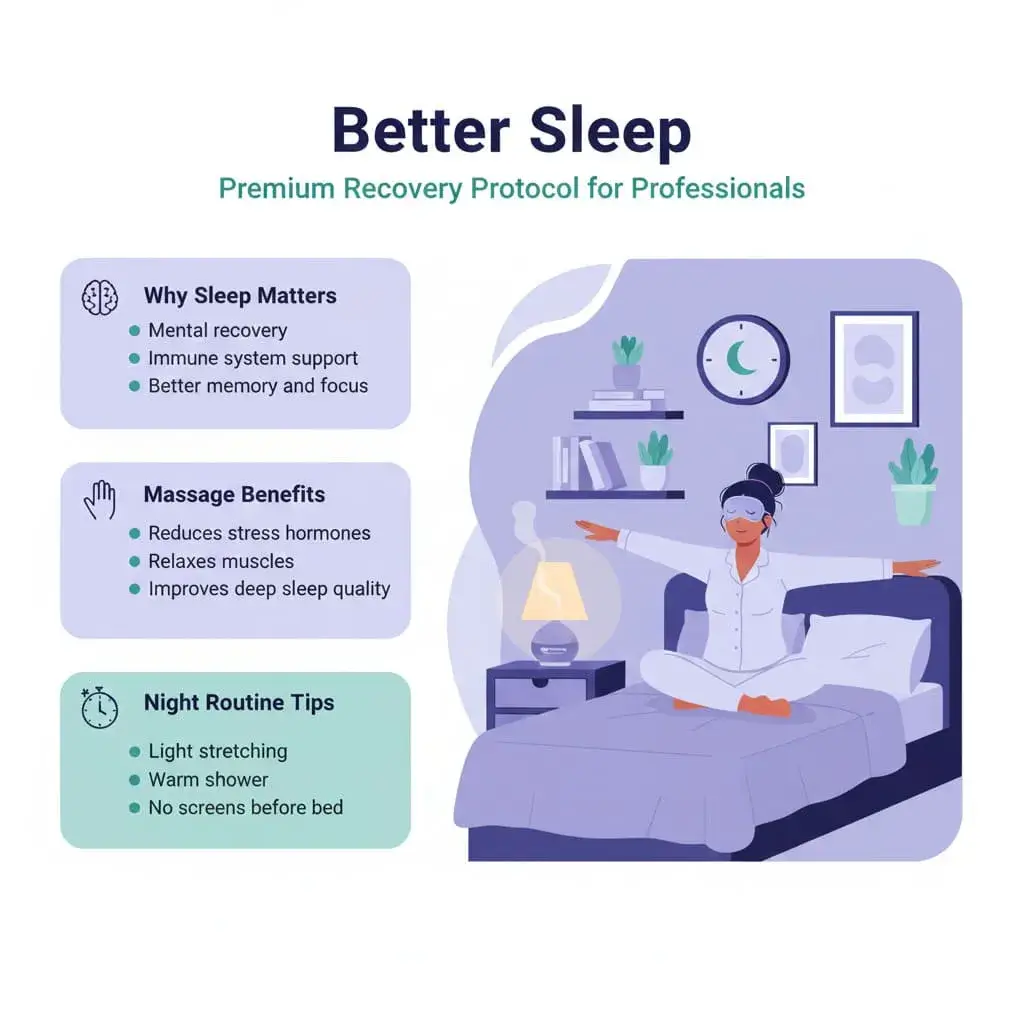
Better Sleep: Premium Recovery Protocol
How high-performers use strategic massage protocols to optimize sleep quality. Evidence-based sleep recovery approaches for cognitive performance.
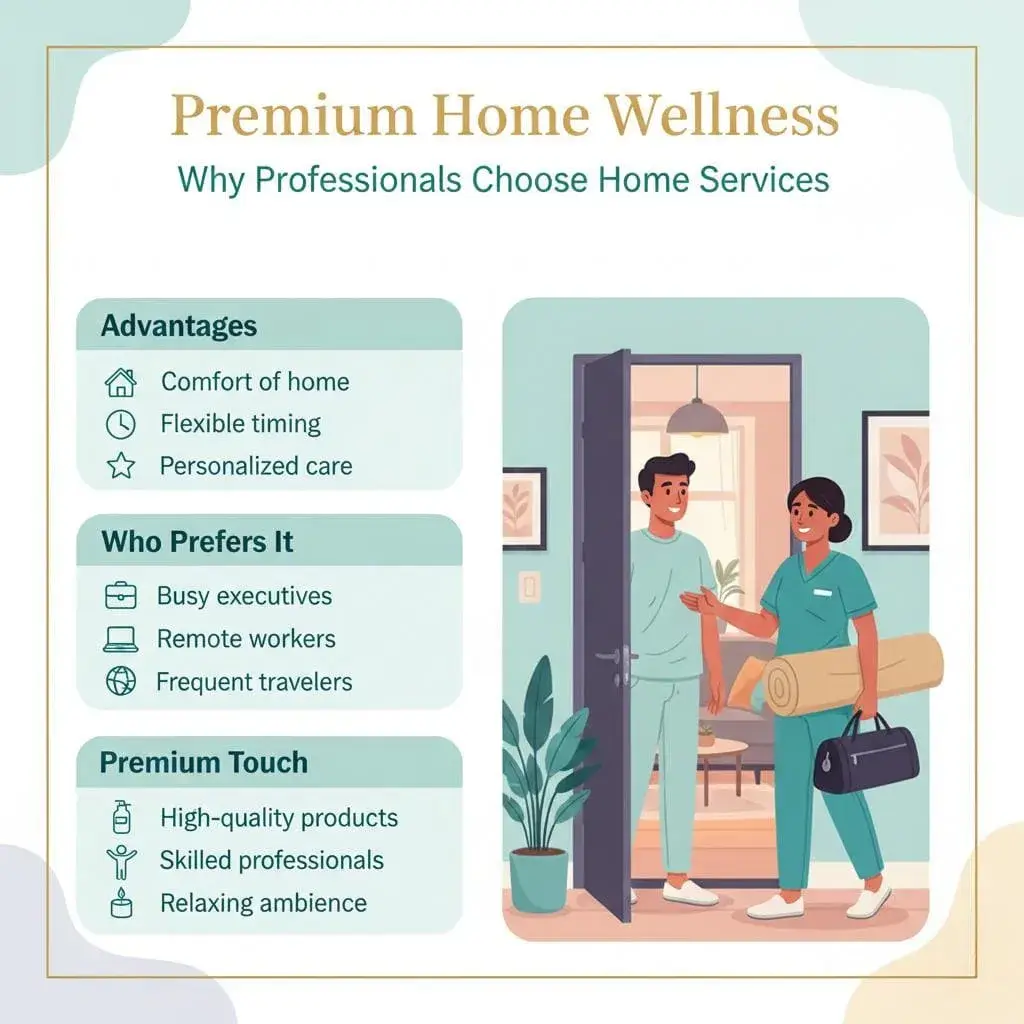
Premium Home Wellness: Why Professionals Choose Home Services
Why successful professionals choose home massage over traditional spas. Discover the productivity, privacy, and quality advantages of home wellness.
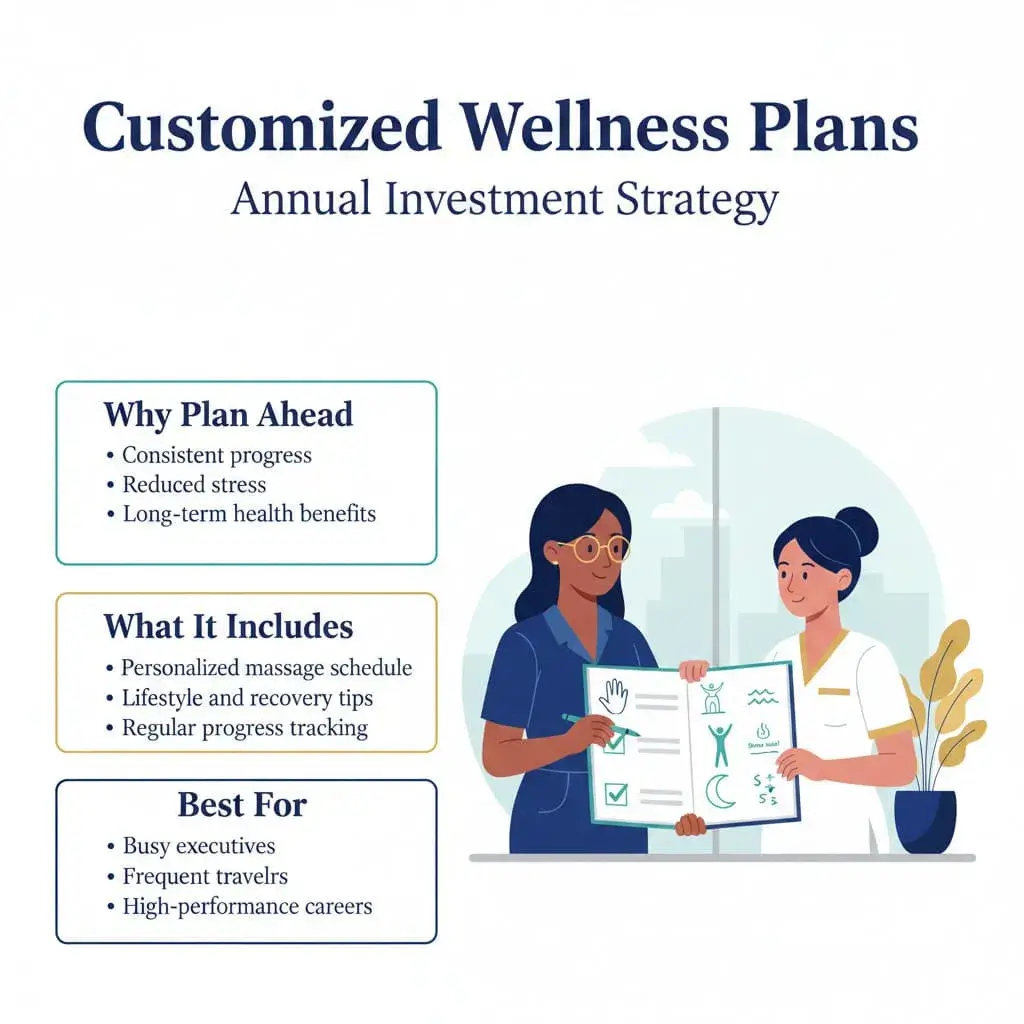
Customized Wellness Plans: Annual Investment Strategy
How professionals structure annual wellness investments for maximum return. Strategic massage frequency, timing, and customization for lasting results.
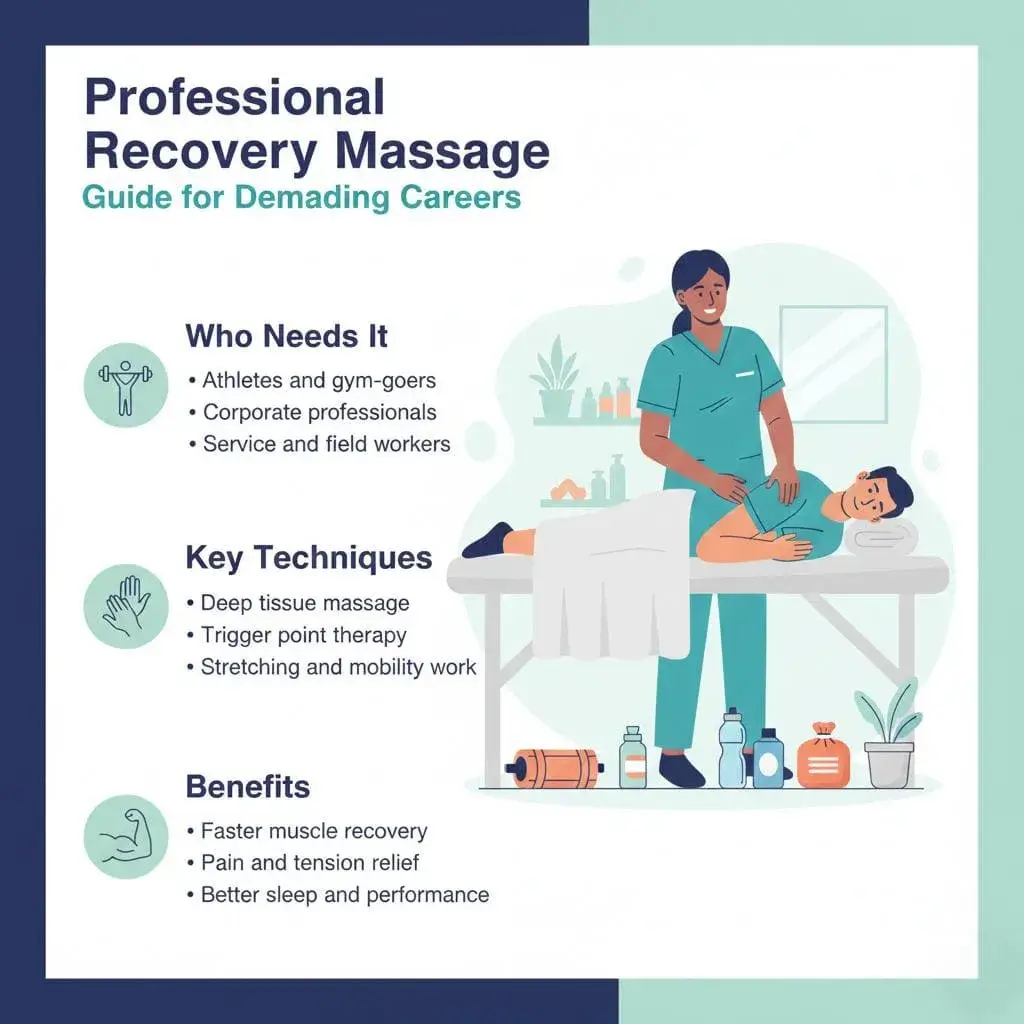
Professional Recovery Massage: Guide for Demanding Careers
How professionals in demanding careers use strategic recovery massage to maintain peak performance. Protocols for physical, cognitive, and travel recovery.