
Career Paths in Elite Wellness: Growth & Opportunities
Building a long-term career in premium massage therapy
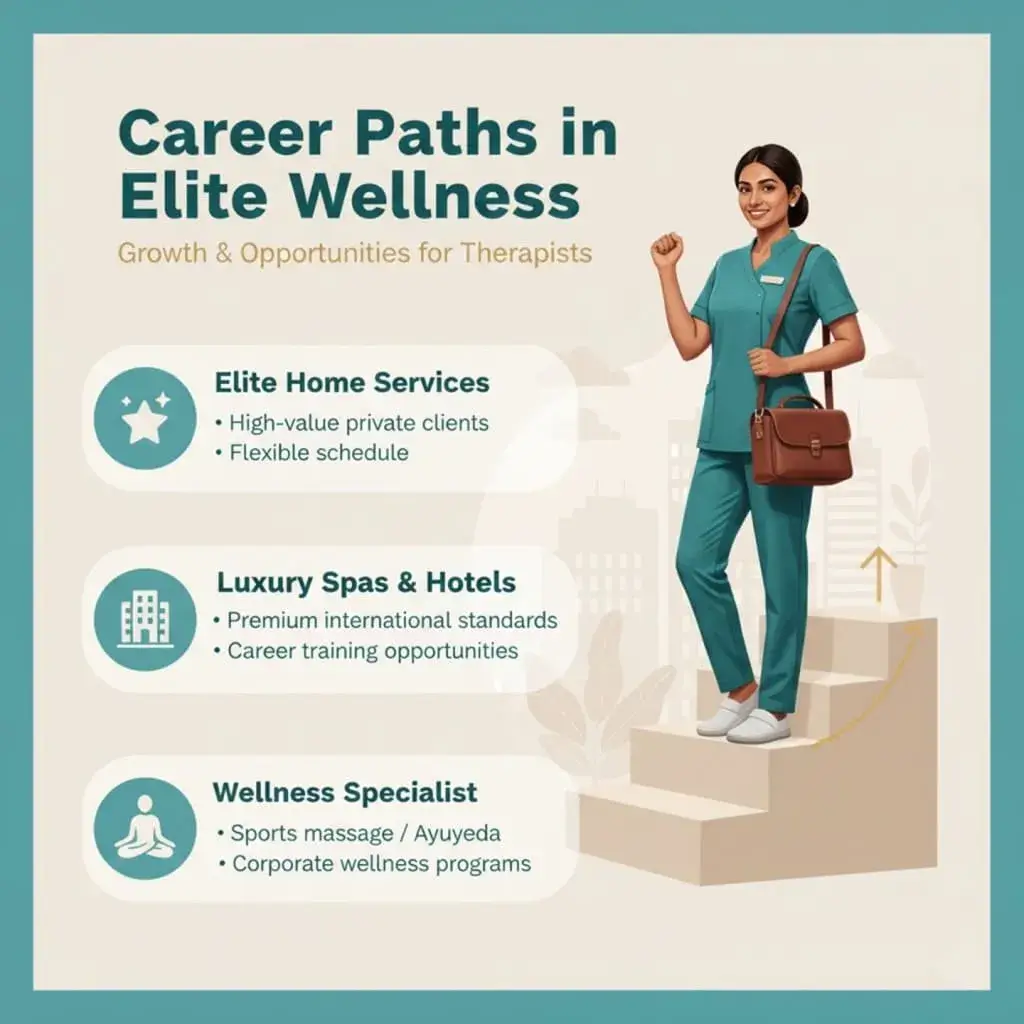
Many therapists enter massage with a simple goal: help people feel better through skilled bodywork. That goal remains valid throughout a career, but the paths to achieving it multiply with experience. Premium wellness offers career trajectories that extend far beyond session-by-session work—trajectories that traditional spa employment rarely makes visible or accessible.
This article maps the career paths available to therapists in elite wellness. Whether you're early in your career planning ahead, mid-career seeking new directions, or experienced and considering what's next, understanding these paths helps you make intentional choices about your professional development.
At Elite Spa, serving clients across Mumbai, Bangalore, Delhi, Pune, and Chennai, we work with therapists at every career stage. We've seen the paths that lead to sustained success and fulfillment. Here's what they look like.
The Foundation: Clinical Excellence
Every career path in premium wellness builds on the same foundation: exceptional clinical skills. Before exploring advancement options, ensure your fundamentals are strong:
Technical Mastery
Premium clients expect premium technique. Master the core modalities—Swedish, deep tissue, sports massage—before branching into specializations. Understand anatomy deeply enough to adapt intelligently to what you find in each client. Develop the sensitivity to read tissue response and adjust accordingly. This foundation supports every future direction.
Professional Presence
Technical skill alone doesn't create premium careers. Communication, presentation, reliability, and client relationship management matter equally. The therapists who advance are those who combine excellent hands with professional excellence in every interaction.
Consistent Delivery
Advancement opportunities come to therapists known for reliability. Consistent quality, session after session. Dependable scheduling. Professional conduct always. Build this reputation before seeking advancement—it's the credential that opens doors.
Path 1: Clinical Specialization
The most common advancement path: developing deep expertise in specific areas that command premium positioning.
Executive Wellness Specialist
Focus on the specific needs of business professionals: desk-worker tension patterns, stress-related holding, executive headaches, travel recovery. Understanding corporate life—the pressures, schedules, and physical consequences—lets you serve this population exceptionally. Executive specialists often develop strong referral networks within professional communities.
Sports and Athletic Recovery
Specialize in serving athletes and fitness enthusiasts: post-workout recovery, injury prevention, performance optimization. This path often involves additional certifications in sports massage, understanding of training cycles, and relationships with gyms, trainers, and sports communities. Athletic clients often have demanding standards—meeting them builds reputation quickly.
Chronic Condition Management
Develop expertise in ongoing conditions: chronic pain management, fibromyalgia support, arthritis care, post-surgical recovery. This path requires deeper understanding of pathology, often additional training, and careful scope-of-practice awareness. Therapists in this specialty often work alongside healthcare providers and build long-term client relationships.
Relaxation and Stress Recovery
Specialize in the art of deep relaxation: techniques that activate parasympathetic response, sleep improvement protocols, anxiety reduction approaches. In high-stress urban environments like Mumbai and Bangalore, this specialization serves significant demand. Mastering relaxation as a clinical skill—not just a side effect—distinguishes true specialists.
- Executive wellness: desk-worker patterns, corporate stress, professional recovery
- Sports and athletic: performance, recovery, injury prevention
- Chronic conditions: pain management, ongoing support, healthcare collaboration
- Relaxation specialist: stress recovery, sleep improvement, parasympathetic activation
- Prenatal/postnatal: pregnancy support, postpartum recovery (certification required)
Path 2: Advanced Modality Expertise
Beyond population specialization, some therapists advance through mastering advanced techniques:
Myofascial Release
Deep training in fascial work—understanding the connective tissue system and techniques that address it specifically. Myofascial specialists often achieve results with chronic conditions that general massage cannot. This path requires significant additional training but creates genuine differentiation.
Neuromuscular Therapy
Advanced work with trigger points, nerve entrapment, and muscular dysfunction. Neuromuscular therapists often work at the boundary between massage and clinical treatment, addressing issues that have resisted other approaches. Certification programs provide structured advancement in this direction.
Thai or Structural Bodywork
Some therapists advance by mastering distinct bodywork traditions—Thai massage, structural integration, or other comprehensive systems. These paths often require extended training, sometimes international study, but create unique positioning in the market.
Continuing Education Strategy
Modality advancement requires intentional investment. Research programs carefully—quality varies significantly. Prioritize hands-on training over online-only certifications. Budget both time and money for ongoing education. The best therapists treat learning as a career-long commitment, not a one-time qualification.
Path 3: Client Portfolio Development
Some therapists advance not through specialization but through building exceptional client relationships:
The Retained Client Model
Rather than maximizing client count, focus on depth: clients who book weekly or bi-weekly, year after year. A portfolio of 15-25 highly retained clients can provide stable, sustainable income with less scheduling complexity than high-volume approaches. This model rewards relationship skills as much as technical ability. Understanding professional standards helps you excel with this clientele.
Premium Positioning
As reputation grows, some therapists position at the highest premium tier—serving clients who prioritize quality above all and compensate accordingly. This path requires exceptional skill, impeccable professionalism, and the confidence to maintain premium positioning. Fewer sessions, higher value, sustainable practice.
Referral Network Building
Satisfied premium clients refer other premium clients. Therapists who excel at client relationships often find that referrals eventually exceed platform-generated bookings. This organic growth creates a self-sustaining practice built on reputation rather than marketing.
| Path | Focus | Key Requirements | Timeline |
|---|---|---|---|
| Clinical Specialization | Population expertise | Deep knowledge of specific client needs | 2-4 years to establish |
| Advanced Modalities | Technique mastery | Significant additional training | 1-3 years of study |
| Client Portfolio | Relationship depth | Exceptional service and retention | 3-5 years to build |
| Training/Mentorship | Knowledge transfer | Communication skills, experience | 5+ years foundation |
| Leadership Roles | Team/operations | Management ability, platform trust | Varies by opportunity |
Path 4: Training and Mentorship
Experienced therapists often find fulfillment in developing others:
Peer Mentorship
Guiding newer therapists through the challenges you've navigated. Mentorship can be informal—sharing knowledge within therapist communities—or structured through platform programs. This role develops naturally for therapists who combine strong skills with communication ability and genuine interest in others' growth.
Technique Training
Teaching specific skills to other therapists. This might involve leading workshops, creating training content, or providing hands-on instruction. Training roles require not just expertise but the ability to break down skills into teachable components and communicate effectively.
Quality Assessment
Some platforms engage experienced therapists in quality assurance—evaluating service standards, providing feedback, helping maintain consistency across the therapist network. This role suits therapists with strong technical knowledge, clear standards, and diplomatic communication skills.
Path 5: Platform and Leadership Roles
For therapists interested in the business side of wellness:
Operations Support
Platforms need people who understand both the therapy work and operational requirements. Roles in scheduling optimization, therapist support, client relations, and service quality leverage field experience in organizational contexts. These opportunities vary by platform size and structure.
Therapist Relations
Supporting other therapists through platform systems—onboarding, ongoing support, issue resolution. This role combines service orientation with operational knowledge. Success requires empathy for therapist challenges alongside platform perspective.
Geographic Expansion
As platforms grow into new cities, experienced therapists sometimes help establish operations—recruiting therapists, setting standards, building client bases in new markets. These roles suit entrepreneurially-minded therapists comfortable with ambiguity and new challenges.
Building Your Development Plan
Career advancement requires intentional planning:
Self-Assessment
Honestly evaluate your current position. Where are your technical strengths? What client types do you serve best? What aspects of the work energize you versus drain you? What skills need development? This assessment informs path selection.
Path Selection
Choose a direction aligned with your interests and aptitudes. Not every path suits every therapist. The best careers emerge from authentic alignment between who you are and what you pursue. Don't choose based solely on perceived prestige or income—choose what you'll sustain with genuine engagement.
Milestone Planning
Break your chosen path into concrete milestones. What certifications will you pursue, and when? What client types will you cultivate? What skills will you develop this year? Specific plans create accountability and progress tracking.
Investment Budgeting
Career development requires investment—time for training, money for courses, energy for learning. Budget explicitly for professional development. The therapists who advance consistently allocate resources to growth rather than treating it as optional when convenient.
- Assess current skills, interests, and growth areas honestly
- Research paths that align with your authentic interests
- Set specific milestones for the next 1-2 years
- Identify training or certifications needed
- Budget time and money for development
- Review and adjust plans annually
Career Sustainability
Long careers require sustainable practices:
Physical Longevity
Massage is physically demanding. Protect your body through proper mechanics, sustainable session limits, adequate recovery, and attention to your own soft tissue health. Many promising careers end prematurely due to preventable physical breakdown. Sustainability isn't optional—it's essential.
Financial Stability
Build financial reserves that allow career decisions based on growth rather than desperation. Emergency funds, retirement planning, income smoothing across variable periods—these foundations enable strategic choices. Financial stress leads to short-term thinking that undermines long-term development.
Professional Renewal
Stay engaged with your profession. Continue learning. Connect with other therapists. Attend workshops or conferences when possible. Isolation and stagnation lead to burnout. The therapists who sustain multi-decade careers maintain curiosity and connection throughout.
Frequently Asked Questions
How long before I should pursue specialization?
Which specialization has the most demand?
How much should I invest in continuing education?
Can I pursue multiple paths simultaneously?
How do I know if training/leadership roles suit me?
What if I'm happy just doing excellent massage work?
How do platform opportunities become available?
Is it possible to change paths mid-career?
Your Career, Your Design
Premium wellness offers something rare: career paths you can design intentionally rather than accepting whatever's offered. Clinical specialization, advanced modalities, client portfolio development, training roles, leadership opportunities—these aren't fixed tracks but possibilities you shape through your choices and development.
The common thread across all paths is commitment to excellence. Build your foundation strong. Choose directions aligned with your genuine interests. Invest in continuous development. If you're transitioning from spa work, understand safety protocols and maintain sustainable practices. The therapists who build fulfilling long-term careers approach their professional lives with the same intentionality they bring to their clinical work.
At Elite Spa, we support female therapists at every career stage—from those building their foundations to those exploring advanced opportunities. Your growth serves everyone: you, your clients, and the profession. We're committed to environments where that growth can flourish.
Related Articles
Female Massage Therapists: Thriving in Premium Home Services
How female massage therapists build rewarding careers in premium home services. Professional growth, client quality, and work-life balance in the evolving wellness industry.
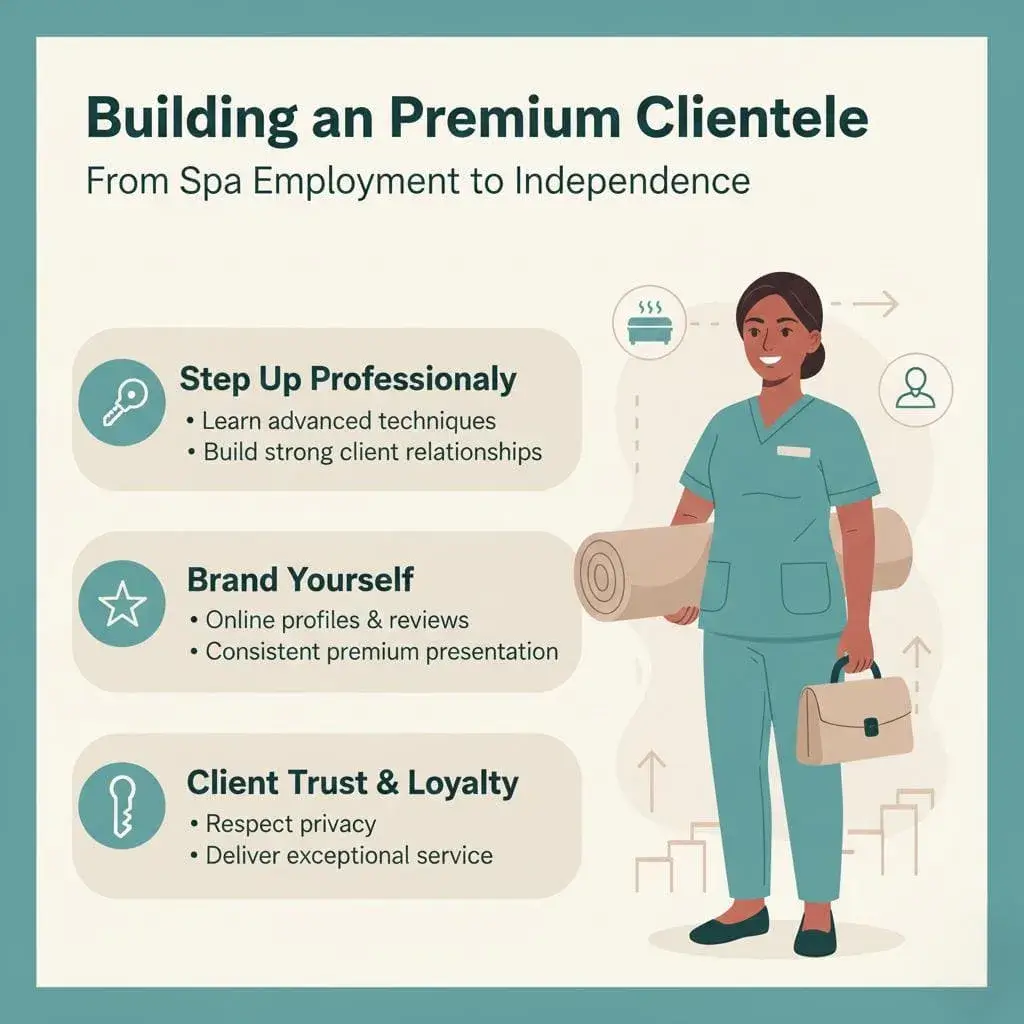
Building a Premium Clientele: From Spa Employment to Independence
A practical guide for massage therapists transitioning from spa work to premium home services. Build your client base, develop business skills, and create a sustainable independent practice.
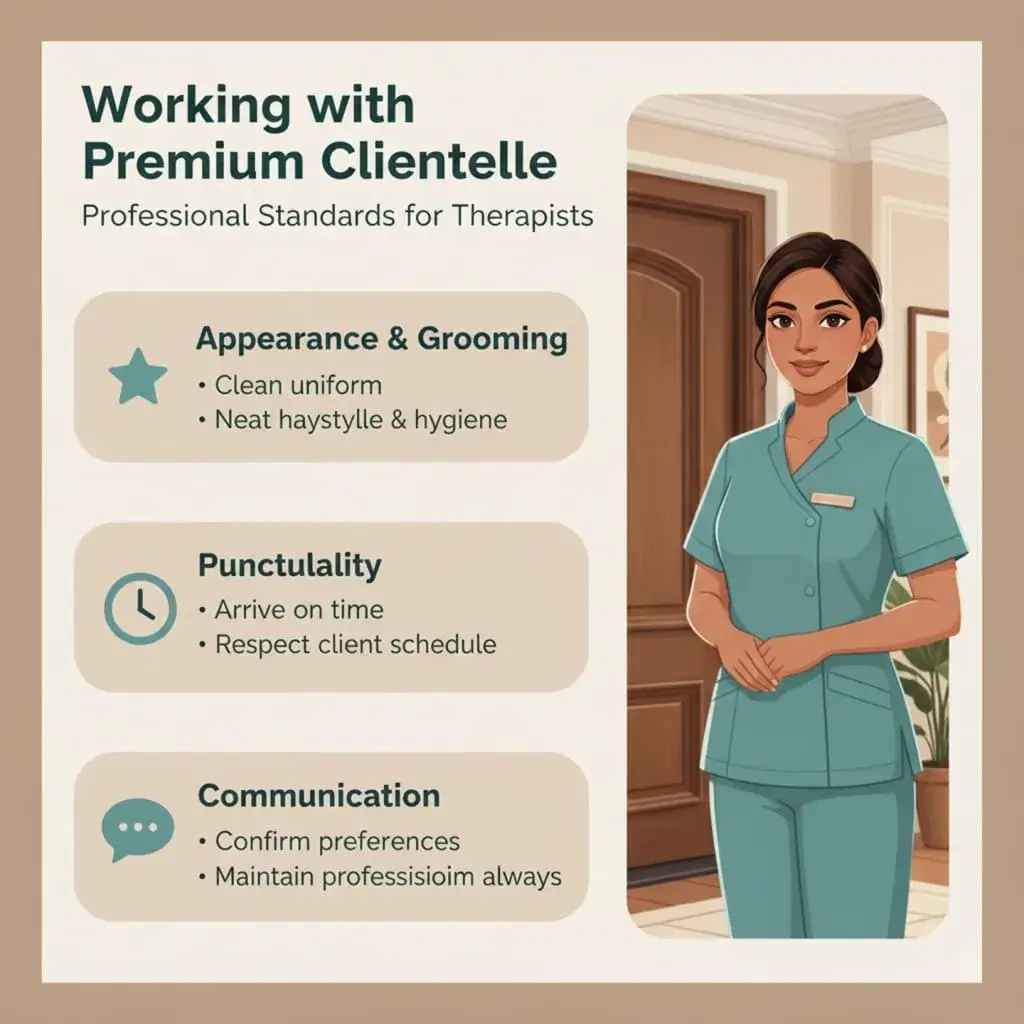
Working with Premium Clientele: Professional Standards for Therapists
How massage therapists excel with premium professional clients. Communication, presentation, and service standards that build lasting client relationships and career success.
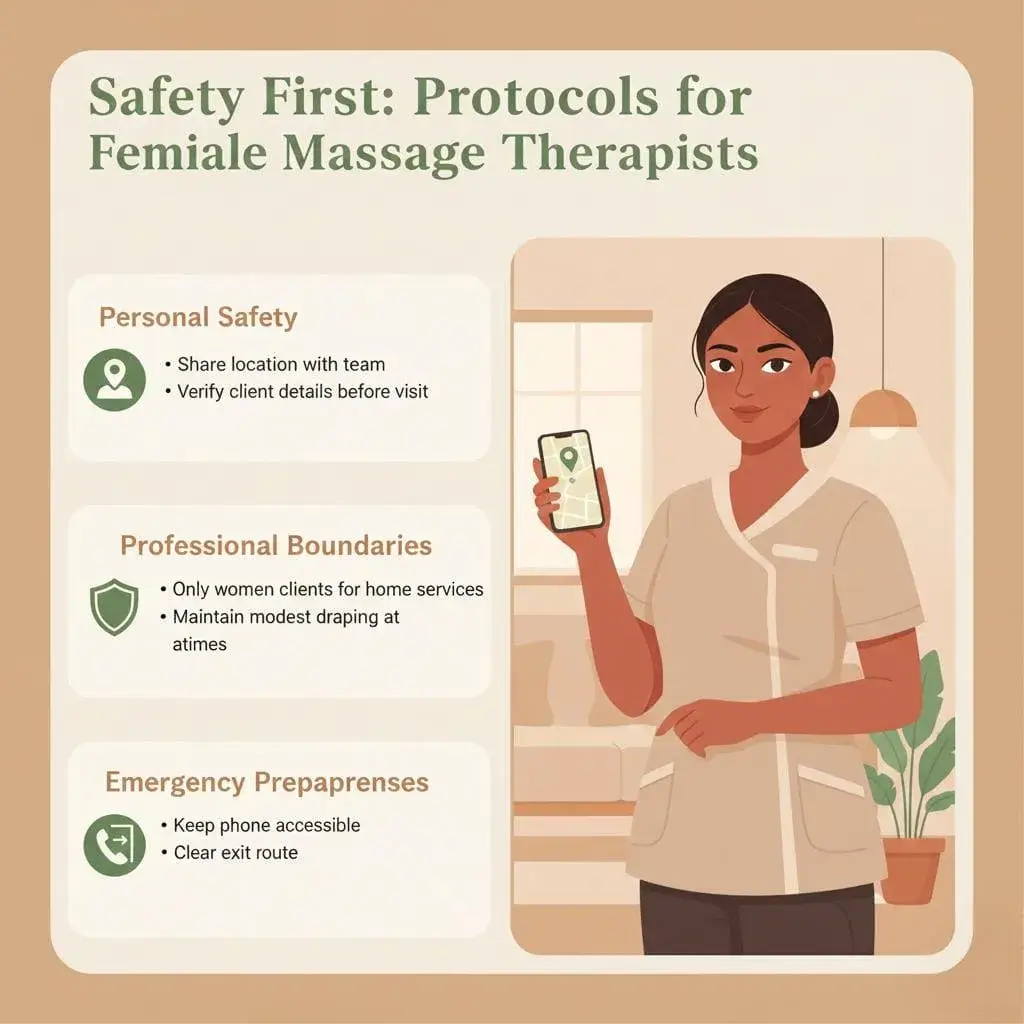
Safety First: Protocols for Female Massage Therapists
Safety guidance for female massage therapists in home services. Professional standards, personal safety practices, and what to look for in a quality platform.
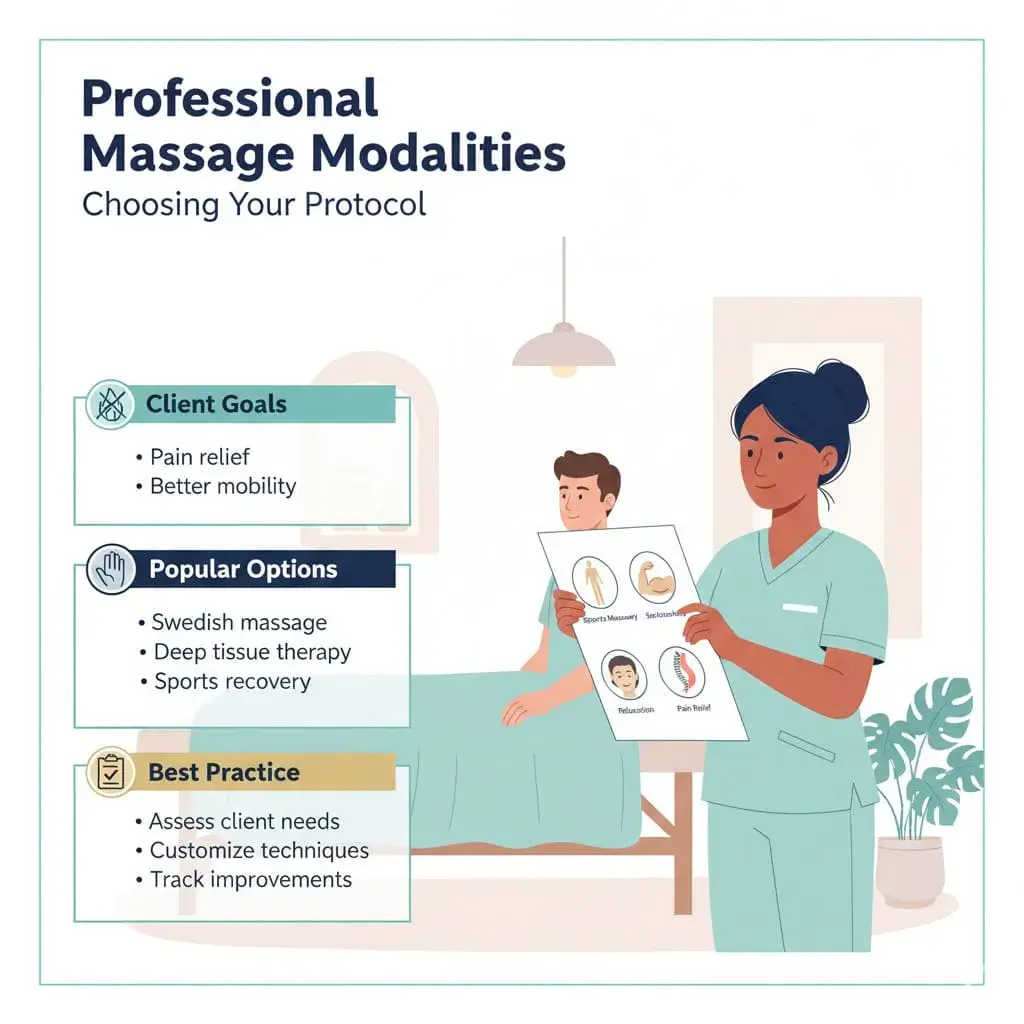
Professional Massage Modalities: Choosing Your Protocol
A decision framework for choosing the right massage type. Compare Swedish, deep tissue, sports, Thai, and other modalities to find your ideal match.